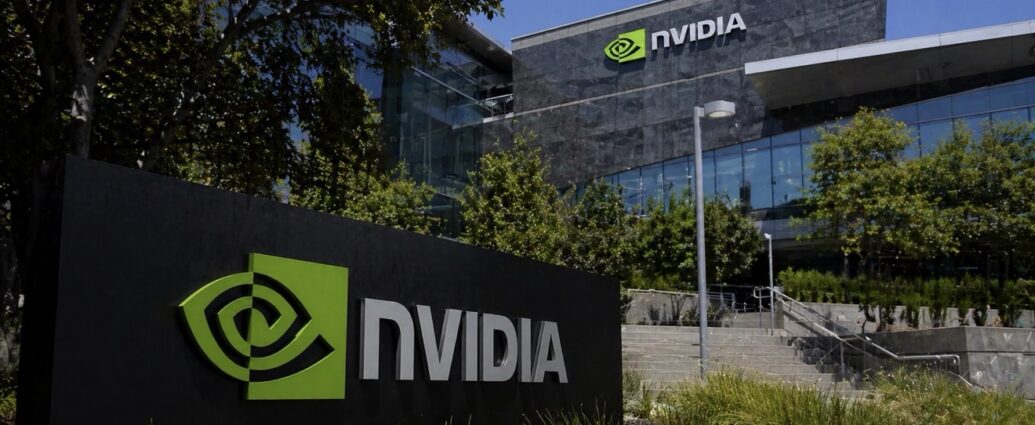
Nvidia Corporation has done what no company in market history has ever achieved — crossing and sustaining a $5 trillion market capitalization, cementing its position as the most valuable enterprise ever to trade on a public exchange and redefining the upper limits of global equity markets.
The milestone, reached with a valuation of approximately $5.08 trillion, places Nvidia (NASDAQ: NVDA) far ahead of its closest rivals, with Alphabet Inc. valued near $4.1 trillion and Apple Inc. at roughly $3.97 trillion, while Microsoft Corp. and Amazon.com Inc. trail behind. “This is not just another record — it’s a structural break in how markets value dominance,” said Dan Ives, Managing Director at Wedbush Securities, calling Nvidia “the backbone of the AI economy.”
The scale of Nvidia’s valuation now defies traditional comparison — and even among America’s largest corporations, the gap is staggering. At roughly $5 trillion, Nvidia is worth more than the combined market value of companies like JPMorgan Chase, Walmart, Exxon Mobil, Procter & Gamble, Coca-Cola, PepsiCo, McDonald’s, Nike, Disney, Boeing, and IBM — a collection of iconic Fortune 500 names that collectively define entire sectors of the U.S. economy. “You’re talking about compressing decades of industrial leadership across multiple sectors into a single company,” said Bank of America analyst Vivek Arya, adding that “there has never been this level of value concentration in modern market history.”
Put another way, it would take roughly 10 to 15 of the most recognizable blue-chip companies in America combined to approach Nvidia’s valuation today. Even entire sectors struggle to match it: the total market capitalization of many traditional industries — from airlines to retail conglomerates — falls short of Nvidia alone. “This is a once-in-a-generation concentration of market power,” said Goldman Sachs analyst Toshiya Hari, noting that “AI has created a winner-take-most dynamic at a scale we haven’t seen before.”
Friday’s surge was catalyzed in part by a blowout earnings report from Intel Corp., which delivered first-quarter 2026 revenue of $13.58 billion, far exceeding the $12.42 billion consensus estimate, alongside adjusted earnings per share of $0.29 versus expectations of just $0.02. Intel’s data-center segment jumped 22% year-over-year, sending its shares to their strongest single-day gain since 1987. “The read-through for Nvidia is immediate — data center demand is accelerating, not slowing,” said Stacy Rasgon, semiconductor analyst at Bernstein, emphasizing that “every incremental dollar spent on AI infrastructure disproportionately benefits Nvidia.”
The rally quickly spread across the semiconductor landscape. Advanced Micro Devices Inc. surged more than 14%, Qualcomm Inc. climbed more than 8%, and the Philadelphia Semiconductor Index (SOX) reached a fresh all-time high. “This is a rising tide moment for chips, but Nvidia remains the clear leader,” Arya added, pointing to the company’s unmatched ecosystem and pricing power.
Underpinning Nvidia’s historic valuation is a financial profile that continues to exceed even the most aggressive forecasts. The company reported fourth-quarter revenue of $68.1 billion, up 73% year-over-year, bringing full fiscal 2026 revenue to $215.9 billion — a 65% annual increase. Data Center revenue alone reached $62.3 billion in the quarter, surging 75% from the prior year. Looking ahead, Nvidia has guided for approximately $78 billion in current-quarter revenue, implying roughly 77% year-over-year growth. “These are numbers that simply didn’t exist at this scale before,” said Morgan Stanley analyst Joseph Moore, describing Nvidia’s trajectory as “hyper-growth at megacap size.”
But Nvidia’s significance extends beyond its financial dominance. The company has become the foundational infrastructure layer for the global artificial intelligence economy — supplying the high-performance GPUs that power everything from advanced AI models to enterprise automation, autonomous systems, and national-scale computing. “Nvidia isn’t just selling chips — it’s selling the engines of modern intelligence,” said Jensen Huang, Co-Founder and Chief Executive Officer of Nvidia, who has repeatedly described AI as a new industrial revolution reshaping every sector.
That transformation traces back to humble beginnings. Nvidia was founded in 1993 by Jensen Huang, Chris Malachowsky, and Curtis Priem, who met at a Denny’s in Silicon Valley with a vision to build advanced graphics processors for gaming. The company’s early years were marked by extreme risk, including a near-collapse before the successful launch of its RIVA 128 chip in 1997. “We were thirty days from going out of business,” Huang has said, highlighting how close the company came to failure before establishing itself.
The inflection point came in 2006 with the launch of CUDA, Nvidia’s parallel computing platform, which allowed developers to use GPUs for general-purpose computing. That move — initially underappreciated — ultimately became the backbone of modern AI computing. “CUDA created the ecosystem that competitors still struggle to replicate,” said Stacy Rasgon, emphasizing that Nvidia’s software advantage now reinforces its hardware dominance.
The next phase of expansion is already underway. Nvidia’s upcoming Vera Rubin platform, expected to launch in the second half of 2026, is projected to drive up to $1 trillion in combined lifetime sales alongside its Blackwell architecture through 2027. Huang has stated that Nvidia could reach $1 trillion in annual revenue within two years. “AI is the most powerful technology force of our time,” he said, adding that “we are at the beginning of a new industrial revolution.”
Wall Street remains overwhelmingly supportive. Of the 57 analysts covering the stock, 56 rate it a buy, with price targets ranging as high as $380. Goldman Sachs, Bank of America, Wedbush, and Cantor Fitzgerald all maintain bullish outlooks. “We see continued upside driven by unmatched demand visibility,” said Cantor analyst C.J. Muse, citing Nvidia’s backlog and long-term supply agreements.
The immediate test now shifts to Nvidia’s largest customers. Microsoft, Alphabet, Meta Platforms, and Amazon — among the biggest buyers of Nvidia’s chips — are set to report earnings this week, with investors focused on capital spending plans that will signal whether AI demand remains at current levels. Nvidia itself reports next on May 20.
From a near-bankrupt startup to a company now worth more than a dozen of America’s most iconic corporations combined, Nvidia’s rise reflects a fundamental shift in how value is created in the global economy.
What comes next will determine whether $5 trillion is a ceiling — or simply the next starting point.
JBizNews Desk