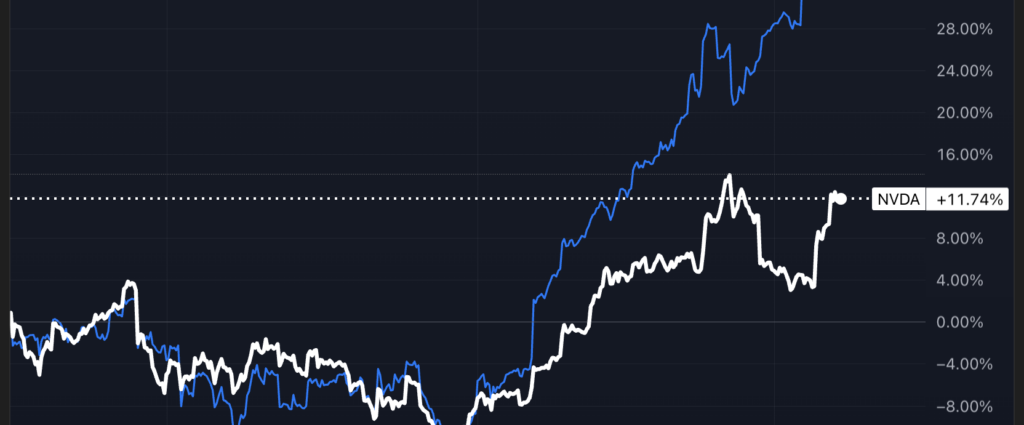
Nvidia Corp. (NASDAQ:NVDA) reports first-quarter fiscal 2027 results on May 20, and Goldman Sachs is already looking past the company’s jaw-dropping $1 trillion AI revenue target.
The chipmaker has told investors it expects $1 trillion in cumulative revenue from its Blackwell, Blackwell Ultra and Rubin platforms across calendar years 2025 through 2027. But Goldman says investors will be watching for something even bigger: whether that number gets updated higher, and whether other Nvidia products not included in that forecast add even more upside.
In plain English, Goldman is suggesting Nvidia’s $1 trillion roadmap may not capture the full scope of the company’s AI opportunity.
On Thursday, the Wall Street giant raised its revenue and earnings estimates for Nvidia by roughly 12%, with calendar-year 2026 and 2027 earnings forecasts now sitting 14% and 34% above Street consensus.
The setup has become its own story. The chipmaker has lagged most of its semiconductor peers this year and now trades at a meaningful discount to its three-year median multiple.
The iShares Semiconductor ETF (NASDAQ:SOXX) has risen by 36% over the past three months, more than three times Nvidia’s returns.
Goldman analyst James Schneider highlighted that the gap can close, but only if management delivers on four specific items investors are watching closely.
“We believe expectations are elevated given strong supply-side results from Taiwan Semiconductor Manufacturing Co. Ltd. (NYSE:TSMC) and the South Korean SK Hynix,” Schneider said.
In addition, U.S. hyperscaler capital expenditure guidance for 2026 has been revised higher.
Nvidia Earnings: What Goldman Expects
Schneider and his team forecast a beat-and-raise quarter for Nvidia.
Their first-quarter revenue estimate of $80.05 billion runs about $2 billion …





This post was originally published here