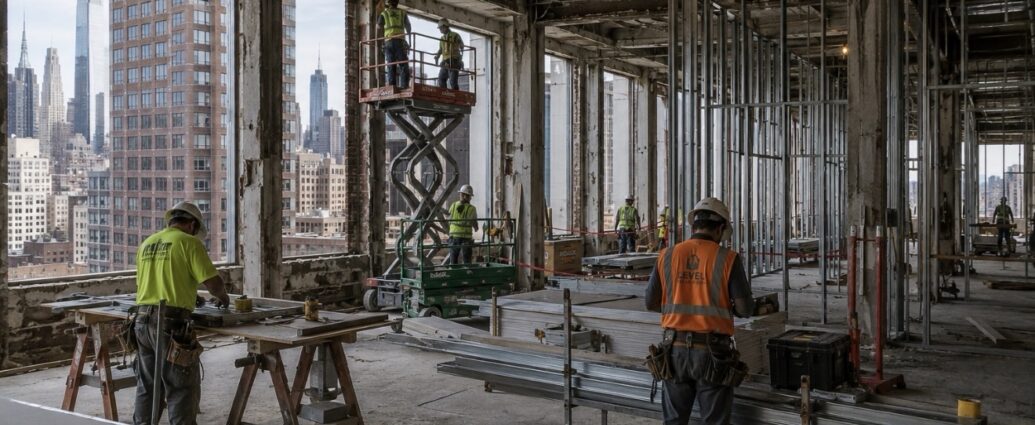
What was once viewed as a niche real estate strategy is becoming an increasingly important part of downtown redevelopment. Cities across the United States are accelerating efforts to transform underused office buildings into apartments, hotels and mixed-use properties as developers look for new ways to revive central business districts that have yet to fully recover from the shift toward hybrid work.
New commercial real estate data released Thursday by CBRE and Yardi Matrix show office-to-residential conversion projects continue expanding, particularly in older buildings that struggle to compete with newer, amenity-rich office space. While not every building can be converted economically, developers say the number of viable projects has grown as office values have declined and municipalities have expanded tax incentives.
For city leaders, the objective extends beyond filling vacant buildings. Adding residents to downtown neighborhoods creates demand for grocery stores, restaurants, pharmacies, gyms and other small businesses that traditionally depended on office workers. A larger residential population can also support public transit systems and increase local tax revenue over time.
Developers caution that conversions remain expensive. Older structures often require significant redesign to accommodate plumbing, natural light and modern residential layouts. Construction financing has also become more challenging as interest rates remain well above the levels seen just a few years ago.
Even so, lenders and investors are showing renewed interest in projects located in markets where housing demand remains strong and office vacancies remain elevated. Cities including New York, Washington, Chicago and Los Angeles continue exploring zoning changes and financial incentives designed to make more redevelopment projects economically feasible.
The shift is also creating new opportunities for architects, engineers, construction firms and building suppliers that specialize in adaptive reuse projects rather than ground-up development.
Downtown skylines are unlikely to return to their pre-pandemic makeup overnight. Instead, many commercial districts are gradually evolving into neighborhoods where people not only work but also live, shop and spend their evenings—a transformation that could redefine the economics of city centers for years to come.
JBizNews Desk | Wall Street
© JBizNews.com All Rights Reserved. Reproduction or distribution without written permission is prohibited.