Crude oil settled near its lowest level since before the Iran war even as a Washington research group warned that Tehran has quietly continued building an underground complex that could one day house a nuclear enrichment facility.
West Texas Intermediate closed near $69 a barrel Friday while Brent crude hovered around $72, roughly where both benchmarks traded on February 27—the day before Israeli and U.S. strikes on Iran ignited the conflict. The last time WTI futures closed below $70 was on Feb. 27. Prices have steadily retreated as commercial shipping resumed through the Strait of Hormuz and traders increasingly bet the fragile ceasefire will hold.
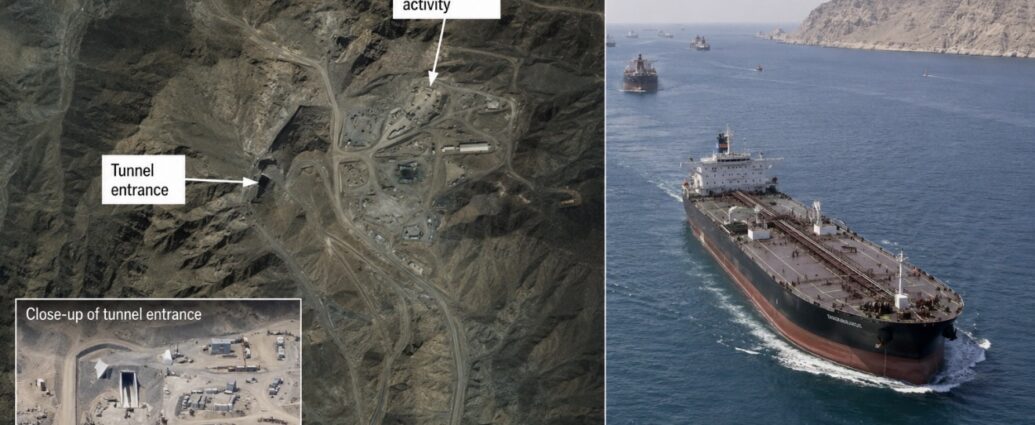
The warning came from the Institute for Science and International Security, a Washington-based nonprofit that monitors nuclear activity using commercial satellite imagery. The organization said images captured in late June show continued excavation and construction at Pickaxe Mountain, a heavily fortified site in Iran’s Zagros Mountains, located just south of the heavily damaged Natanz uranium enrichment complex.
Spencer Faragasso, a senior fellow at the Institute, wrote on X that excavation at the site has continued since at least 2020 and appears designed to preserve Iran’s nuclear capabilities if negotiations with Washington fail. According to the Institute’s analysis, the underground tunnels appear large enough to house an enrichment facility. Inspectors from the International Atomic Energy Agency (IAEA) have not been granted access to the site.
Faragasso argued that if Iran is negotiating in good faith, halting construction at Pickaxe Mountain would be an obvious confidence-building measure. Continued excavation, he said, raises fresh questions about Tehran’s long-term intentions.
The report carries significant implications for energy markets because the nuclear dispute remains the central issue behind the recent conflict. The Islamabad Memorandum, signed remotely by President Donald Trump and Iran’s president on June 17, calls for preserving the status quo while broader negotiations continue. The Institute argues that continuing construction at a suspected nuclear site would conflict with that objective. If confirmed, the activity could strengthen opposition to the agreement in both Washington and Jerusalem and quickly return geopolitical risk to oil markets.
For now, traders are looking beyond the report.
Commercial shipping through the Strait of Hormuz has climbed back above 10 million barrels per day, while Saudi Arabia has restored crude exports to roughly 90% of pre-war levels. The United Arab Emirates has also returned exports to more than 3.9 million barrels per day, using both the Strait of Hormuz and its bypass pipeline network. Combined with emergency reserve releases, those supply increases have transformed a market that faced severe shortages only months ago into one with considerably more available oil.
The next major test could come within days.
Al Arabiya reported that the next round of U.S.-Iran negotiations is expected to begin in Pakistan on July 11, with discussions expected to focus on Iran’s nuclear program, economic sanctions, and frozen Islamic Revolutionary Guard Corps (IRGC) assets. Neither Washington, Tehran, nor Pakistan has formally confirmed the meeting date.
The difference between earlier forecasts and today’s market tells the broader economic story. The U.S. Energy Information Administration (EIA) had projected Brent crude would average approximately $105 per barrel during June and July if disruptions in the Strait of Hormuz continued. Instead, oil prices have remained more than $30 below those projections as shipping resumed much faster than expected. That reversal has prevented the sharp increases in gasoline and diesel prices many economists feared heading into the busy July Fourth travel season.
For businesses that rely heavily on fuel—including trucking companies, airlines, manufacturers, and shipping firms—the decline has provided welcome relief after Brent briefly surged above $118 per barrel during the height of the conflict.
That relief, however, depends almost entirely on the ceasefire holding and negotiations continuing.
If evidence mounts that Iran has continued expanding a secret underground nuclear facility while talks proceed—or if the expected July negotiations break down—the geopolitical risk premium could return to oil markets quickly. Any renewed tensions in the Middle East would likely ripple through fuel prices, transportation costs, global supply chains, and ultimately the prices consumers pay for everyday goods.
JBizNews Desk | Washington, D.C.
© JBizNews.com All Rights Reserved. Reproduction or distribution without written permission is prohibited.