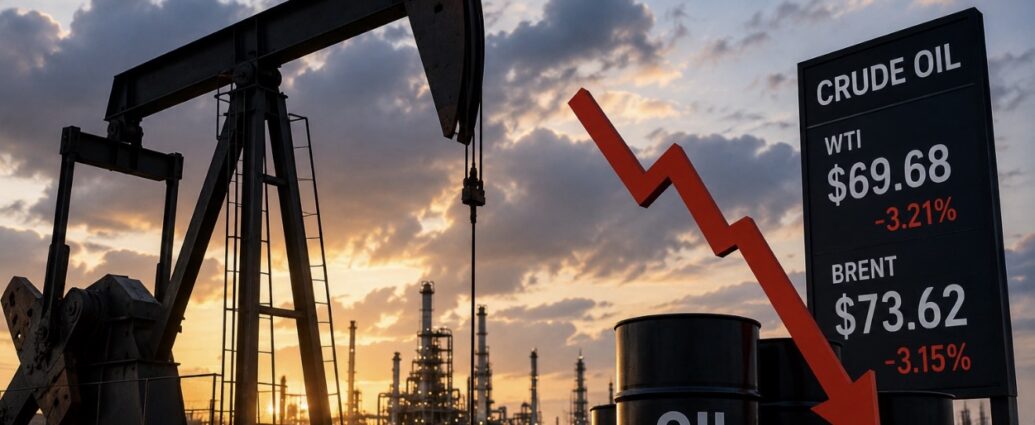
Oil prices tumbled again, with U.S. crude falling below $70 a barrel and approaching levels last seen before the U.S.-Iran conflict began, as a growing number of tankers resumed passage through the Strait of Hormuz and diplomatic efforts continued reducing fears of a prolonged supply disruption.
The decline marks a dramatic reversal from the panic that gripped energy markets earlier in the conflict.
Brent crude, the global benchmark, slipped below $74 per barrel, while West Texas Intermediate dropped beneath $70. Both benchmarks now sit far below the wartime highs reached when traders feared a lengthy shutdown of Middle Eastern energy exports.
The Strait of Hormuz remains the world’s most important oil chokepoint.
Under normal conditions, roughly one-quarter of global seaborne crude oil passes through the narrow waterway connecting the Persian Gulf to international markets. Any disruption immediately affects energy prices worldwide.
At the height of the crisis, tanker traffic slowed dramatically as concerns over security risks mounted. Hundreds of vessels faced delays, shipping costs surged, and traders feared a prolonged interruption to global energy supplies.
Those fears are now easing.
Shipping activity has steadily improved, and exporters throughout the Gulf region are restoring operations closer to normal levels. Energy traders increasingly believe the worst-case scenarios that once dominated headlines are becoming less likely.
Diplomatic developments have contributed significantly to the recovery.
Negotiations involving regional governments and international mediators have helped reduce immediate tensions, while agreements designed to ensure safe maritime transit have encouraged shipping companies to resume operations through the strait.
The impact extends far beyond oil markets.
Lower crude prices generally translate into cheaper gasoline, lower transportation costs, reduced pressure on manufacturers, and potentially slower inflation. Businesses throughout the economy benefit when energy costs decline.
Consumers stand to gain as well.
Fuel prices often respond quickly to major moves in crude oil markets, and sustained declines could provide relief at the pump after months of elevated costs.
Not everyone believes the risk has disappeared.
Several analysts caution that current supply conditions are being supported in part by inventory drawdowns and strategic stockpiles rather than a complete recovery in production. Once those inventories are depleted, markets could again face tighter conditions.
Others point to continuing geopolitical risks throughout the region.
Tensions involving Iran, Israel, and various regional actors remain unresolved, and any renewed disruption could quickly reverse recent gains.
Even so, markets appear increasingly convinced that the immediate threat of a major supply shock has diminished.
That shift in sentiment has been enough to send oil sharply lower and restore a measure of stability to global energy markets.
For households, businesses, and investors, the message is straightforward.
After months of uncertainty, energy markets are beginning to price in a future that looks far less disruptive than many once feared.
JBizNews Desk | New York
© JBizNews.com All Rights Reserved. Reproduction or distribution without written permission is prohibited.