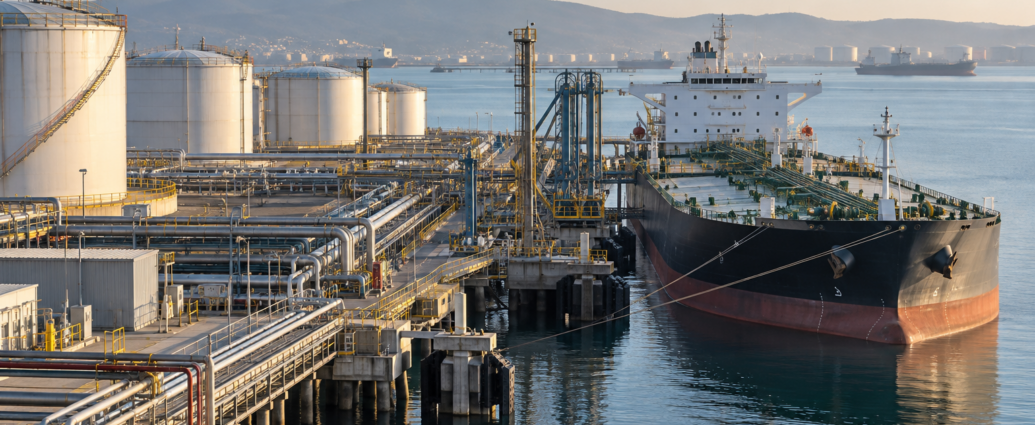
Oil prices edged lower Monday, Oct. 12, as traders weighed the prospect of additional Russian diesel supplies against uncertainty over President Donald Trump’s announced halt to Russia-Ukraine attacks on energy facilities. For truckers, farmers and businesses, lasting relief depends on fuel reaching markets and refineries operating reliably.
Brent crude was down about 0.3% at $104.37 a barrel, while U.S. West Texas Intermediate fell about 0.6% to $91.33 in Monday’s European-morning market reporting. Both benchmarks had fallen more than 1% earlier in the session before recovering part of their losses.
The policy change that can be verified is a U.S. sanctions authorization. Treasury’s Office of Foreign Assets Control issued General License 135 on Oct. 9, allowing specified transactions involving the sale, delivery, offloading and importation of Russian-origin diesel, including imports into the United States.
The authorization runs through 12:01 a.m. Eastern on April 7, 2027. It does not establish that the promised fuel has been produced, loaded or delivered, and it does not remove all restrictions on dealings with Russia.
The ceasefire is less settled. Trump announced Sunday that Russia and Ukraine had agreed to stop attacking energy facilities. In an official address that evening, Ukrainian President Volodymyr Zelenskyy welcomed the prospect and said Ukraine was ready to refrain from striking Russian energy infrastructure if Russia showed the same readiness.
Zelenskyy also reported continued attacks, including a strike on a heat-and-power plant in Kharkiv, and said Kyiv awaited clear details of the U.S.-Russia discussions. Moscow had not publicly confirmed an agreement in the reporting reviewed Monday. Those statements leave a gap between an announced understanding and an observable halt to attacks.
Trump’s diesel announcement contains more fuel than the first three shipments alone suggest. He said Russia would supply more than 300,000 metric tons immediately, another 500,000 tons in November and 1 million tons afterward. He also described an additional 3 million tons, with timing dependent on the condition of Russian refineries.
The initial 300,000 tons is approximately 2.25 million barrels. Using that same approximate conversion, the first three installments total about 13.5 million barrels. Including the additional conditional shipment would bring the announced total to roughly 36 million barrels.
Reuters reported an International Energy Agency forecast of global diesel consumption near 29 million barrels a day. On that comparison, the first three installments represent less than half a day’s worldwide demand; the full announced package represents about 1.2 days.
That comparison gives readers scale, but does not by itself predict prices. In a tight market, even a relatively small addition can matter. The more useful questions are how much supply is genuinely additional, when it arrives and whether it reaches regions facing the greatest shortages.
Diesel powers freight trucks, agricultural machinery and other equipment businesses depend on. A sustained decline can reduce delivery and operating costs, while higher prices can squeeze margins or be passed along to customers. Diesel relief is also distinct from gasoline relief: the fuels serve different markets and their prices can move differently.
Refinery operations are central to the possible benefit. Crude oil must be processed into usable fuels. Fewer attacks could help Russia maintain production and exports, but sanctions permission alone cannot repair damaged equipment or guarantee shipping capacity.
The International Energy Agency is pursuing a separate response. In an Oct. 11 statement, Executive Director Fatih Birol encouraged members with outstanding commitments from the March emergency-stock release to assess whether they could accelerate remaining deliveries, prioritizing diesel.
He also urged all members to assess whether additional diesel releases were needed and, if appropriate, identify their size and timing. That was a request for assessment, not an announcement that another collective release had been approved. The agency’s governing board meets Oct. 15.
The IEA statement also highlighted renewed attacks on civilian and energy infrastructure in Saudi Arabia. Those risks help explain why a possible improvement in Russian supply has not removed the wider pressure on fuel markets.
Goldman Sachs raised its December Brent forecast to $90 a barrel from $85, according to its analyst note reported by Reuters. The bank still expects supply adaptation eventually to bring prices lower, while warning that renewed escalation could push them higher.
Political opposition adds another uncertainty. Seven Republican and Democratic senators issued a joint statement Sunday arguing that allowing Russian diesel imports conflicts with U.S. law and asking the administration to reverse course. Their claim is a legal challenge to the policy, not a court ruling invalidating Treasury’s license.
The next concrete tests are whether attacks stop, shipments materialize and IEA members commit additional diesel supplies. Until then, Monday’s modest oil decline represents a market response to possible relief, rather than evidence that truckers’ and farmers’ fuel bills have already fallen.
JBizNews Desk | Washington
© JBizNews.com. All rights reserved. This article is original reporting by JBizNews Desk. Unauthorized reproduction or redistribution is strictly prohibited.