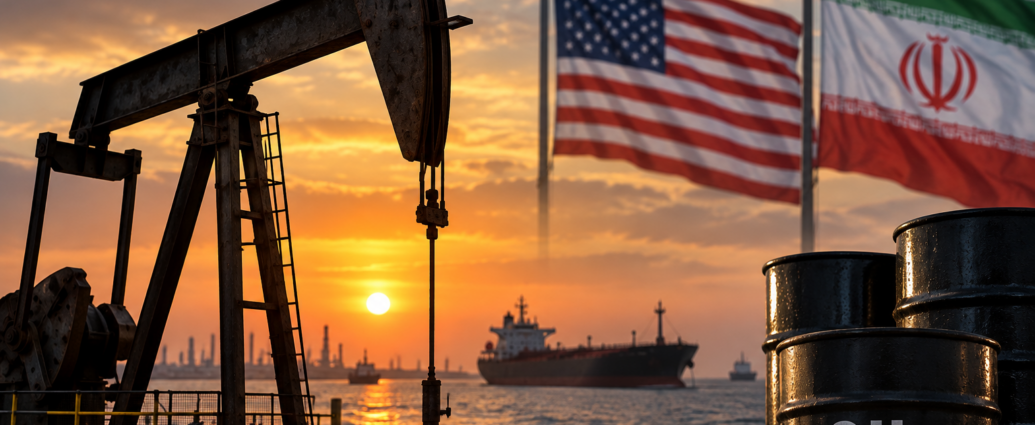
Oil prices swung sharply Tuesday as investors weighed hopes for U.S.-Iran diplomacy against fresh warnings from President Donald Trump that an agreement may not come until after the November midterm elections.
Crude prices had fallen for several sessions as traders grew more optimistic that diplomacy could reduce the risk of a wider conflict and restore more normal energy flows through the Middle East. But that optimism weakened after Trump addressed the United Nations General Assembly and called for greater economic pressure on Iran while suggesting a deal may have to wait until after the U.S. elections.
Brent crude, the international benchmark, traded around the psychologically important $100-a-barrel level Tuesday, while West Texas Intermediate, the main U.S. benchmark, remained in the mid-$90 range for the expiring October contract. Prices moved substantially during the session as traders reacted to rapidly changing diplomatic headlines.
Why Oil Had Been Falling
The earlier decline was driven partly by expectations that Washington and Tehran could move toward negotiations during this week’s U.N. gathering in New York.
Trump had previously indicated he could be open to meeting Iranian President Masoud Pezeshkian, while Iran had signaled through intermediaries that it could consider renewed negotiations.
Those developments encouraged traders to remove some of the geopolitical premium that had built into crude prices because of fears that the conflict could further disrupt Middle Eastern energy supplies.
Tuesday’s developments complicated that outlook.
Trump called for Iran’s economic isolation and showed little indication during his U.N. appearance that direct negotiations were imminent. He nevertheless said he believed an agreement could eventually be reached, potentially after the November elections.
That leaves oil traders trying to determine whether diplomacy represents a genuine path toward de-escalation or whether the conflict will continue putting global energy supplies at risk.
Saudi Arabia Finds Another Route
Oil prices have also been influenced by changing Saudi export flows.
Saudi Aramco sharply increased crude shipments from its Gulf terminals after a drone attack disrupted the kingdom’s East-West Pipeline and halted some shipments through the Red Sea port of Yanbu.
Aramco loaded roughly 14 million barrels of crude onto seven very large crude carriers in the Gulf on Sunday, according to tanker-tracking data reported by Reuters.
Oil flows through the Strait of Hormuz averaged roughly 2.9 million barrels per day over six days, compared with about 700,000 barrels per day in August, according to shipping data.
The additional shipments provided some reassurance that Saudi Arabia could keep more oil moving despite damage to another important export route.
But routing additional crude through Hormuz creates another vulnerability.
The narrow waterway between Iran and the Arabian Peninsula remains one of the world’s most strategically important energy corridors. Any major disruption there could quickly tighten global supplies and push crude prices higher again.
What It Means for Consumers
For American households, the biggest question is whether lower crude prices eventually translate into cheaper gasoline.
Crude oil represents a major component of the cost of producing gasoline, meaning a sustained decline in oil can eventually reduce wholesale and retail fuel prices.
But consumers should not expect every daily move in crude to immediately appear at the pump.
Refining costs, inventories, transportation expenses, regional supply conditions and retail margins also influence gasoline prices. More importantly, the geopolitical situation remains volatile enough that a sudden escalation could quickly reverse oil’s recent decline.
That uncertainty matters beyond gasoline.
Energy prices feed into transportation, aviation, manufacturing and shipping costs. Businesses that spend heavily on fuel can benefit when crude prices decline, while another sustained surge could add renewed pressure to operating expenses and consumer prices.
What Oil Traders Are Watching
Attention now turns to whether U.S. and Iranian officials make tangible diplomatic progress during the U.N. meetings and whether Saudi Arabia can continue restoring disrupted export capacity.
Iranian President Masoud Pezeshkian is in New York for the General Assembly, but as of Tuesday there was no confirmed Trump-Pezeshkian meeting.
Meanwhile, Saudi Arabia has been working to restore its East-West Pipeline while simultaneously increasing shipments through the Gulf.
The combination leaves the oil market unusually sensitive to political headlines.
Diplomatic progress could remove more of the geopolitical premium embedded in crude prices. Renewed fighting, attacks on energy infrastructure or disruptions around the Strait of Hormuz could produce the opposite result.
For businesses and consumers, that means the recent decline in oil prices offers some potential relief — but the forces driving it remain far from settled.
JBizNews Desk | Wall Street
© JBizNews.com All Rights Reserved. Reproduction or distribution without written permission is prohibited.