My Oura ring and I are close.
Every morning, before I put on my glasses and right after I shuffle out from under my comforter, I check my Oura app and for 7 seconds contemplate the non-jewelry silver band on my index finger. My Sleep Score rarely surprises me, sure, but this is how it’s gone, more or less, every morning sometime between 6 and 7 AM for the last three years of my life, since I got my first Oura ring in August 2023.
So, in early September, I was especially interested when Oura filed its S-1, the official public disclosure of a company going public. And, this Monday morning, as I rolled over and looked at my Oura ring, it occurred to me: As Anthropic is reportedly looking to push its IPO back to November (and could push further), while OpenAI has punted to 2027, Oura is now the most consequential IPO that’s imminent.
And Oura’s numbers are compelling: The wearable maker’s total revenue, for the nine months that ended June 30, was over $1.2 billion, a leap from $697.6 million for the same period in 2025. Additionally, net income jumped in that time frame, from $1.6 million in 2025 to $60.8 million in 2026.
Hardware is about 80% of Oura’s revenue, but the company’s subscriber base (of which I’m part) also has momentum. On Monday, the company updated its filing to show that as it ended the 2026 fiscal year, Oura had 5.7 million paid members, marking 96% growth year-over-year. (The initial filing had 5 million.)
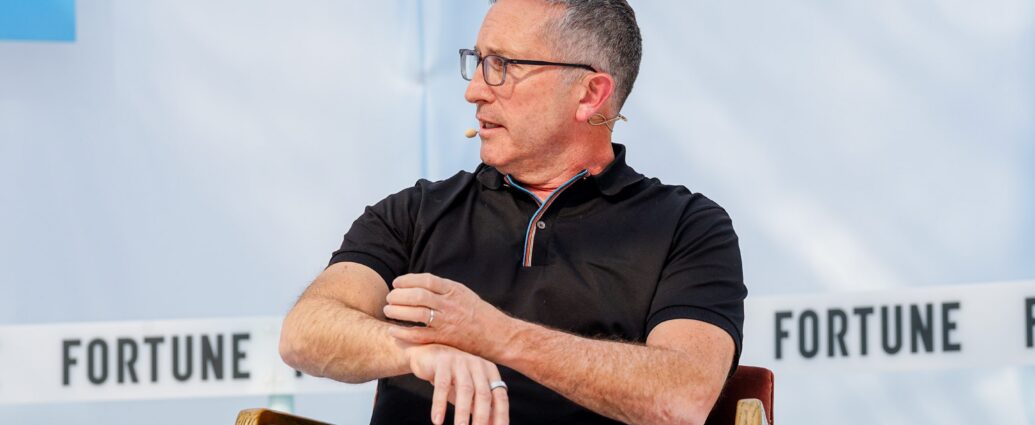
Oura—whose backers seeking a return include Fidelity, Dragoneer, Iconiq Capital, Forerunner Ventures, and Lifeline Ventures—has certainly seen its fair share of controversy in recent years, particularly around concerns with data privacy that I’ve interviewed CEO Tom Hale about more than once. (At Brainstorm Tech last year, he told me onstage that Oura will never sell customer data.) And the company—founded in Finland by Kari Kivelä, Markku Koskela, and Petteri Lahtela in 2013—has an AI story of its own. I hosted a recent AI video feature “Inside the “Lifemaxxing” Economy: Has Fitness AI Optimization Gone Too Far?”
During that chat, Hale went deeper into the company’s strategy. “AI and our particular take on it is going to be a pretty big moat,” he said then. “The data is actually the scarce resource here. Our data set [is] 42 billion hours… across a huge population.” That’s what fuels intelligence, Hale said.
Still, Oura won’t be an AI IPO. And I’ve found covering Oura surprisingly refreshing throughout its rise over the last few years, as the AI boom has been growing. I started my career covering consumer M&A, so I’ll always have a soft spot for the space: Consumer companies hold special places in the intimacies of our lives. (I also know that my dad is going to read this and text me, because we both love talking about our Oura rings.)
So, as I rolled over and looked at my Oura app around 7 AM from under my sheets, it occurred to me that it may be instructive that, right now, the IPO we can rely on is something I keep on my hand. Anything can happen, of course. But even in the AI era, what’s tactile matters.
See you tomorrow,
Allie Garfinkle
X: @agarfinks
Email: alexandra.garfinkle@fortune.com
Submit a deal for the Term Sheet newsletter here.
Joey Abrams curated the deals section of today’s newsletter.
This story was originally featured on Fortune.com