By JBizNews Desk
GoodRx and Novo Nordisk are launching one of the most aggressive affordability pushes yet in the booming GLP-1 market, rolling out a nationwide self-pay pricing program for the newly introduced oral formulation of Ozempic that could significantly expand access for millions of Americans with type 2 diabetes.
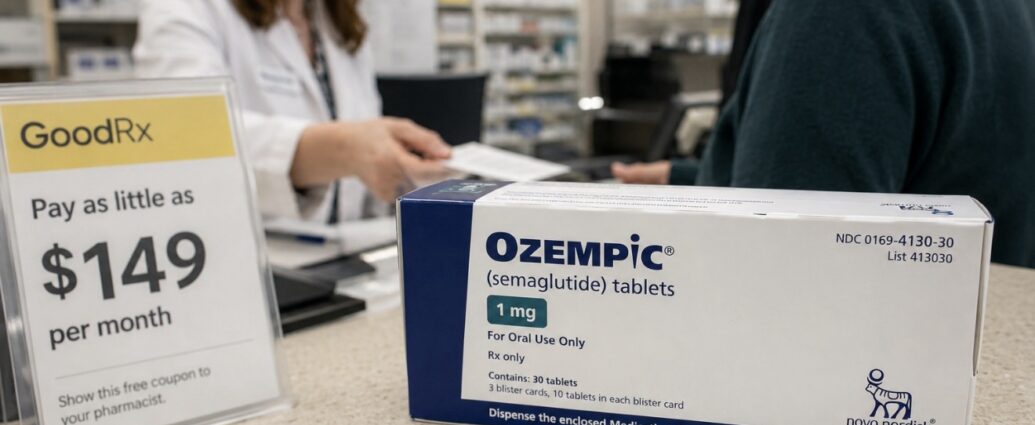
The companies announced that eligible patients can now access oral semaglutide — the pill version of the blockbuster diabetes drug — for as little as $149 per month through GoodRx’s network of roughly 70,000 pharmacies nationwide, bypassing many of the insurance barriers that have slowed access to GLP-1 medications across the country.
The launch marks a major strategic shift not only for Novo Nordisk, but for the broader pharmaceutical industry, where drugmakers are increasingly experimenting with direct consumer pricing models as public frustration grows over insurance denials, prior authorizations, and the soaring cost of specialty medications.
Under the new pricing structure, the oral Ozempic formulation will be available at three cash-pay tiers: 1.5mg for $149, 4mg for $199, and 9mg for $299 monthly. Some insured patients may qualify for pricing as low as $25 for up to three months, according to the companies.
For consumers, the numbers matter. Traditional injectable Ozempic can cost uninsured patients more than $900 monthly at retail prices before discounts or manufacturer programs. Even discounted self-pay injectable pricing has often ranged between $349 and $499 per month, placing the medication beyond reach for many working Americans without strong prescription coverage.
The oral formulation fundamentally changes that equation.
“This is an important step forward, offering a convenient alternative to the established injectable,” said Wendy Barnes, President and Chief Executive Officer of GoodRx, describing the rollout as part of a broader expansion of the company’s partnership with Novo Nordisk across its semaglutide portfolio.
Ed Cinca, Senior Vice President of Marketing and Patient Solutions at Novo Nordisk, said the collaboration is designed to expand patient access through a transparent pricing structure while giving physicians more flexibility in tailoring treatment options.
The stakes for both companies are enormous.
GLP-1 receptor agonists — the drug class that includes Ozempic, Wegovy, Mounjaro, and Zepbound — have become one of the fastest-growing pharmaceutical markets in modern history. Originally developed for diabetes treatment, the medications have transformed obesity care, cardiovascular risk management, and metabolic disease treatment, fueling tens of billions of dollars in annual drug sales.
According to the Centers for Disease Control and Prevention, approximately 38 million Americans have diabetes, while tens of millions more remain prediabetic. Yet despite strong clinical demand, access has consistently been constrained by cost.
A large claims-based study published in JAMA Network Open found that higher out-of-pocket costs for GLP-1 drugs significantly reduce both treatment initiation and long-term adherence, underscoring how pricing remains one of the largest barriers to widespread adoption.
The timing of the rollout is also highly strategic.
Novo Nordisk has faced mounting competitive pressure from Eli Lilly & Co., whose rival GLP-1 drugs Mounjaro and Zepbound have captured significant market share and delivered record sales growth. Investors and analysts have increasingly focused on whether Novo Nordisk can maintain its leadership position as the market evolves from supply shortages toward broader mass-market adoption.
The oral Ozempic expansion offers Novo Nordisk a new way to differentiate itself.
Unlike injections, oral medications typically face lower psychological barriers among patients hesitant to begin injectable therapies. Healthcare providers have long argued that a lower-cost pill format could dramatically expand the eligible patient pool, particularly among individuals newly diagnosed with diabetes or patients resistant to injections.
For GoodRx, the partnership signals a broader transformation of its own business model.
Long known primarily as a prescription discount and price-comparison platform, the company is increasingly positioning itself as a direct healthcare access infrastructure provider for pharmaceutical manufacturers. Company executives said the new Novo Nordisk collaboration demonstrates how GoodRx can help manufacturers deliver transparent nationwide pricing while directly reaching patients through retail pharmacies.
The platform now serves approximately 25 million consumers annually and more than one million healthcare professionals, giving drugmakers immediate national distribution scale without building separate patient-access systems.
Wall Street has been closely watching whether the GLP-1 market begins shifting away from scarcity-driven pricing toward broader retail competition and transparent self-pay models. Analysts say the GoodRx-Novo Nordisk arrangement could become a template for future pharmaceutical partnerships as manufacturers seek to avoid mounting political scrutiny over drug pricing while simultaneously expanding patient adoption.
The implications extend well beyond diabetes care.
As oral GLP-1 options become more widely available and consumer pricing becomes easier to understand, healthcare economists say the industry may be entering the next phase of the weight-loss and diabetes drug revolution — one where pharmacy access, affordability, and convenience become as important as clinical effectiveness.
For millions of Americans who previously assumed Ozempic remained financially out of reach, the pharmacy conversation may have just changed overnight.
JBizNews Desk
© JBizNews.com. All rights reserved. This article is original reporting by JBizNews Desk. Unauthorized reproduction or redistribution is strictly prohibited.