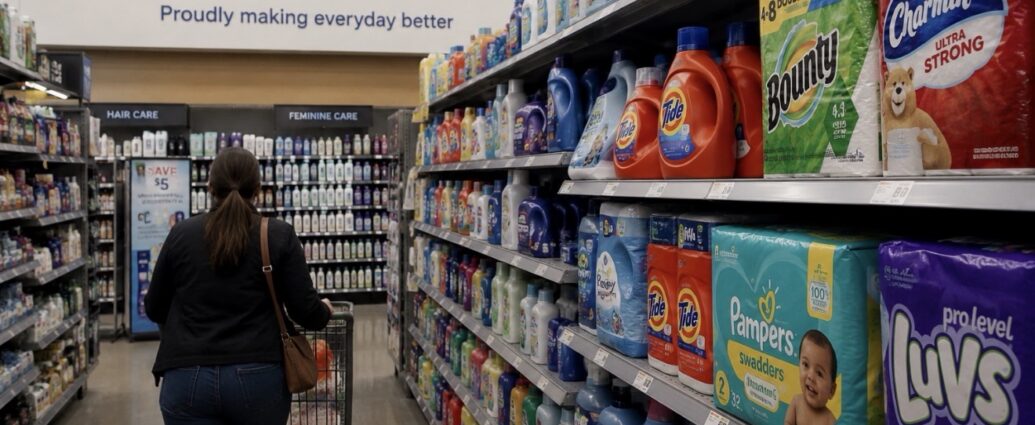
When Procter & Gamble speaks, economists, retailers and investors tend to listen. The maker of everyday brands including Tide, Pampers, Gillette and Charmin reaches millions of households, making its results one of the clearest real-time indicators of how American consumers are managing their budgets.
The company’s latest outlook points to a consumer who is still spending—but spending more carefully.
While Procter & Gamble remains profitable, management projected organic sales growth of just 1% to 3% for the coming fiscal year and warned that higher commodity prices, freight costs and geopolitical uncertainty could reduce earnings by roughly $1 billion. Rather than signaling a collapse in demand, the forecast reflects a shift in consumer behavior that has become increasingly evident across much of the retail economy.
That distinction matters.
Consumers are continuing to purchase essential household products, but they are increasingly trading down, buying larger value-sized packages, waiting for promotions and prioritizing necessities over discretionary purchases. For economists, those behavioral changes often appear before they show up in broader economic data.
The results also reinforce another trend developing across corporate America: margins are once again coming under pressure. Rising transportation costs, higher energy prices and more expensive raw materials are forcing manufacturers to find additional efficiencies while remaining cautious about passing higher prices directly to consumers.
For retailers, suppliers and manufacturers, Procter & Gamble’s guidance offers an early read on demand heading into the second half of the year. Inventory planning, promotional activity and pricing strategies are all likely to become more conservative if other consumer companies report similar trends over the coming weeks.
Viewed alongside recent reports from retailers, restaurants and other consumer-facing businesses, the picture that is emerging is one of resilience rather than weakness. The American consumer has not stopped spending, but households are becoming increasingly disciplined about where every dollar goes—a pattern that could influence everything from holiday inventory decisions to corporate hiring plans.
Why it matters
Because Procter & Gamble sells products that households buy regardless of economic conditions, its results often serve as a leading indicator for broader consumer demand. If spending on everyday essentials begins to slow, businesses across multiple industries—from retailers and transportation companies to manufacturers and advertisers—typically take notice.
What to watch next
The next major test will come from upcoming retail sales data, inflation reports and additional earnings from consumer-focused companies. Together, they will help determine whether Procter & Gamble is describing an isolated slowdown or confirming a broader shift in the U.S. economy as businesses prepare for the important holiday selling season.
JBizNews Desk | Cincinnati
© JBizNews.com All Rights Reserved. Reproduction or distribution without written permission is prohibited.