Prime Minister Benjamin Netanyahu and Defense Minister Israel Katz, before 10:00 a.m. on Monday morning, ordered the IDF to return to heavy attacks on Hezbollah’s Dahiyeh stronghold in Beirut, but at press time, their orders had been delayed by interventions by the US and Iran.
In the morning, they said that the order was given after increased Hezbollah rocket attacks on Israeli civilians throughout the North.
Netanyahu said that he would not allow a situation where Israeli civilians in the North came under fire, but where top Hezbollah officials in Dahiyeh in Beirut retained their immunity from being struck.
Their statement came after top US officials initially seemed to green-light re-striking Beirut as the Iran nuclear talks had dragged longer than US President Donald Trump had wanted, with Washington having held Israel back in Lebanon as a concession to the Islamic Republic, based on the assumption that a deal would have occurred in prior weeks.
Between 10:00 a.m. and 5:00 p.m., there were no other Israeli actions or statements regarding Beirut.
Then, around 5:00 p.m., IDF Arabic Spokesman Col. Avichay Adraee threatened the residents of Dahiyeh that they should evacuate if Hezbollah continued firing on Israel, since this would lead to IDF strikes on the Hezbollah stronghold.
Iran then called to pause all ceasefire talks, and reports surfaced that the Islamic Republic was explicitly threatening to fire on Israel’s North if the IDF would strike Beirut.
For some hours, reports swirled about the US leaning on Israel to delay or not attack Beirut.
IDF officials did not seem to know how to update The Jerusalem Post on the delay or how long it would last.
Then in the evening Trump made a series of confusig statements in a post on Truth Social, including that IDF ground forces would not advance on Beirut (though Israel was threatening only airstrikes so far) and that Hezbollah agreed to a complete ceasefire with Israel.
At press time, it was unclear exactly what Israel and Hezbollah’s positions were compared to Trump’s presentation of them, but still, no attacks on Beirut had taken place.
Until Trump’s announcement, Hezbollah had continued periodic drone and rocket fire on Israel throughout the day, including after Adraee’s warnings.
Even shortly after Trump’s announcement, the IDF sent out initial warnings of additional rocket launches by Hezbollah toward Israel.
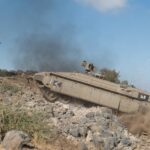
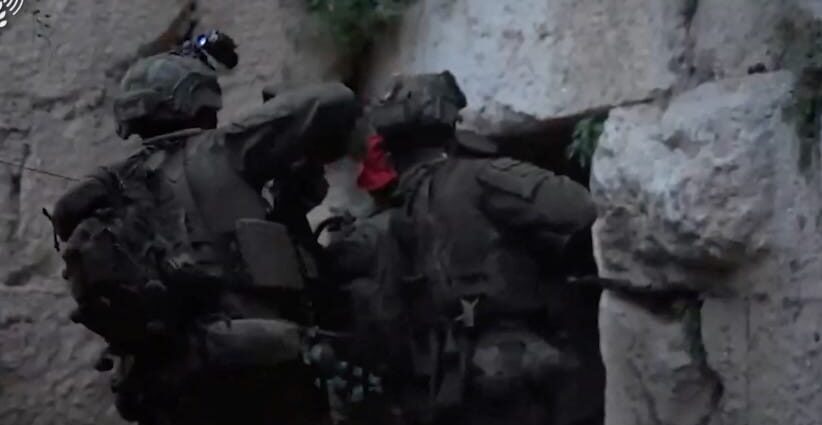
Meanwhile, the IDF announced on Sunday morning that its ground troops had taken over the Beaufort Ridge outpost and Wadi al-Saluki areas beyond the Litani River, but despite those moves, Hezbollah managed to shower the North with drones and reportedly over 50 rockets throughout the day.
On May 26, in response to ongoing Hezbollah drone attacks, which have harmed an increasing number of IDF soldiers, Israel confirmed that the military had invaded deeper into Lebanon beyond the April 17 ceasefire yellow line and the Litani.
Ahead of the troops’ advance, the air force, artillery, and tanks conducted extensive support strikes against Hezbollah infrastructure in the area to reduce resistance.
Further, the IDF added that it was operating near Nabatiya, another significant Hezbollah stronghold in southern Lebanon, and is prepared to expand its operations there as well.
Nabatiya would be the farthest that IDF ground forces have advanced, around 20 kilometers from the Israeli border, whereas as of the April 17 ceasefire, the IDF was set at around 10 kilometers from the border.
Nahariya, Acre, Tel Dan, Beit Hillel, Kiryat Shmona, Safed, Maalot, and a wide range of other Galilee areas were either struck or had repeated sirens from Hezbollah rockets and drones fired toward them on Sunday.
Many of those same villages, as well as Karmiel, were also under attack by Hezbollah on Saturday.
Multiple additional IDF soldiers have been killed in recent days by the ongoing drone attacks, sending the total IDF casualties from Hezbollah drones post-ceasefire into double digits and closing in on 20.
There were no reports of civilian casualties for much of Sunday, with an increasing number of civilians self-evacuating those areas (especially with schools suspending classes recently), but both Tel Dan and Beit Hillel had reports of firefighters battling large fires, and there were reports in the late evening of four injured at Beit Hillel.
Although for about a week after the April 17 ceasefire, Israel and Hezbollah both significantly reduced hostilities, around a week later, both sides started gradually escalating.
The IDF wanted to escalate to put more pressure on Hezbollah to agree to disarm. Hezbollah wanted to escalate because they viewed continued IDF operations against its forces in parts of southern Lebanon, which the IDF had taken control over, as a violation of the ceasefire.
Initially, Hezbollah struck back on a limited basis, mostly against IDF soldiers in southern Lebanon.
However, as Hezbollah FPV drones started to injure more IDF soldiers, this both encouraged Hezbollah to launch more such drones and pressed the IDF to launch more aggressive attacks on Hezbollah to try to get the Lebanese terror group to back down from the drone attacks.
When neither side backed down, the IDF started to invade Lebanon beyond the Litani, including large-scale air strikes in Tyre and the Bekaa Valley, and even one time in Beirut, and Hezbollah started to fire more rockets and drones at Israeli civilian villages.