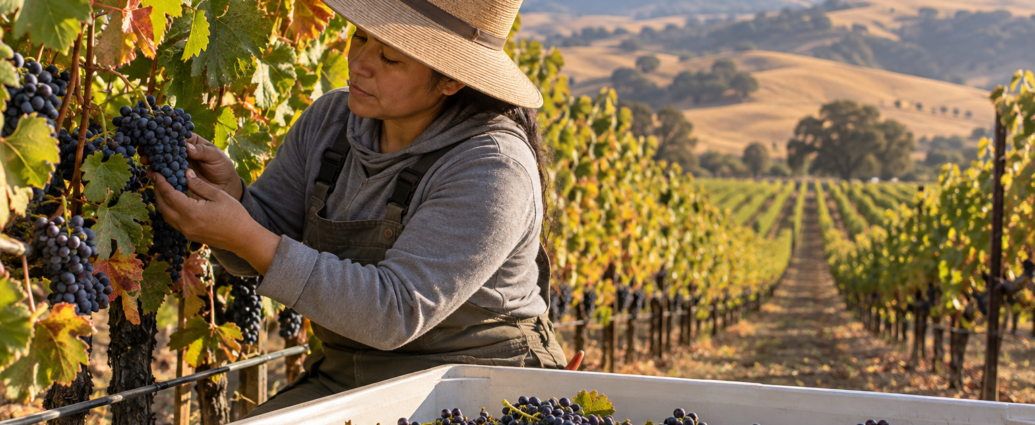
California’s grape vines produced far fewer grapes than normal this year, and for an industry drowning in unsold wine, that is a relief. Strange spring weather cut the crop across the state just as winemakers and growers were desperate for supply to shrink and finally catch up with falling demand.
The trouble started early. A record-breaking heat wave in March woke the vines up weeks ahead of schedule. Then cold, rainy and windy weather rolled in right when the vines were flowering, the short window when grapes are pollinated. Poor pollination means fewer grapes on each bunch, and smaller ones. California produces about 4 out of every 5 bottles of wine made in the United States, so a short crop there is a short crop for the country.
Some growers are seeing big drops. Elias Fernandez, who has made wine at Shafer Vineyards in Napa for 42 years, said yields there could be down 30% to 50% from last year. Shafer began picking Chardonnay on Aug. 25, almost a month earlier than last year. In Mendocino County, Bonterra Organic Estates started its harvest on July 22, nearly two weeks earlier than in 2025.
On its own, that would be bad news. But California’s wine business has a bigger problem: too many grapes and not enough people buying wine.
Wine sales have fallen more than 20% over the past five years, or about 1 out of every 5 bottles that used to be sold. During the pandemic, winemakers expanded production expecting demand to keep growing. It did not. The result was warehouses full of unsold wine and growers who could not find buyers for their fruit.
The squeeze has been brutal for farmers. California had nearly 600,000 acres of vineyards at its pandemic peak, and growers have since pulled out or stopped farming about 1 in 4 of those acres, according to Jeff Bitter, president of Allied Grape Growers, which represents about 500 farmers. This year, about half of California’s wine grapes went into harvest season without a buyer lined up. In a normal year, 7 or 8 out of every 10 tons are already under contract. Some growers have been forced to choose between harvesting at a loss, leaving grapes to rot on the vine or ripping out vineyards their families farmed for generations.
That is why a weak harvest helps. Fewer grapes means less new wine added to a market that already has too much. Adam Beak, head of beverage at BMO Commercial Bank, said that over the long run, a light harvest or two would be highly beneficial because it would help bring grape and bulk wine supply back in line with demand.
This is the second small crop in a row. Last year’s California grape crush was expected to be the smallest in at least 25 years, coming in well under 2.5 million tons. That compares with 2.9 million tons in 2024 and an average of about 4 million tons a year in the mid-2010s, meaning the state’s grape crop has shrunk by nearly 40% from those levels.
The fix for the glut is already underway on two fronts. Nature is cutting supply through short harvests, and growers are cutting it themselves by tearing out vines. Many are replacing grapes with crops in stronger demand, such as almonds, walnuts, pistachios and olives. Industry analysts say that combination sets the stage for a more balanced grape market, though they expect any price recovery for growers to be slow.
The quality of this year’s smaller crop also looks strong. Smaller grapes pack more flavor, and winemakers across the state are reporting intense, concentrated fruit. Jason Haas, general manager at Tablas Creek Vineyard in Paso Robles, said that while growers would have liked more quantity, the quality looks impeccable.
For shoppers, the years of oversupply have meant plenty of discounts on store shelves. A tighter supply of grapes could slowly take some of those bargains away, but with warehouses still holding extra wine and demand still soft, any change in what Americans pay for a bottle is likely to come gradually rather than overnight.
JBizNews Desk | Napa, Calif.
© JBizNews.com All Rights Reserved. Reproduction or distribution without written permission is prohibited.