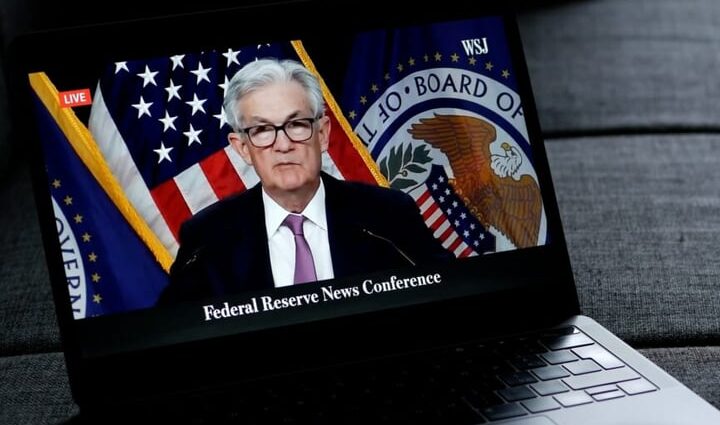
Federal Reserve Chair Jerome Powell on Wednesday warned that the escalating Middle East conflict will push U.S. inflation higher in the near term — but ruled out stagflation and described the U.S. economy as resilient.
Powell’s remarks came after the Federal Open Market Committee held the federal funds rate unchanged at 3.50%–3.75% for the third consecutive meeting, as widely expected.
Middle East Crisis Front And Center
“The implications of developments in the Middle East for the U.S. economy are uncertain,” Powell said in his opening statement.
“In the near term, higher energy prices will push up overall inflation. It is too soon to know the scope and duration of the potential effects on the economy.”
He highlighted the traditional central bank approach of “looking through” energy shocks, but conditioned that option on inflation expectations remaining anchored — a threshold he acknowledged is less comfortable given years of above-target inflation.
“The question of looking through, when it does arise, will be one to approach not lightly, but in the context that inflation has been above target,” Powell said.
He also highlighted the U.S.’s position as a net energy exporter, noting that higher oil prices would boost domestic drilling activity and corporate profits — providing some economic offset.
Yet, he cautioned that “the net of the oil shock will still be some downward pressure on spending and employment and upward pressure on inflation.”
Rate Path: Cuts Still In Play, Hike Not Off The Table
The median SEP …