By JBizNews Desk | May 5, 2026
Jerome Powell is stepping down as Federal Reserve Chair in less than two weeks — but he is not stepping away from power.
In a move that is reshaping the balance of influence inside the central bank, Powell confirmed he will remain on the Federal Reserve’s Board of Governors after his chairmanship ends on May 15, ensuring he continues to vote on interest rates and monetary policy decisions through January 2028.
The decision immediately complicates President Donald Trump’s efforts to exert greater control over the Fed, denying the White House an immediate majority on the seven-member board at a time when the administration has been pushing aggressively for lower interest rates.
“My decisions on these matters will continue to be guided entirely by what I believe is in the best interest of the institution and the people we serve,” Powell said at his final press conference as chair.
Most Fed chairs retire when their term ends. Powell is doing the opposite.
A Direct Clash Over Control of the Fed
Powell’s decision lands in the middle of an increasingly public and personal conflict with President Trump, who has repeatedly criticized the Fed for keeping borrowing costs too high.
On Monday, Trump escalated his rhetoric, posting an AI-generated image of Powell being dropped into a dumpster on Truth Social, writing: “‘Too Late’ is a DISASTER for America! Interest Rates too high!”
The remark reflects a broader campaign by the president, who has for months pushed for aggressive rate cuts and publicly blamed Powell for slowing economic momentum.
Powell has not responded in kind, but he has made his concerns clear.
“I worry that these attacks are battering the institution,” he said, warning that political pressure risks undermining the Fed’s ability to make decisions based on economic conditions rather than politics. He described the current environment as “unprecedented in our 113-year history.”
By remaining on the board, Powell ensures that the Fed’s leadership transition will not result in an immediate shift in voting control — a dynamic that could shape policy decisions well into 2027.
The Backdrop: Investigations and Pressure
Powell’s decision to stay was also shaped by events inside Washington.
In recent months, the Department of Justice opened a criminal investigation into cost overruns tied to the Federal Reserve’s Washington headquarters renovation — a probe Powell publicly described as a “pretext” tied to disagreements over monetary policy.
He said he would not step down until the matter was resolved.
“My concern is really about the series of illegal attacks on the Fed,” Powell said, adding that they “threaten our ability to conduct monetary policy without considering political factors.”
The DOJ has since dropped the investigation, and Powell said he was “encouraged by recent developments.” But he has made clear he is not leaving yet.
“I had long planned to be retiring,” he said. “The things that have happened in the last few months left me no choice but to stay until I see them through.”
A Divided Fed at a Critical Moment
Powell’s final policy meeting underscored just how fractured the Federal Reserve has become.
The central bank held interest rates steady at 3.50% to 3.75% for a third consecutive meeting, citing heightened uncertainty tied to the Middle East conflict and rising energy prices.
But the decision revealed deep internal divisions.
The meeting produced four dissents — the highest level since 1992. Stephen Miran, a Trump appointee, voted for an immediate rate cut, while three other officials dissented in the opposite direction, opposing language suggesting cuts could be coming at all.
The result is a Federal Open Market Committee being pulled in multiple directions simultaneously — between concerns about persistent inflation and growing pressure to support economic growth.
That tension is expected to intensify under new leadership.
Powell’s Record: Crisis Response and Inflation Fallout
Powell’s eight-year tenure will likely be defined by two sharply contrasting chapters.
In 2020, as the pandemic triggered a global economic shutdown, Powell moved aggressively — cutting rates to near zero and launching emergency lending programs that stabilized financial markets and helped prevent a deeper recession. The response was widely viewed by economists as decisive and effective.
But the Fed’s handling of inflation in 2021 proved more controversial.
Powell and other officials initially characterized rising prices as “transitory,” a view that did not hold. Inflation peaked at 9.1% in June 2022, forcing the Fed into one of the fastest rate-hiking cycles in modern history.
Borrowing costs surged across the economy, contributing to a slowdown in housing, tighter credit conditions, and increased pressure on consumers and small businesses.
Inflation has since eased closer to the Fed’s 2% target, but recent increases in energy prices tied to the Iran conflict have raised concerns that progress could stall.
“Energy shocks complicate the Fed’s job significantly,” said Diane Swonk, Chief Economist at KPMG, noting that geopolitical risks can quickly feed back into inflation expectations.
What Comes Next
Kevin Warsh, Trump’s nominee to succeed Powell, is expected to face a full Senate confirmation vote the week of May 11, putting him on track to take over before Powell’s term expires and to chair the Fed’s next policy meeting in June.
Powell has signaled he will not interfere.
“There’s only ever one chair of the Federal Reserve Board,” he said. “When Kevin Warsh is confirmed and sworn in, he will be that chair.”
But Powell’s continued presence means Warsh will inherit a central bank where his predecessor still holds a vote, where the board is not fully aligned with the administration’s policy preferences, and where internal divisions are already pronounced.
For markets — and for American households — the implications are significant. Interest rate decisions made in the months ahead will directly affect mortgage rates, credit costs, business investment, and consumer spending at a time when economic conditions remain uncertain.
The Final Signal
Powell’s legacy will ultimately be debated — from his pandemic response to the inflation surge that followed. But his final decision may prove just as consequential as any policy move.
By choosing to stay, Powell is not just extending his tenure. He is reinforcing a message about the independence of the Federal Reserve — at a moment when that independence is being openly tested.
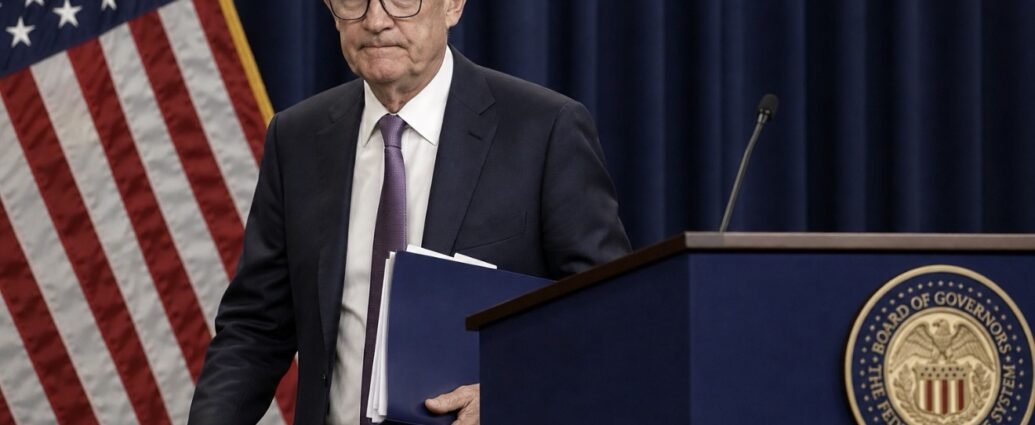
As he stepped away from the podium at his final press conference as chair, Powell offered a brief closing line: “I won’t see you next time.”
He won’t be chair.
But he will still be there.
© JBizNews.com. All rights reserved. This article is original reporting by JBizNews Desk. Unauthorized reproduction or redistribution is strictly prohibited.