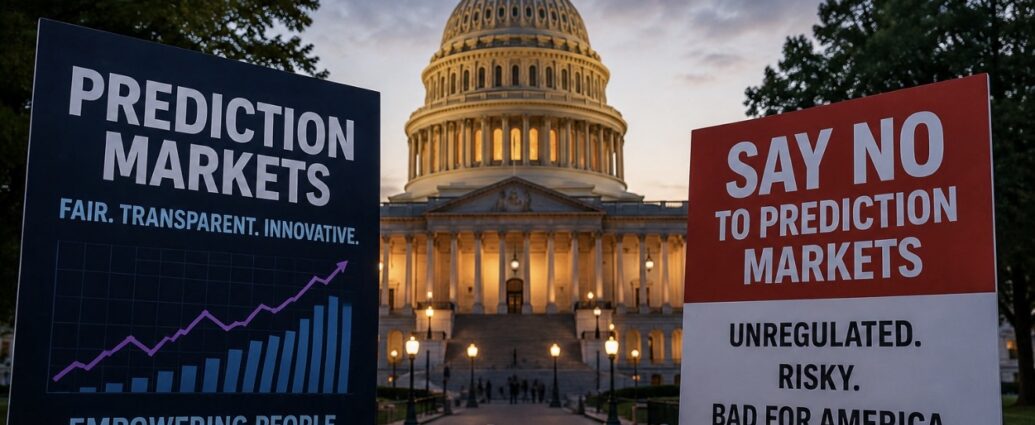
Kalshi, the largest prediction market operator in the United States, poured $990,000 into direct federal lobbying during the first six months of 2026 — and close to $1.8 million once the outside firms it retained are counted, according to newly filed disclosures reviewed this week. The figure already tops the roughly $1 million the company spent across all of 2025 and stands as its heaviest six-month push since it first registered to lobby in July of last year.
The spending surge reflects a widening fight in Washington over who gets to regulate an industry that now handles billions of dollars in weekly trades. From April through June alone, Kalshi reported $500,000 in federal lobbying on “matters affecting prediction markets” — its largest single-quarter outlay on record. The company also brought on a team at FTP, the firm previously known as Forbes Tate Partners, to work on legislation governing how the platforms are overseen.
The opposition is spending just as aggressively. The American Gaming Association, which represents casinos and traditional sportsbooks, laid out roughly $1.39 million in direct lobbying so far this year, climbing toward $1.8 million with outside firms — about 30 percent above its pace in the first half of 2025. The trade group spent $630,000 in the second quarter targeting, among other issues, event contracts tied to sports. The Cherokee Nation, which runs casino and gaming operations, added another $600,000 over the same six-month stretch.
Polymarket, Kalshi’s chief rival, is running a leaner operation. Its parent company, Blockratize, paid $90,000 to Advocus Partners in the second quarter for counsel on digital asset and information-market policy. The platform is nonetheless making a bold return to the American market after a multiyear ban, with federal investigators recently closing their probes into the company.
Sports betting giants have opened a second front. DraftKings reported $350,000 in second-quarter federal lobbying, while FanDuel spent a combined $480,000 between April and June and retained FGS Global to press its case on online wagering. Their central argument is that prediction-market sports contracts amount to sports betting by another name and should face the same state-level rules. The American Gaming Association estimates states have forfeited more than $1.2 billion in tax revenue as the platforms have expanded.
The money is also flowing toward the midterms. Win for America, a super PAC, has raised $70 million from sports betting companies including FanDuel, DraftKings and Fanatics Betting and Gaming — a war chest earmarked for the 2026 election cycle.
Lawmakers, meanwhile, are circling. The Senate unanimously approved a measure in April barring members and their staff from placing bets on prediction markets. The House has not followed suit, though Representative Bryan Steil, the Wisconsin Republican who chairs the House Administration Committee, introduced a bill last month that would extend the prohibition to members’ spouses and dependent children. Representative James Comer, the Kentucky Republican who leads the House Oversight Committee, opened an investigation in May into what he described as unchecked insider trading on the platforms.
Much of the regulatory tug-of-war centers on the Commodity Futures Trading Commission, which has sued New York, Wisconsin, Arizona, Connecticut and Illinois while asserting sole authority over the industry. President Donald Trump weighed in on May 26, posting that it was critically important for the agency to keep exclusive control. Concerns over misuse have sharpened the debate: the Justice Department in April charged an Army soldier with using classified information to win roughly $400,000 betting on the timing of a foreign leader’s capture.
Olivia Chalos, deputy chief legal officer at Polymarket, has argued that a single federal framework serves responsible operators and the customers they handle, noting the platform has made close to 100 referrals to law enforcement over suspicious activity. For now, both sides appear prepared to keep writing checks until Congress decides where the lines fall.
JBizNews Desk | Washington, D.C.
© JBizNews.com All Rights Reserved. Reproduction or distribution without written permission is prohibited.