Imagine starting life with a permanent biological deficit that you won’t discover until decades later. For the 15 million babies (one in 10 births) born each year prematurely, this is the hidden reality of kidney health. Until now, scientists knew that early arrival doubled the lifetime risk of chronic kidney disease, but the underlying biological culprit remained a mystery.
Prematurity is defined as a live birth before 37 weeks of pregnancy. Thanks to improvements in treatment and research in this field, the rate of live premature births has increased dramatically within the past decades. But preemies can suffer from an increased rate of adult diseases, when organs such as the kidney have not developed well in the uterus.
A groundbreaking joint study by researchers at Hadassah-University Medical Center in Jerusalem’s Ein Kerem and at Monash University in Melbourne has finally uncovered the cellular mechanism behind the shortfall – and, crucially, pinpointed the narrow therapeutic window where intervention might protect these vulnerable organs for life. The signs precede the diagnosis by many years.
Dr. Morris Nechama of Hadassah’s pediatric nephrology unit and the Faculty of Medicine of the Hebrew University of Jerusalem led the study, together with Athar Amleh, a doctoral student from the Palestinian Authority carrying out her doctoral research at Hadassah, whose scholarship was funded by the Yad Hanadiv Foundation.
Amleh designed and carried out the experiments and is the first author of the paper. Dr. Oded Volovelsky, director of Hadassah’s pediatric nephrology, and Prof. Alexander Combes of the Monash Biomedicine Discovery Institute in Melbourne, Australia worked with them.
The new study just published in iScience, under the title “Preterm birth disrupts nephron progenitor cell dynamics predisposing to renal disease,” provides the authoritative answer of why the kidneys of premature babies remain vulnerable for life.
Using an advanced mouse model, the research team has identified the exact cellular disruption caused by premature birth that limits the development of kidney filtration units – opening up a specific, limited period during which action must be taken for future preventative treatments.
A healthy human relies on roughly one million microscopic filtration units built entirely before or around birth, which never regenerate. The study reveals for the first time how premature birth short-circuits this delicate developmental window, leaving millions of adults going through life with a lower kidney reserve that they never knew they were missing.
The cellular mechanism leaves the kidney with too few filtration units and the short window of time in which intervention may be possible. The findings could make possible a technique to protect the kidneys of babies born prematurely, the researchers said.
“We have known for years that children born prematurely reach adulthood with more vulnerable kidneys, but we didn’t know exactly what went wrong and when. Here, we saw it happen in real time: nephron progenitor cells enter distress within the first hours after birth, and their timing is disrupted. They try to compensate later, but the window has already closed,” Nechama said:
Health effects from premature birth
In an American study of 15-year-olds who had been born prematurely, about half already had high blood pressure, protein in the urine, or smaller-than-normal kidneys. Thus, many people go through life with kidneys that started out with less reserve, without knowing it, until something begins to go wrong.
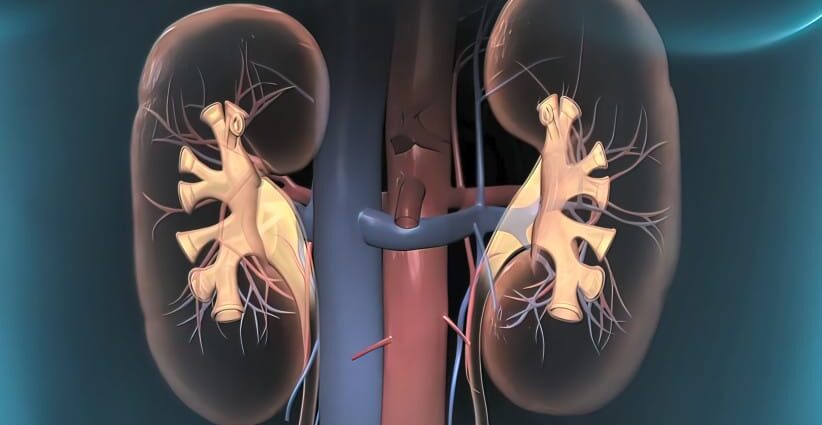
A healthy kidney consists of about a million tiny filtration units called nephrons in each normal human kidney. The creation of human nephrons ends by the 35th week of gestation, but this number varies greatly between different individuals. They don’t regenerate after birth. Some babies are born with more and some with fewer, Volovelsky explained in an interview with The Jerusalem Post; a person born with fewer nephrons carries a smaller kidney reserve throughout life.
Preterm birth is increasingly recognized not merely as an acute neonatal event but as a lifelong determinant of renal health. But the cellular and molecular mechanisms driving this developmental programming have remained elusive, often confounded in clinical settings by two or more medical conditions that occur at the same time in a person – such as sepsis, medications that harm the kidneys, or having received steroids after birth.
The human nephron, the basic functional unit of the kidney, is a structure that produces urine in the process of removing waste and excess substances from the blood. At present, little can be done clinically to increase the number of nephrons.
Epidemiological studies have already shown that children and adults born prematurely suffer more often from high blood pressure, protein in the urine, and reduced kidney function. Until now, it was not clear why.
“Our research, using a mouse model of premature birth, provides the answer. The researchers examined the progenitor cells that give rise to nephrons and found that the sudden, early transition from the womb to the outside world disrupts the delicate timing of their development and maturation. The cells enter a state of stress and lose the opportunity for repair. We believe the findings are relevant to human babies as well,” Volovelsky added.
“Immediately after premature birth, the progenitor cells enter a state of cellular stress, triggering an emergency molecular response known as the unfolded protein response. At the same time, the genes responsible for differentiation into mature nephrons are suppressed. In other words, the cells focus on survival instead of building.”
A day later, they try to compensate for the delay with a faster wave of division and differentiation, but the compensation comes too late.
“One surprising finding of our study is that in the preterm animals, the period of nephron building lasts about 24 hours longer than usual, yet this extension does not fill the gap. The result is a permanent nephron deficit, clearly measured about a month after birth and already accompanied by signs of declining kidney function,” Volovelsky noted.
In a later examination, at an age equivalent to adulthood, the kidneys of these mice showed signs of chronic damage: the glomeruli (filtration bodies) had enlarged to compensate for their small number, protein appeared in the urine, and markers of kidney tubular damage accumulated. In other words, damage caused in the first days of life keeps unfolding for decades.
“We accompany children born prematurely in the clinic and see the result years later, sometimes only in adolescence. This study indicates that the first few days after birth are not only a period of survival but also a period in which the kidney’s reserve for life is set. It’s a perspective that can change what we monitor and how we monitor these children. Preemies should be monitored for kidney disease as they get older.”
An additional finding is a difference between the genders. “The impairment in nephron number and kidney function was significant in males but not in females, consistent with previous evidence that male fetuses are more susceptible to adverse perinatal conditions, and it may help in assessing risk in the future,” the pediatric nephrologist stated.
Identifying the stress response in progenitor cells as the point of failure suggests a possible intervention window in the first few days after premature birth. If this stress response can be curbed in time, it may be possible to preserve some of the nephrons that are lost today.
The researchers emphasize that this is an early stage; the study identifies the mechanism and the timing, but a treatment that prevents the damage has not yet been tested, and that is the goal of their next study.
Nechama and Volovelsky said their research could eventually revolutionize the care of kidney disease. The notion that nephron numbers can be restored with timely intervention in experimental models gives hope to the important struggle to find a cure for kidney diseases.
The study grew out of an Israeli-Australian collaboration supported by AUSiMED, an Australian charity that promotes joint medical research between the two countries.
The collaboration continued without interruption throughout the war, with the lab work in Jerusalem and the bioinformatic analysis in Melbourne advancing in parallel, in daily coordination across the time difference and the security situation. For the teams, it was also proof that international medical research can keep working under the most difficult conditions, they said.