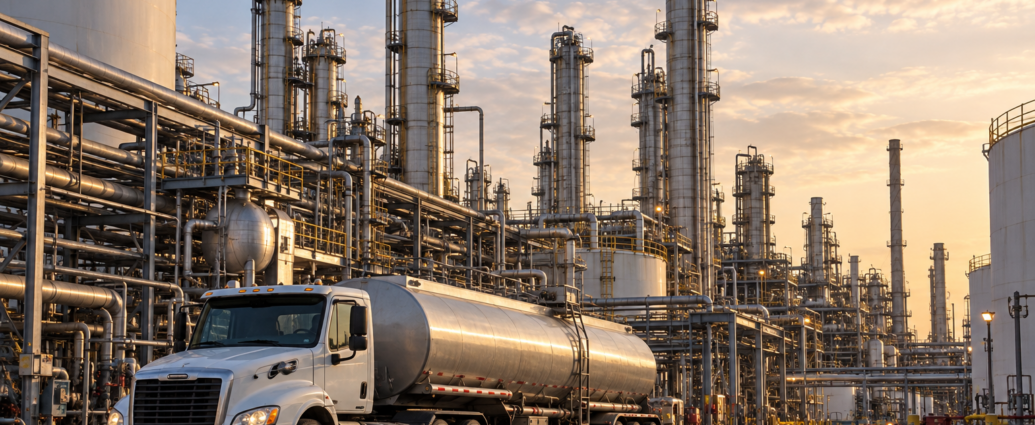
Americans are paying more at the pump than the price of crude oil alone would explain, because the world has lost a big chunk of the refineries that turn oil into gasoline, diesel and jet fuel. That is the finding of an October 8 report from the Federal Reserve Bank of Dallas, which warns the extra cost will likely stick around even after oil tankers move freely through the Strait of Hormuz again.
Here is the plain mechanism. Crude oil is the raw material, but nobody puts crude in a car. Refineries have to process it into fuel first. When there are not enough working refineries, fuel gets scarce even if crude is available, and the price of finished fuel climbs faster than the price of oil. The gap between the two is called the crack spread. In simple terms, it is the markup the market pays for turning a barrel of oil into usable fuel.
That gap is now unusually wide. Dallas Fed economists Jesse Thompson and Garrett Golding wrote that the difference between oil prices and wholesale prices for diesel, gasoline and jet fuel has grown well beyond normal, topping levels last reached in 2022 after Russia invaded Ukraine.
The cause is a loss of refining muscle around the world. Middle East refinery outages, shipping limits, damaged Russian refineries and cutbacks in Chinese refining have taken as much as 6 million to 8 million barrels a day of refining capacity out of use since late spring, up to 10% of the world’s total. That is like shutting down 1 out of every 10 refineries on the planet.
The economists were clear on who is not to blame. They said the high prices reflect real supply shortages in the global fuel market, not gas stations or distributors padding their markups.
For drivers, the numbers are already showing up. The national average for regular gasoline was $4.36 a gallon on October 8, a record for this time of year, according to AAA. A year earlier, it was about $3.11. For truckers, farmers and anyone whose business runs on diesel, the squeeze is worse. The Dallas Fed noted that retail diesel prices have never run this far above gasoline prices before, and diesel feeds directly into the cost of shipping groceries and goods.
The world was short on refineries even before this year’s shocks. Global fuel use grew by 4 million barrels a day between 2019 and 2025, while refining capacity grew by only 2.3 million barrels a day. Put simply, demand grew almost twice as fast as the ability to make fuel. Europe and North America closed 2.1 million barrels a day of capacity over that stretch, as older plants shut down because of thin profits, regulatory costs and aging equipment. In the U.S., about half of that loss was made up by converting plants to renewable diesel and by new Gulf Coast equipment built to process light shale oil.
Washington’s main emergency cushion is running low. The Strategic Petroleum Reserve held 284 million barrels in September, its lowest level since 1982. At the current draw of 1.2 million barrels a day, it could last less than six months before hitting the 80 million barrels officials consider the minimum needed to keep it working. Some private analysts think the real floor is closer to 200 million barrels, which would leave far less time.
The U.S. has stepped up to fill some of the gap. American crude exports rose from 4 million barrels a day in February to an average of 5.2 million in May, helped in part by reserve releases, and U.S. exports of refined fuels also climbed. European buyers have increasingly turned to American refiners for diesel. But the economists warned these are stopgaps that cannot be kept up indefinitely if shipping through Hormuz stays restricted.
Inventories at home are thin as a result. U.S. stockpiles of crude oil and refined fuels are at multiyear lows, which leaves less room to absorb the next surprise.
The longer-term relief depends on repairing damaged plants. Middle East refineries hit during the conflict could take months to recover, and Russian outages may continue, which is why the Dallas Fed expects fuel to stay expensive relative to crude even after oil flows return to normal. Until that capacity comes back, the report warns, consumers will increasingly be forced to adjust through using less fuel, sharper price swings and possibly higher prices.
That also matters for inflation. The economists said headline inflation could stay above where oil prices alone would suggest for as long as a large share of the world’s refining capacity remains offline, which makes the Fed’s job of bringing prices down harder.
JBizNews Desk | Dallas
© JBizNews.com All Rights Reserved. Reproduction or distribution without written permission is prohibited.