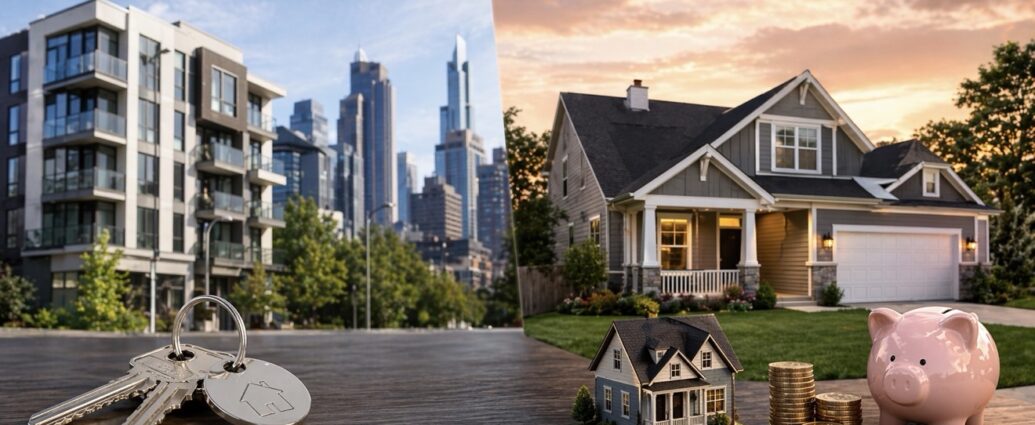
Renting now costs less than buying a starter home in all 50 of the largest U.S. metropolitan areas, a striking sign that elevated mortgage rates and still-high home prices continue to shut out many first-time buyers. In a report released April 16, Realtor.com said “a person moving into the typical rental spends less each month than someone buying a starter home today,” with chief economist Danielle Hale adding in the company’s statement that “renters who are intentional about saving have a real opportunity to build toward a down payment faster than they might think.”
The affordability gap reflects a housing market that remains badly skewed against entry-level ownership even after some moderation in home-price growth. According to Realtor.com, renters save an average of $920 a month compared with the monthly cost of purchasing a starter home, a figure Danielle Hale said could materially accelerate down-payment savings. Separate reporting from Reuters and Associated Press has consistently tied weak affordability to mortgage rates that remain far above pandemic-era lows, with Freddie Mac saying in its weekly survey that borrowing costs near 30-year highs in recent years have “continued to impact buyer demand.”
That pressure shows up most clearly in the monthly payment math. Data published by Mortgage Bankers Association and cited in its regular housing updates indicate financing costs remain the biggest obstacle for would-be buyers, with chief economist Mike Fratantoni saying in prior market commentary that “purchase application activity continues to be constrained by affordability challenges.” While home listings have improved in some markets, National Association of Realtors chief economist Lawrence Yun has repeatedly said in public remarks that “housing affordability remains a major challenge,” especially for younger households trying to enter the market.
The gap between renting and buying also underscores how the economics of housing have shifted since the run-up in prices during the pandemic. In recent releases, S&P Dow Jones Indices managing director Brian D. Luke said home prices have remained “well above” pre-pandemic levels even as annual gains cooled, a dynamic that keeps ownership costs elevated despite modest market normalization. Reporting from CNBC and Bloomberg on recent housing data similarly noted that buyers face a combination of high prices, limited affordable inventory and financing costs that leave renting the cheaper near-term option in much of the country.
For households determined to buy, the report points to a practical, if frustrating, conclusion: renting may now function as the financial bridge to ownership rather than a detour from it. Danielle Hale said in Realtor.com’s release that the monthly savings from renting “can be earmarked for a down payment when they are ready to purchase,” particularly in markets where the spread between rental and ownership costs is widest. Economists at Zillow have made a similar point in market commentary, with senior economist Orphe Divounguy saying in prior analyses that affordability constraints increasingly force buyers to spend more time saving before entering the market.
The broader economic backdrop offers only limited relief. Officials at the Federal Reserve have said policy decisions remain driven by inflation and labor-market conditions, not housing alone, leaving mortgage rates vulnerable to shifts in bond yields even if the central bank eventually eases. Jerome Powell, chair of the Federal Reserve, has said in public remarks that the housing sector has faced “longer-term shortages” and that rate-sensitive parts of the economy continue to feel the effects of tighter monetary policy. Reporting from Reuters on Fed deliberations has emphasized that any decline in mortgage rates could prove gradual rather than dramatic, limiting the chance of a sudden affordability reset.
That matters not only for consumers but also for builders, landlords and lenders trying to gauge demand. National Association of Home Builders chairman Carl Harris said in one recent industry statement that builders continue to face “elevated financing and construction costs,” even as they try to add more entry-level supply. At the same time, apartment operators benefit when would-be buyers remain renters for longer, a trend RealPage and other housing-data firms have said supports leasing demand in many markets, even if rent growth itself has cooled from earlier peaks.
The report does not suggest Americans have given up on ownership; rather, it highlights how long the path to a first purchase has become. Surveys from Fannie Mae have shown consumers still view homeownership positively over the long term, even as many say it is a bad time to buy. In its monthly sentiment releases, Fannie Mae has repeatedly said affordability remains the dominant concern, with many respondents citing high home prices and mortgage rates as the main barriers.
What comes next hinges on three variables: mortgage rates, starter-home supply and wage growth. If rates ease meaningfully or more lower-priced inventory reaches the market, the rent-versus-buy gap could narrow. Until then, Realtor.com’s finding that renting costs less in every major metro offers a blunt message for executives, lenders and policymakers alike: the U.S. housing market still lacks a workable on-ramp for first-time buyers, and that imbalance will keep shaping consumer spending, household formation and residential investment through the rest of the year.
JBizNews Desk