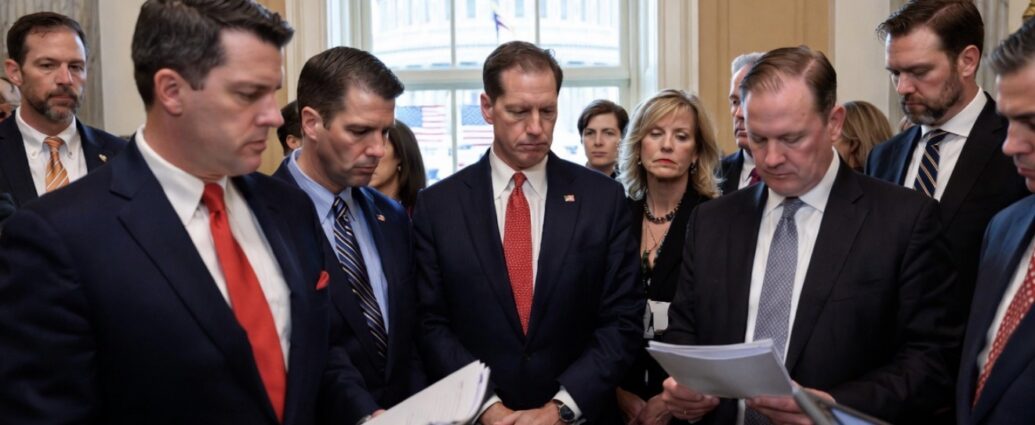
On Thursday, Sen. Roger Wicker of Mississippi, the top Republican on the Senate Armed Services Committee and a longtime ally of President Donald Trump, broke ranks to criticize the administration’s agreement with Iran, warning that its proposed $300 billion reconstruction fund would dwarf the economic relief provided under the 2015 nuclear deal and could hand Tehran an unprecedented financial windfall.
Wicker said the planned rebuilding package, even if no American taxpayer money is directly involved, would make the benefits Iran received under former President Barack Obama’s Joint Comprehensive Plan of Action (JCPOA) “look like a pittance by comparison.” The criticism immediately exposed growing unease among Republicans who supported a hard line against Iran but are now questioning the economic terms emerging from the ceasefire framework.
The fact that a three-decade Republican senator with deep national-security credentials would voice those concerns publicly underscored how divided parts of the party have become. Other Republicans quickly joined in. Sen. Bill Cassidy of Louisiana called the agreement “the worst foreign policy blunder in decades,” arguing Iran’s nuclear ambitions remain intact. Sen. Thom Tillis of North Carolina pointed to the war’s cost, citing lost aircraft, 13 American deaths, hundreds of injuries, and roughly $100 billion spent since the opening strikes, saying the agreement’s reported 14-point framework did not justify the sacrifice. Sen. Joni Ernst of Iowa warned against repeating the mistakes of the previous nuclear accord, saying, “I don’t want to see JCPOA 2.0.”
At the center of the fight is a simple question: what exactly is the $300 billion fund, and who ultimately pays for it?
The memorandum signed Wednesday by President Trump and Iranian President Masoud Pezeshkian commits the United States to work with regional partners on establishing a reconstruction mechanism worth at least $300 billion to help rebuild Iran following months of war. The final structure is expected to be negotiated during a 60-day implementation period. Iran had initially sought approximately $400 billion in war damages, a demand Washington rejected.
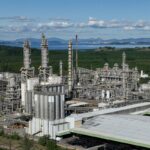
According to sources familiar with the negotiations, more than half of the proposed funding has already been privately committed, with contributions expected to come primarily from regional governments, sovereign wealth funds, private investors, and development partners rather than direct U.S. appropriations. The money would flow through a proposed Reconstruction and Development Fund aimed at restoring critical infrastructure damaged during the conflict, including airports, energy facilities, refineries, transportation networks, and major industrial sites such as the Mobarakeh Steel Complex, one of Iran’s largest manufacturing assets.
The White House has aggressively pushed back against claims that American taxpayers will finance the effort.
Speaking at the G7 Summit in France, Trump said the United States would not contribute money to the fund and dismissed reports suggesting Washington had pressured Gulf nations into participating. He later reiterated on Truth Social that reports claiming America was paying Iran were “Fake News.”
Vice President JD Vance echoed that message, stating that the agreement does not provide Iran “a single dime of American money.” Vance indicated that any future contributions would likely come from Gulf states and international investors and would be contingent on Iran meeting its obligations under the agreement, including dismantling portions of its nuclear infrastructure and complying with inspection requirements.
Administration officials also emphasized that the reconstruction fund is separate from ongoing discussions involving sanctions relief and the potential release of frozen Iranian assets held abroad.
That distinction has done little to calm critics.
The scale of the proposed package is what continues to draw attention. Under the 2015 nuclear agreement, roughly $55 billion in frozen Iranian assets became accessible following implementation of the deal. Even before accounting for possible sanctions relief under the new framework, the proposed $300 billion reconstruction fund represents a figure more than five times larger, explaining why many Republicans view it as a dramatic expansion of economic concessions.
Supporters of the agreement argue that the comparison is incomplete.
They point out that much of the proposed funding would be directed toward rebuilding infrastructure destroyed during the conflict rather than flowing directly into government accounts. They also argue that restoring economic stability inside Iran reduces incentives for future military escalation and lowers the likelihood of renewed disruption to global energy markets.
That economic argument is increasingly becoming the administration’s strongest defense.
Beyond the political fight, the most immediate impact of the agreement is being felt in the oil market.
The Strait of Hormuz, which Iran effectively closed during the conflict, normally handles roughly 20% of the world’s seaborne oil shipments. The prospect of its reopening has already begun easing supply fears that pushed energy prices sharply higher throughout the war.
On Thursday, West Texas Intermediate crude fell approximately 1.25% to $75.83 per barrel, while Brent crude declined roughly 1.4% to $78.41, as traders concluded the agreement reduces the risk of a prolonged disruption to global energy supplies.
The International Energy Agency (IEA) has warned that global oil markets could swing into a substantial surplus by 2027 if production normalizes and shipping through Hormuz fully resumes. IEA Executive Director Fatih Birol has publicly urged the waterway’s reopening “without conditions,” arguing that restoring confidence in global energy markets is essential to stabilizing prices.
For American households, cheaper oil may ultimately become the agreement’s most tangible benefit.
Falling crude prices have already helped push the national average gasoline price below $4 per gallon for the first time since late March, according to AAA, marking three consecutive weeks of declines. Lower energy costs filter through the broader economy, reducing pressure on transportation, manufacturing, shipping, food prices, and inflation.
That matters at a time when many families remain squeezed by elevated housing, grocery, insurance, and travel costs.
The administration is urging critics to focus on those economic benefits.
Vance described the preliminary framework as a “win-win” for the United States and argued that reopening energy markets, reducing inflation pressures, and avoiding another prolonged Middle East conflict would benefit American consumers. Trump has simultaneously sought to reassure hawks by warning that the United States would strike Iran again if Tehran violates the agreement.
Still, skepticism remains widespread.
Several Republican senators have complained they have not received a comprehensive classified briefing on the agreement and say Congress has been left to debate major provisions publicly while negotiators continue working through implementation details. With a 60-day negotiation period now underway, lawmakers are expected to scrutinize every aspect of the fund, sanctions policy, nuclear commitments, and enforcement mechanisms.
The size of the reconstruction package, the timing of sanctions relief, and the durability of the ceasefire will ultimately determine both Iran’s economic recovery and the financial impact on the global economy. For now, the agreement is holding, oil prices are moving lower, gasoline prices are easing, and the loudest criticism is coming not from Democrats but from within President Trump’s own party.
JBizNews Desk | New York & Washington
© 2026 JBizNews.com. All Rights Reserved. Reproduction, redistribution, republication, or retransmission of this content, in whole or in part, without prior written permission from JBizNews.com is strictly prohibited.