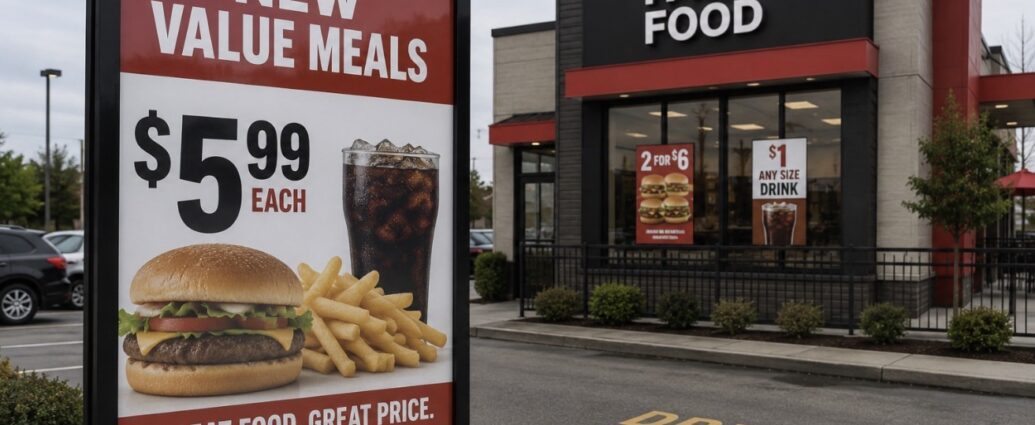
NEW YORK — America’s largest restaurant chains are expanding discounts, value meals and limited-time promotions as consumers remain cautious about discretionary spending despite easing inflation. Company earnings and recent industry data released this week show value offerings continue driving customer traffic, even as higher labor, food and operating costs pressure restaurant margins.
Major quick-service and casual dining chains have increasingly focused on lower-priced meal bundles, loyalty rewards and digital promotions to attract customers who are eating out less frequently or trading down from higher-priced menu items. Restaurant executives say consumers remain willing to spend but are becoming more selective about where and how often they dine.
The shift reflects broader changes in household spending patterns. While inflation has moderated from recent highs, many families continue facing elevated housing, insurance and utility costs, leaving less room in monthly budgets for discretionary purchases such as restaurant meals. Value promotions have become one of the industry’s primary tools for maintaining customer traffic without significantly reducing menu prices across the board.
Industry data indicates restaurant visits have remained relatively stable, but average customer spending has softened as diners choose smaller orders, skip premium add-ons or redeem digital discounts more frequently. Mobile ordering and loyalty programs are playing a growing role in helping restaurant operators target promotions while collecting customer purchasing data.
Food-service companies are also balancing promotional activity against profitability. Aggressive discounting can increase traffic but may compress margins if higher volumes fail to offset lower average transaction values. Operators continue investing in automation, kitchen technology and supply-chain efficiencies to control expenses while preserving competitive pricing.
Suppliers across the food industry are closely monitoring restaurant demand because it influences purchasing of meat, produce, beverages, packaging and transportation services. Continued value-focused marketing could help stabilize volumes even if consumer spending remains restrained during the second half of the year.
Analysts expect restaurant competition to remain intense as operators seek to attract budget-conscious consumers without sacrificing profitability. Upcoming quarterly earnings will provide investors with additional insight into whether traffic gains from value promotions are translating into stronger revenue growth and improved operating margins.
JBizNews Desk | Wall Street
© JBizNews.com All Rights Reserved. Reproduction or distribution without written permission is prohibited.