By JBizNews Desk
May 11, 2026
American retailers are continuing to hire aggressively despite rising fuel costs, weakening consumer sentiment, and mounting warnings from some of the country’s largest consumer-facing companies that household finances are beginning to crack under growing economic pressure.
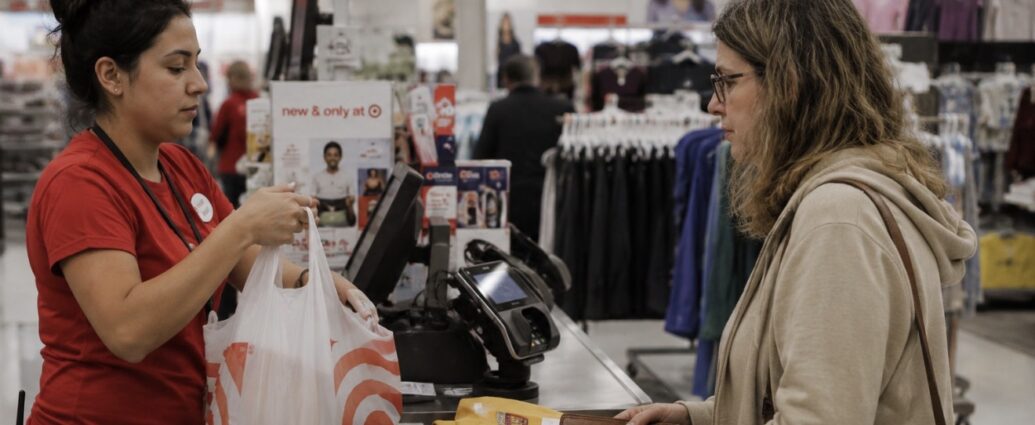
The retail sector added nearly 22,000 jobs in April, accounting for almost one-fifth of total U.S. job growth during the month, according to new data released Friday by the Bureau of Labor Statistics. Total retail employment now stands near 15.5 million workers, the highest level since July 2024.
The hiring surge reflects a consumer economy that, at least on the surface, has remained remarkably resilient despite gasoline prices climbing above $4.54 per gallon nationally, tariff-related price increases on everyday goods, and the economic fallout tied to the ongoing Iran war and the continued disruption of global energy markets.
“This still shows how resilient spending has been, even amid a lot of the uncertainty,” said Cory Stahle, senior economist at job platform Indeed.
But beneath the strong employment numbers, warning signs are rapidly multiplying.
Executives across the restaurant, appliance, and packaged-food industries are increasingly describing a consumer under growing financial strain — particularly lower-income households now confronting higher energy bills, rising debt burdens, and dwindling savings.
Among the clearest warnings came from McDonald’s Chief Executive Officer Chris Kempczinski, who told analysts during the company’s latest earnings call that the consumer environment is “certainly not improving, and it may be getting a little bit worse.”
McDonald’s posted stronger-than-expected quarterly earnings, supported largely by its value-focused McValue platform and discounted menu offerings. But executives acknowledged that financial pressure among lower-income consumers is intensifying.
Chief Financial Officer Ian Borden told analysts that while higher-income households remain relatively stable, spending trends among lower-income consumers continue deteriorating, with rising gasoline prices tied to the Iran conflict becoming an additional burden.
The warning echoed concerns increasingly emerging across the broader retail and consumer economy.
At Whirlpool, executives delivered an even more alarming assessment.
Chief Executive Officer Marc Bitzer told investors that the Iran war amplified consumer fears surrounding the cost of living and triggered a sharp pullback in discretionary big-ticket purchases.
North American appliance demand fell 7.4% during the first quarter, with March alone declining 10% — a slowdown Bitzer compared to conditions seen during the Global Financial Crisis.
“Consumers are holding back on replacing appliances and rather repairing them,” Bitzer said.
Chief Financial Officer Roxanne Warner added bluntly: “The consumer isn’t doing these discretionary, big ticket purchases.”
Whirlpool reported an $82 million quarterly net loss, slashed its full-year guidance by half, suspended its dividend for the first time in nearly 50 years, and said it would prioritize reducing approximately $900 million in debt.
Meanwhile, Kraft Heinz Chief Executive Officer Steve Cahillane delivered perhaps the starkest warning of all.
“Consumers are literally running out of money toward the end of the month,” Cahillane told analysts during the company’s earnings call.
Economic data increasingly supports those concerns.
The U.S. personal savings rate fell to just 3.6% in March, according to the Bureau of Economic Analysis, well below the long-term historical average of approximately 8.4%.
At the same time, Americans are carrying record debt levels.
According to the Federal Reserve Bank of New York, credit card balances reached approximately $1.28 trillion at the end of 2025 — roughly $350 billion above pre-pandemic levels.
Aggregate household delinquency rates climbed to 4.8%, the highest level since 2017, reflecting growing stress among borrowers already grappling with elevated interest rates and rising living costs.
Additional pressure is now arriving from student loans.
Federal student loan collections resumed during 2026 following a five-year pandemic-era pause, with analysts warning that as many as 13 million borrowers could face default by year-end.
Consumer spending patterns are also beginning to shift more visibly.
According to Deloitte, discretionary spending dropped sharply in March before partially recovering in April, though overall spending levels remain below January highs — suggesting the slowdown may not simply be a temporary pullback.
A March survey conducted by YouGov found that 28% of Americans expect their financial situation to worsen during 2026. Among those respondents, roughly two-thirds said they planned to reduce spending on dining out and entertainment.
That trend is already appearing inside corporate earnings.
Shake Shack recently reported weaker-than-expected results tied to declining customer traffic, reinforcing concerns that middle-income consumers may increasingly retreat toward lower-cost dining options and discount retailers if inflation pressures continue intensifying.
Analysts say sit-down restaurants, mid-priced apparel chains, and discretionary retailers remain especially vulnerable if consumers continue prioritizing essentials over optional purchases.
For retailers specifically, the growing concern is timing.
Many companies expanded hiring this spring based on strong spending data from earlier in the year. But if elevated gasoline prices persist and the Iran conflict drags on without resolution, retailers could enter the summer carrying excess staffing levels just as consumers begin pulling back more aggressively.
“We’re seeing some potential growth,” Indeed’s Stahle said. “But the Iran war and a lot of these other things are looming.”
For now, the American consumer continues spending enough to keep retailers hiring.
The question increasingly confronting Wall Street — and corporate America alike — is how much longer that resilience can last before mounting financial pressure finally forces a broader economic slowdown.
— JBizNews Desk
© JBizNews.com. All rights reserved. This article is original reporting by JBizNews Desk. Unauthorized reproduction or redistribution is strictly prohibited.