By JBizNews Desk
Monday , May 4, 2026
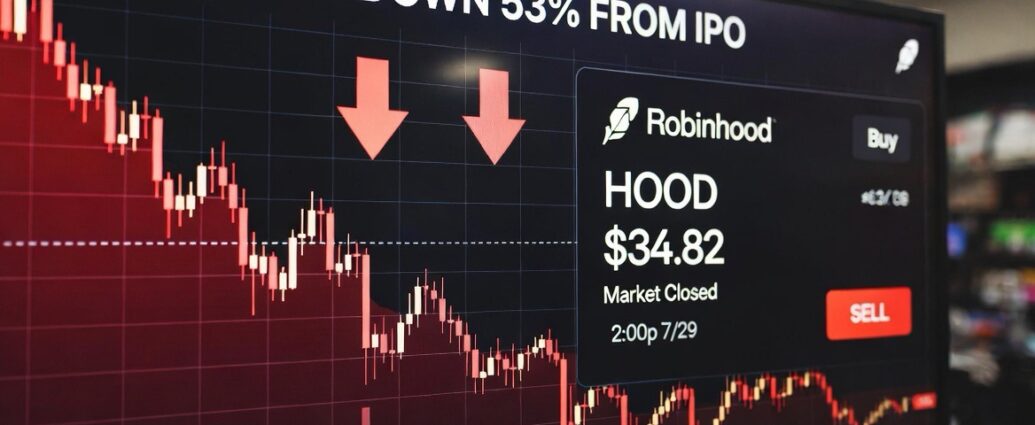
Robinhood Markets (HOOD) has fallen 53% from its highs of the past year, leaving investors to wrestle with a classic question: is this the kind of sharp pullback that creates a generational buying opportunity, or is the stock a classic value trap hiding deeper structural problems?
The brokerage, once the poster child for retail trading enthusiasm during the 2021 meme-stock frenzy, now trades at levels that look compelling on the surface. Yet the recent sell-off has been driven by more than just market volatility. Robinhood’s first-quarter 2026 results showed a clear slowdown in growth, particularly in its once-lucrative cryptocurrency business, raising questions about the sustainability of its business model in a more mature and regulated environment.
The Numbers Behind the Decline
Robinhood reported crypto revenue of $134 million in the first quarter of 2026 — a 47% drop from the same period a year earlier. That decline was the main culprit behind the stock’s post-earnings sell-off, with shares dropping more than 8% in extended trading following the report. Overall revenue growth slowed significantly, and while the company remains profitable, the pace of expansion has clearly cooled from the breakneck levels seen in previous years.
The stock’s 53% drawdown from its 2025 peak has left it trading at roughly $73–75, a level that some analysts view as attractive given the company’s still-growing user base and expanding product offerings. Others see it as a warning sign that the easy-growth phase is over and that competition from traditional brokers and newer fintech players is intensifying.
Why the Stock Has Fallen
Several factors have converged to pressure Robinhood’s valuation. The post-2021 normalization of retail trading volumes has reduced transaction-based revenue. Regulatory scrutiny has increased across the industry, with the Securities and Exchange Commission and other bodies tightening rules around payment for order flow — Robinhood’s core revenue engine. Meanwhile, the cryptocurrency market, which once drove explosive growth for the platform, has entered a more mature and less volatile phase, leading to the sharp drop in crypto-related revenue.
At the same time, Robinhood has been expanding into new areas such as retirement accounts, credit cards, and international markets. These initiatives are promising but have yet to fully offset the slowdown in the company’s traditional brokerage business.
The Bull Case: Once-in-a-Decade Opportunity
Proponents argue that the current valuation represents a compelling entry point. Robinhood still commands a massive retail user base and has successfully transitioned from a pure commission-free trading app to a broader financial services platform. If the company can continue to monetize its users through higher-margin products and international expansion, the stock could deliver substantial upside from current levels.
Analysts who see it as a buy point point to the company’s path to sustained profitability, its strong brand recognition among younger investors, and the long-term growth potential of retail investing as a secular trend. At current prices, the stock is trading at a discount to its growth potential, they say, making it a potential once-in-a-decade opportunity for patient investors.
The Bear Case: Value Trap
Skeptics counter that the stock is cheap for a reason. The decline in crypto revenue highlights the platform’s heavy reliance on volatile revenue streams. Regulatory risks remain elevated, and competition from established players like Charles Schwab, Fidelity, and newer fintech entrants is only increasing. If Robinhood cannot diversify its revenue mix quickly enough or if retail trading volumes remain subdued, the company could struggle to justify even its current valuation.
Some analysts have lowered price targets in recent weeks, citing slower growth and the risk that the stock could remain range-bound for an extended period. In this view, the 53% drop is not a buying opportunity but a reflection of fundamental challenges that have yet to be fully resolved.
The Road Ahead
The market for Robinhood’s shares will ultimately be decided by how successfully the company executes on its diversification strategy and how the broader retail investing environment evolves. With the stock down more than 50% from its highs, the debate between “once-in-a-decade opportunity” and “value trap” is as sharp as ever.
For investors watching the fintech space, Robinhood remains one of the most watched names. Whether the current valuation represents a bargain or a trap will depend on the company’s ability to prove that its growth story is far from over.
— JBizNews Desk
© JBizNews.com. All rights reserved. This article is original reporting by JBizNews Desk. Unauthorized reproduction or redistribution is strictly prohibited.