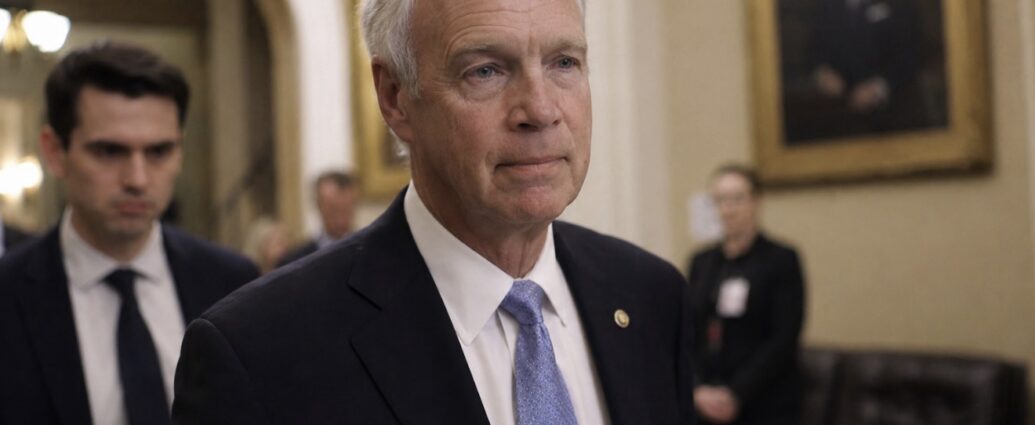
Sen. Ron Johnson, the Wisconsin Republican and self-described fiscal hawk, is positioned to become the next chairman of the Senate Budget Committee, his office confirmed Sunday, July 12, following the sudden death of Sen. Lindsey Graham of South Carolina. Johnson spokeswoman Grace Carnathan said the senator “is prepared to serve as budget chair when announced,” signaling he intends to claim a gavel that steers the chamber’s tax-and-spending machinery at a fraught moment for federal finances.
Graham, 71, died Saturday night at his Capitol Hill home from what the District of Columbia Medical Examiner described in preliminary findings as an aortic dissection tied to cardiovascular disease, according to a statement released by his office. His death removes a central architect of the Republican fiscal agenda and hands outsized influence to a lawmaker who has spent his career warning that Washington spends far beyond its means.
Johnson, a third-term senator, is next in line by seniority for the Budget post. Two more senior Republicans, Sen. Chuck Grassley of Iowa and Sen. Mike Crapo of Idaho, are expected to keep their gavels atop the Judiciary and Finance committees, clearing Johnson’s path. The elevation still requires ratification by the Senate Republican Conference and the full Senate, procedural steps typically completed with little fanfare.
The timing carries weight for markets and for the White House. Graham used the Budget chairmanship to move two party-line reconciliation packages through the Senate — last year’s tax-cut-centered One Big Beautiful Bill Act and this year’s measure funding immigration enforcement through the remainder of President Donald Trump’s term. Republican leaders are weighing a third reconciliation bill, and the Budget chairman controls the blueprint that sets its spending and revenue targets.
That is where Johnson’s record becomes consequential. He has repeatedly pushed to return federal outlays to their pre-pandemic share of the economy, roughly 20.6% of gross domestic product, the 2019 level. In a Wall Street Journal op-ed last year, he argued that restoring that ratio would save about $8.4 trillion over a decade — far beyond the roughly $1.5 trillion in cuts his colleagues were then debating. He has called the national debt, now near $37 trillion, unsustainable, and has resisted raising the debt ceiling without deeper reductions, describing the borrowing cap as leverage his party should not surrender.
Johnson also broke ranks during last year’s megabill fight, warning the legislation would widen deficits the Congressional Budget Office pegged at nearly $4 trillion over ten years. He has since signaled support for another reconciliation attempt, but his insistence on hard spending targets could complicate leadership’s math. Republicans hold a narrow majority, and Graham’s death temporarily trims it further until South Carolina Gov. Henry McMaster names a replacement to serve until January.
For businesses, the shift carries real stakes. The Budget Committee frames the fiscal envelope for tax policy, including whether expiring provisions of the 2017 Trump tax cuts are extended and whether new business tax breaks survive. A chairman determined to offset every dollar of tax relief with spending cuts could reshape the size and structure of the next package, influencing corporate rates, Treasury issuance and the trajectory of federal borrowing that feeds into interest rates. Deeper cuts to programs such as Medicaid and food assistance, which drew much of the friction in prior rounds, would again land on the table.
Johnson’s stance has long unsettled some in his own party. He has described himself as “more Tea Party than Republican” and cast spending discipline as the central test of GOP governance. Whether he can convert the Budget gavel into leverage — or whether leadership and Trump override his objections as they did in the last two reconciliation fights — will help set the fiscal path heading into the 2026 midterms.
Graham, first elected to the Senate in 2002, chaired the Budget panel after years on Judiciary, Appropriations and other powerful committees. His death also scrambles the November ballot in South Carolina, where he had secured renomination for a fifth term. Under state law, Republicans must field a replacement nominee, with a special primary expected by Aug. 11.
For now, attention turns to how quickly the conference formalizes Johnson’s ascension and how he wields a post sitting squarely at the intersection of politics, policy and the federal balance sheet.
JBizNews Desk | Washington
© JBizNews.com All Rights Reserved. Reproduction or distribution without written permission is prohibited.