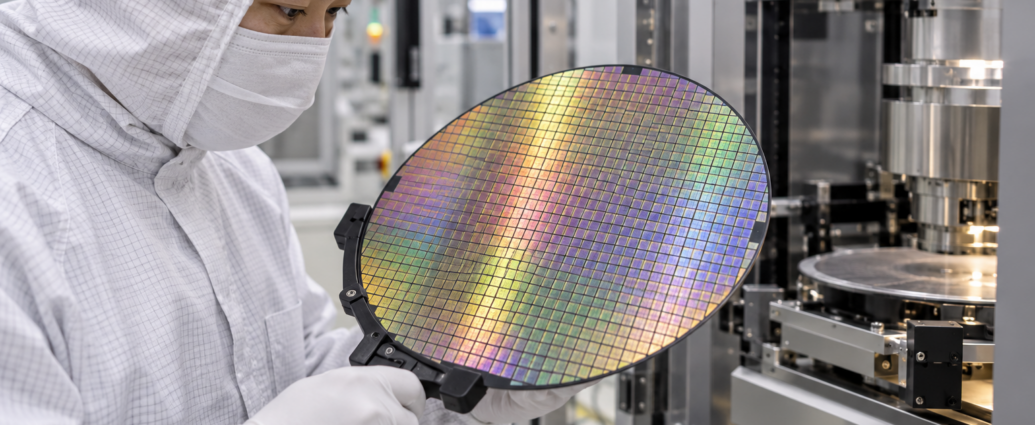
Samsung Electronics’ forecast of record quarterly profit failed to stop a selloff in South Korean stocks on October 8, exposing a widening gap between booming chip earnings and investors’ confidence in the artificial intelligence trade. For businesses buying computers and phones, weaker semiconductor shares offer little assurance that component costs are about to fall.
Samsung estimated third-quarter operating profit at 107.4 trillion won on revenue of 195 trillion won. Those preliminary figures compare with profit of 12.17 trillion won and sales of 86.06 trillion won a year earlier.
That puts operating profit at about 8.8 times the year-earlier level, an increase of roughly 782.5%. Revenue more than doubled. Profit also increased about 20% from the second quarter’s 89.49 trillion won, according to the company’s earnings guidance.
Yet Samsung shares closed down 2.42% at 262,000 won. The benchmark Kospi fell 177.97 points, or 2.62%, to 6,625.93, while SK Hynix dropped 2.44%, according to NewsPim’s closing report citing Korea Exchange data.
Selling extended beyond the chipmakers. Including transactions on alternative exchange Nextrade, foreign investors sold a net 2.44 trillion won of shares in the main equity market, while institutions sold about 1.93 trillion won. Individual investors bought approximately 3.60 trillion won. These totals include alternative-exchange trading and should not be mixed with figures covering a narrower trading venue or session.
The retreat had been building before Samsung’s announcement. Foreign investors sold a net 20.305 trillion won of Kospi shares between September 1 and October 2, Asia Business Daily reported, citing Korea Exchange and Yonhap Infomax data. Its total includes after-market transactions from September 15.
SK Hynix accounted for 12.009 trillion won of that selling and Samsung for 5.186 trillion won. Together, the two companies represented about 85% of the net outflow. Foreign investors were net buyers on only seven of the period’s 22 trading days.
As of October 2, foreign ownership of SK Hynix stood at 49.76%, its lowest level since May 2023. These are dated measures of the September selloff, rather than evidence that foreign ownership continued falling every day afterward.
The earnings themselves are not the central dispute. Investors are weighing whether extraordinary growth can continue after a sharp rise in chip stocks. Reuters reported that analysts had also trimmed forecasts because appreciation of the won reduces the local-currency value of overseas sales denominated in dollars.
The supply outlook helps explain why falling shares and expensive electronics can coexist. TrendForce said on September 30 that manufacturers continued prioritizing advanced production capacity for high-performance server memory, leaving the broader market undersupplied.
The research firm projected fourth-quarter contract-price increases of 10% to 15% for conventional DRAM, the memory used for working data, and 15% to 20% for NAND flash, which stores files. Those are forecasts for components, not announced increases in every laptop or phone’s retail price.
The pressure is already affecting the computer business. IDC’s preliminary October 8 report estimated worldwide third-quarter PC shipments at 62.7 million units, down 20.1% from a year earlier.
IDC attributed the decline partly to manufacturers and distributors stocking up earlier in the year ahead of expected memory-driven price increases. Elevated prices, supply constraints and logistical disruption then weakened the usual third-quarter pickup.
For an employer replacing a fleet of laptops, the practical risk is paying more, accepting reduced specifications or postponing purchases. TrendForce said some PC brands were reducing storage capacity in mainstream models to contain manufacturing costs.
There may still be discounts. IDC said concern about excess channel inventory could bring promotions, although it expected prices to remain above year-earlier levels. A temporary retail offer would therefore not establish that the underlying memory shortage had ended.
Samsung’s next scheduled checkpoint is October 29, when it releases detailed quarterly results. Investors will get a clearer view of which divisions generated the profit and whether the outlook supports another earnings advance. Device makers and their customers will be watching a different test: whether more memory supply reaches everyday products.
JBizNews Desk | Seoul
© JBizNews.com. All rights reserved. This article is original reporting by JBizNews Desk. Unauthorized reproduction or redistribution is strictly prohibited.