JBIZNEWS | AVIATION & GLOBAL BUSINESS | OCTOBER 14, 2026
RIYADH, Saudi Arabia — Saudi Arabian airlines are scrambling to move billions of dollars worth of passenger aircraft out of danger after deadly Houthi missile and drone strikes on Riyadh’s main airport damaged commercial jets, killed civilians and forced airlines to suspend operations.
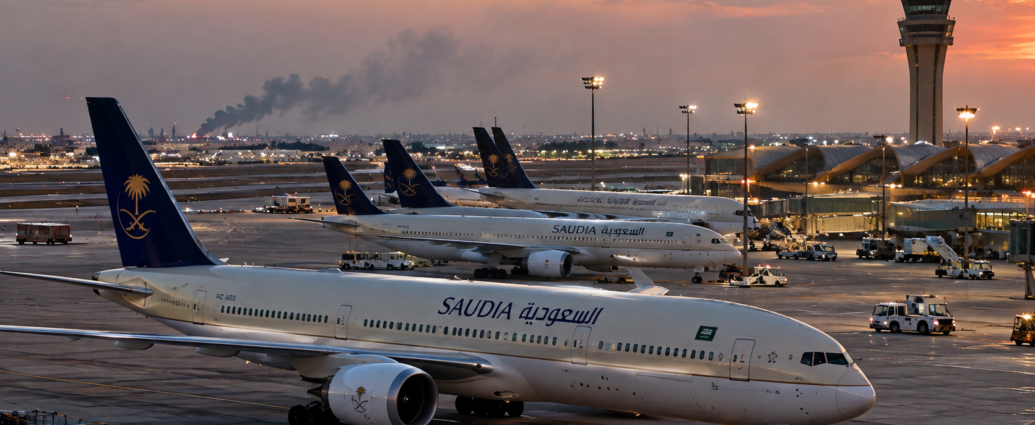
The emergency effort involves aircraft valued at approximately $4 billion, with the number remaining at King Khalid International Airport falling from 134 to just 38 since the attacks began.
Six aircraft have reportedly sustained damage valued at approximately $375 million, including a Saudia Airbus A320 that was destroyed and a Boeing 787 belonging to the kingdom’s new national carrier, Riyadh Air.
The evacuation represents an extraordinary challenge for Saudi Arabia’s aviation industry, which has invested billions of dollars in expanding its international airline network and transforming the kingdom into a major global transportation hub.
A $4 Billion Fleet at Risk
The attacks have forced Saudi airlines to make urgent decisions about where to relocate their most valuable assets.
Saudia, Riyadh Air and Flyadeal are among the carriers exposed to the escalating conflict.
Riyadh Air, which began operating in June, has already suffered damage to one Boeing 787 and evacuated four additional aircraft.
Moving aircraft away from Riyadh could protect them from further destruction, but it creates new operational challenges. Airlines must arrange parking, maintenance, staffing and aircraft positioning while dealing with restrictions on Saudi airspace.
Unlike aircraft that can be moved on short notice, commercial jets require safe departure corridors, flight crews, fuel, maintenance clearance and permission to enter other countries’ airspace.
The logistical difficulty increases when the airport itself has been struck repeatedly.
Deadly Strikes Shut Down Riyadh’s Main Airport
The crisis escalated following Houthi attacks on October 8 and October 10.
The earlier attack killed three people and damaged five aircraft. A subsequent strike devastated parts of the airport, killing at least 13 people and injuring more than 300.
Saudi authorities have suspended operations at King Khalid International Airport, with the closure currently expected to continue until at least October 17.
The Houthis, an Iran-aligned armed movement based in Yemen, have threatened additional attacks on Saudi airports and oil infrastructure.
The disruption has spread beyond Saudi carriers. International airlines including Lufthansa, Air France-KLM, Etihad Airways and Qatar Airways have suspended or adjusted flights, while travelers face cancellations and alternative routings.
Aviation Insurance Faces a Major Test
Beyond physical damage, the attacks threaten to increase the cost of operating commercial aircraft in Saudi Arabia.
War-risk aviation insurance protects airlines and aircraft owners against certain losses involving armed conflict, missiles and other hostile acts, subject to policy terms and exclusions.
Saudi Arabia’s major carriers face insurance renewals next month, placing the timing of the attacks under particular scrutiny.
Insurers must now reassess the possibility that several aircraft could be damaged or destroyed in a single attack, especially when large numbers of jets are parked at one airport.
Higher premiums, restricted coverage or additional security requirements could increase operating costs even after flights resume.
For aircraft leasing companies and lenders, the situation also raises questions about where valuable aircraft can safely be based.
Why Saudi Arabia’s Air Defenses Are Struggling
Saudi Arabia has invested heavily in sophisticated air defense systems, including American-made equipment. Yet the Houthis have demonstrated an ability to penetrate defenses using combinations of drones, cruise missiles and ballistic missiles.
Low-flying drones and cruise missiles can exploit limitations in radar coverage, while simultaneous threats force defensive systems to identify, prioritize and intercept multiple incoming weapons.
Saudi Arabia’s vast territory complicates the challenge. Protecting major cities, military installations, oil facilities and airports requires extensive radar coverage and sufficient interceptor supplies.
The sustained attacks have also raised concerns about depleted interceptor stocks and the cost of defending against relatively inexpensive weapons.
Saudi authorities are investigating how missiles and drones managed to reach the airport despite the kingdom’s substantial defense investments.
A Threat to Saudi Arabia’s Economic Transformation
The damage extends far beyond airline balance sheets.
Crown Prince Mohammed bin Salman’s Vision 2030 economic diversification strategy depends heavily on aviation, tourism, international business and logistics.
Saudi Arabia has invested heavily in new airports, airlines, hotels and tourism destinations to reduce its dependence on petroleum revenues.
Repeated attacks on major aviation infrastructure threaten those ambitions.
International businesses considering conferences, investments or regional offices must now weigh transportation reliability and employee safety.
The attacks also threaten cargo operations, business travel and the kingdom’s ability to position Riyadh as a reliable international connection point.
For Saudi airlines, the immediate priority is protecting aircraft and personnel. For the government, the greater challenge is restoring confidence that its airports can operate safely despite the continuing conflict.
With tens of aircraft already relocated and the Houthis threatening further strikes, the crisis underscores a costly reality for modern aviation: billions of dollars in aircraft and infrastructure can remain vulnerable even in countries equipped with advanced military defenses.
JBizNews Desk | Riyadh, Saudi Arabia
© 2026 JBizNews. All Rights Reserved.