
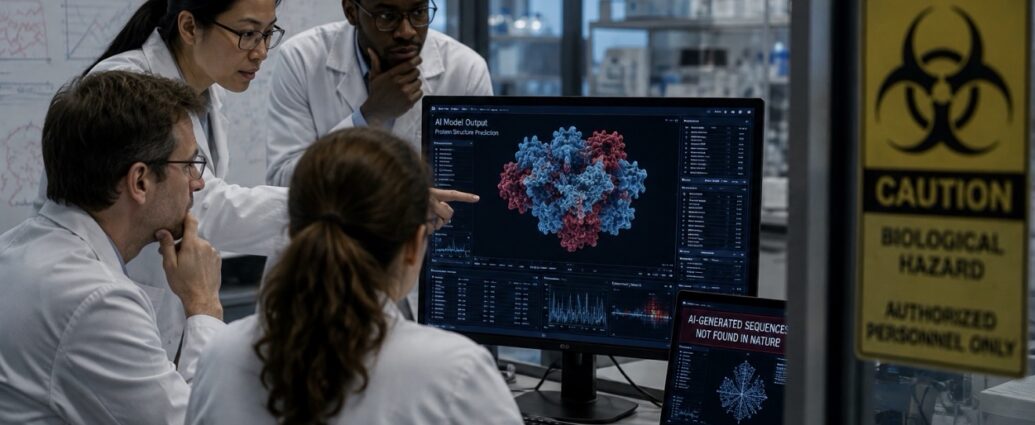
Researchers at Stanford University used artificial intelligence to create 16 functional viruses not found in nature earlier this month.
Some may feel as though they are at the start of a dystopian film, wondering why scientists would meddle with something as dangerous as new deadly viruses. However, these scientists have good reason, and while the viruses may be deadly to their intended targets, they have the potential to be life-saving for humans around the world.
The viruses created in the Stanford Lab are bacteriophages, and as the name suggests, these are viruses that exclusively target bacteria. As antibiotic resistance rises worldwide, chemical engineer Brian Hie and Samuel King began studying a potential solution involving the bacteriophage ΦX174 (pronounced “FYE-ex-1-7-4”), which targets E. Coli bacteria.
Antibiotic-resistant E. Coli found to pose threat to Israeli society
Researchers in Israel raised the alarm about antibiotic-resistant E. Coli bacteria in the past. A study published by the Health Ministry and Tel Aviv University in 2021 found that infections caused by the bacteria placed an “extremely high” burden on the public health system.
Researchers called for immediate action, including the development of prevention strategies and long-term control of antibiotic resistance.

Hie, using EVO 2, a generative AI model he created that generates new DNA sequences to solve biological challenges, may have the start of a solution.
Using ΦX174 as a template, the AI designed thousands of new genomes. The research team chemically synthesized and tested nearly 300 in the lab and came up with 16 that were viable and effective.
They were different from any natural phages, completely new viruses.
New phages could lead to new effective antibiotic medications
Hie explained that multiple phages could be used to create a more effective antibiotic medication.
“If the bacteria gain resistance to a single phage, it’s game over for the medication,” Hie said to the Stanford Report. “But if you have multiple genetically distinct phages in a mixture, it would be harder for the bacteria to develop resistance to the entire cocktail.”
The researchers found that a mixture of the designed phages was able to overcome the ΦX174-resistant E. coli strains when a mix of naturally sourced ΦX174-like phages could not.
While the innovations have great potential, many have also expressed concern over the potential dangers of using artificial intelligence to create viruses.
EVO 2 is open source, meaning anyone can download the AI and design new genomes themselves.
The Stanford researchers addressed biosafety and biosecurity considerations directly in their paper, encouraging any future researchers to consult with safety and security professionals and writing that all experiments were performed at the biosafety level appropriate for research with bacteriophages.
Additionally, safeguards were put in place by limiting the data used to train the AI. With the data given to it, EVO 2 was unable to generate any virus genomes capable of targeting animals (including humans), plants, or fungi.
Hie acknowledged that the tool could potentially be used for dangerous purposes but argued that the open availability is necessary to expedite research and the vast potential benefits to health and humanity.
Hie also claimed these viruses were safer than many naturally occurring viruses, as designed viruses were subject to more oversight in production.
Others have taken a more cautious approach.
Scientists call for tighter oversight, new legal framework
In a paper written in response to King and Hie, scientists from John Hopkins University’s Center, Thomas Inglesby and Moritz Hanke for Health Security warned that while the Stanford researchers limited the AI’s training data it would not be difficult for a different user to discover a way around the limitations, opening the possibilities for viruses designed to infect humans, animals, or plants in ways we cannot yet counter.
Inglesby and Hanke called for national and global oversight on future research, writing that the mechanisms in place are not enough.
Countries such as the US and Israel have laws that govern the research of dangerous biological agents, including bacteria and viruses.
In Israel, researchers must be granted approval by the official Council for Research into Biological Disease Agents before working with certain dangerous pathogens.
However, these laws are all designed with known pathogens in mind and do not cover new artificially designed viruses.
International policies, such as the World Health Organization’s global guidelines, also do not cover risks from AI-generated pathogens.
Additionally, while King, Hie, and the other researchers called for the providers of synthetic nucleic acids, which are used to create the newly designed viruses, to screen customers’ orders and be wary of potential bad actors, Inglesby and Hanke called for the practice to be mandated by law.
“The question is no longer whether generative viral genome design will exist. It is whether society can build oversight that allows its benefits to unfold while preventing it from enabling serious harm,” they wrote.




