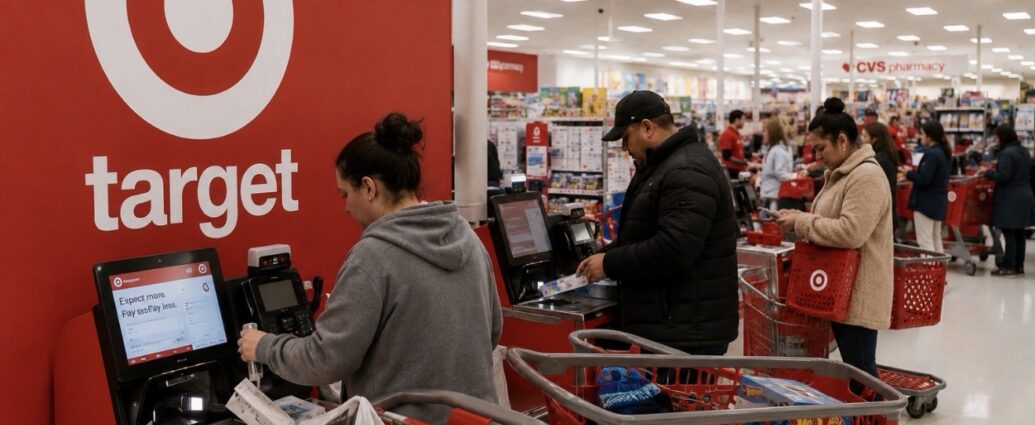
American consumers are still spending — just far more selectively than they were a year ago.
That is the clearest message emerging from the first-quarter retail earnings season, where a surprisingly large number of U.S. chains are beating Wall Street expectations despite persistent inflation, elevated borrowing costs, and growing concerns about slower economic growth later this year.
According to the latest May 27 scorecard from the London Stock Exchange Group, 161 of the 188 companies tracked in its U.S. Retail and Restaurant Index have now reported quarterly results. Roughly 71% beat analyst profit expectations, while 70% exceeded revenue forecasts — unusually strong numbers for a sector many investors expected would show clear signs of consumer fatigue by now.
Across the index, profits are on pace to rise 26.4% from the same quarter last year, while total sales are tracking roughly 7.4% higher.
The results suggest something important about the current American economy: households have not stopped spending, but they are becoming dramatically more disciplined about where their money goes.
That distinction is shaping the entire retail landscape in 2026.
The Consumer Is Still Alive — But More Defensive
For much of the past year, economists and retailers feared that higher interest rates and lingering inflation would finally crack consumer spending.
Instead, shoppers continue showing resilience, supported by a still-solid labor market, rising wages in some sectors, accumulated household savings among higher-income consumers, and a growing tendency to prioritize experiences, essentials, and perceived value over discretionary splurges.
But the spending behavior itself has changed.
Consumers are comparison shopping more aggressively, trading down selectively, delaying larger purchases, and increasingly concentrating spending in categories where they believe they are getting measurable value for money.
That is why discount chains, off-price retailers, warehouse clubs, and selective specialty categories continue outperforming.
The quarter’s strongest retail results largely came from companies positioned around value, convenience, or highly targeted demand niches rather than broad discretionary consumption.
Dick’s Sporting Goods Shows Experience Spending Is Still Strong
One of the biggest surprises of the earnings season came from Dick’s Sporting Goods, which reported a massive 62.7% increase in quarterly revenue.
Comparable sales at stores open at least a year rose 6%, roughly double analyst expectations and one of the strongest major retail performances of the quarter.
The numbers align with broader federal retail data showing sporting goods remaining one of the strongest consumer spending categories recently — a sign that Americans are still allocating money toward fitness, outdoor activity, youth sports, and lifestyle-oriented purchases despite broader economic caution.
At the same time, Dick’s management maintained a relatively cautious tone about the rest of the year, acknowledging ongoing uncertainty surrounding consumer confidence and broader macroeconomic conditions.
That caution is becoming common across retail.
Even companies posting strong current results remain hesitant to declare the consumer fully healthy.
Foot Locker’s Small Improvement Carries Outsized Meaning
Buried inside the Dick’s results was another potentially important signal.
Foot Locker, which Dick’s now owns, posted a 0.6% increase in comparable sales — its first positive same-store sales reading in roughly two years.
On the surface, the number appears modest.
But for retail analysts, the significance is psychological as much as financial. Sneaker and youth apparel demand had become one of the clearest weak spots in discretionary spending over the past two years, particularly among younger consumers squeezed by inflation and rising living costs.
Even a small return to positive growth may suggest parts of discretionary retail spending are beginning to stabilize rather than deteriorate further.
Abercrombie’s Reinvention Continues
Perhaps no retailer better captures the broader transformation of American retail than Abercrombie & Fitch.
Once viewed as a declining mall-era brand, Abercrombie has now delivered 14 consecutive quarters of sales growth — one of the most remarkable turnarounds in modern apparel retail.
The company beat profit expectations again this quarter, though revenue came in slightly below forecasts.
Its strongest growth came from Asia and the Americas, particularly the core Abercrombie label, while weakness emerged in Europe and parts of the Middle East amid geopolitical instability and softer tourism demand.
Management specifically cited unrest in the Middle East as pressuring Hollister sales in the region, highlighting how global geopolitical conditions are increasingly affecting consumer-facing businesses even outside traditional industrial sectors.
Still, the broader takeaway remained positive: brands successfully repositioned around lifestyle identity, quality perception, and targeted demographics continue outperforming many traditional apparel peers.
Off-Price Retail Keeps Winning
The clearest winners of the quarter, however, were once again discount and off-price retailers.
Ross Stores and TJX Companies — parent of T.J. Maxx, Marshalls, and HomeGoods — both exceeded expectations and reinforced one of the strongest themes in retail right now: value-oriented shopping behavior is accelerating.
TJX raised full-year guidance after HomeGoods posted a 9% comparable-sales increase, while management said the current quarter has also started strongly.
The strength of off-price retail matters because it reveals how consumers are adapting to inflation psychologically.
Households are not necessarily spending less overall.
They are becoming far more strategic about where they spend.
Rather than abandoning consumption entirely, many shoppers are reallocating toward retailers that maximize perceived value, bargain discovery, or necessity-based spending.
That behavioral shift may prove more durable than investors initially expected.
Target’s Results Reveal The New Consumer Math
One of the most closely watched earnings reports came from Target, long viewed as a bellwether for middle-class consumer behavior.
The company exceeded both revenue and profit expectations, with comparable sales rising 5.6% — its first positive same-store sales growth in five quarters.
Digital sales climbed nearly 9%, helped by strong adoption of same-day fulfillment services tied to Target Circle 360.
Yet despite the strong report, Target shares still fell after earnings.
Why?
Because investors increasingly care less about what retailers just reported and more about whether the pace is sustainable.
Target itself maintained a cautious tone about the second half of the year, reflecting broader uncertainty around inflation, interest rates, consumer credit quality, and potential economic slowing.
That caution may ultimately define the retail story more than the headline beats themselves.
What Wall Street Is Really Watching
Underneath the earnings numbers, Wall Street is trying to answer one central question:
Is the U.S. consumer genuinely strong — or simply surviving longer than expected?
So far, the answer appears to be somewhere in between.
Consumers continue spending, but the quality of that spending is evolving rapidly. Value, convenience, and selective lifestyle categories are winning. Big-ticket discretionary purchases remain softer. Discount retail continues outperforming premium positioning in many categories.
The result is not a collapsing consumer economy.
It is a highly fragmented one.
That fragmentation explains why some retailers are producing exceptional numbers while others continue struggling despite operating in the same broader economy.
And it suggests the second half of 2026 may depend less on whether Americans keep spending — and more on where they decide the money is still worth it.
New York — JBizNews Desk
© JBizNews.com All Rights Reserved. Reproduction or distribution without written permission is prohibited.