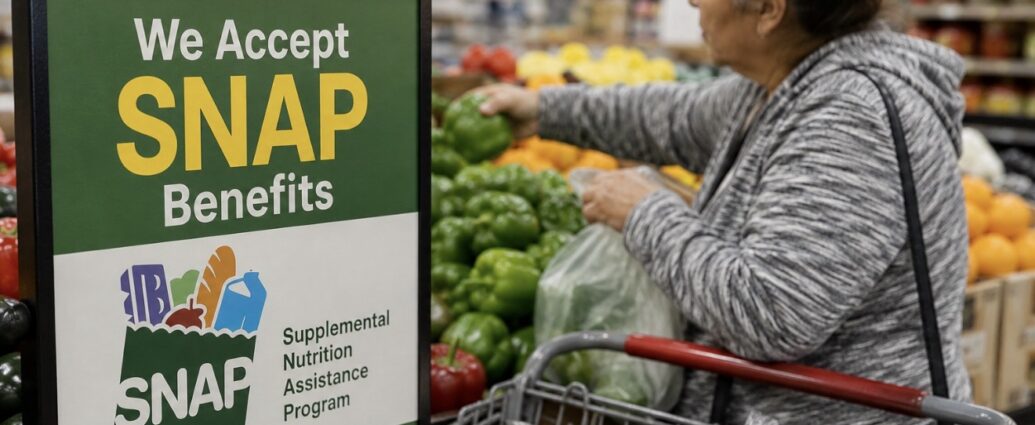
The U.S. Department of Agriculture (USDA) on Friday, July 17, 2026, formally began implementing new federal requirements that will reshape portions of the Supplemental Nutrition Assistance Program (SNAP), launching the first phase of a nationwide rollout that will affect eligibility reviews, work requirements, and program administration across all 50 states over the coming months. State agencies are now beginning the process of updating their systems and notifying recipients as they prepare to comply with the new federal law.
The action marks one of the most significant updates to the country’s largest nutrition assistance program in years. While many current recipients will not see immediate changes to their monthly benefits, millions of households could eventually encounter revised eligibility standards, additional documentation requirements, or new work-related obligations depending on their individual circumstances and the timeline adopted by their state.
SNAP remains one of the federal government’s largest domestic assistance programs, serving more than 40 million Americans every month. The program provides electronic monthly benefits that can be used to purchase eligible food items at supermarkets, grocery stores, warehouse clubs, neighborhood markets, convenience stores, and participating online retailers. For many working families, seniors, disabled Americans, veterans, and households facing temporary financial hardship, SNAP represents an essential part of the monthly household budget.
Although the program is federally funded, each state administers SNAP independently under USDA oversight. That means implementation of the new requirements will not occur simultaneously nationwide. Instead, state human services agencies are now beginning what is expected to be a months-long process of updating computer systems, retraining caseworkers, revising application procedures, modifying eligibility software, and notifying recipients before any individual benefit determinations change.
Among the most significant provisions are expanded work requirements affecting certain able-bodied adults, revised eligibility review procedures, updated reporting requirements, and changes to exemptions that apply to qualifying veterans, caregivers, individuals with documented medical conditions, and other protected categories established under federal law. States must also strengthen periodic eligibility reviews to ensure recipients continue meeting applicable federal standards.
Federal officials have said the objective is to improve workforce participation while preserving assistance for households that remain eligible under the law. USDA guidance instructs state agencies to provide recipients with appropriate notice before benefits are reduced, suspended, or terminated because of the new requirements.
For consumers currently enrolled in SNAP, experts emphasize that there is no reason to panic. Most households will not experience an immediate interruption in benefits simply because implementation has begun. Instead, recipients should carefully review any correspondence received from their state agency, respond promptly to requests for documentation, and ensure their mailing address, telephone number, and email information remain current.
State agencies are expected to contact affected households directly if additional information, employment verification, income documentation, or household updates become necessary. Missing a response deadline could delay benefits or require a recipient to re-establish eligibility through additional review.
The changes also carry significant implications for retailers throughout the country. SNAP generates well over $100 billion in annual food purchases, making it an important source of consumer spending for supermarkets, independent grocery stores, warehouse clubs, discount retailers, neighborhood markets, and rural food providers. Even relatively small shifts in enrollment or benefit levels can influence purchasing patterns across local economies.
Large grocery chains have historically monitored federal SNAP policy closely because benefit distributions often correspond with higher consumer spending at the beginning of each month. Smaller independent retailers serving lower-income communities may also experience changes depending on how implementation affects local enrollment.
State governments now face the administrative challenge of balancing federal compliance with uninterrupted service for millions of recipients. Human services departments must revise policy manuals, update online application systems, train eligibility specialists, modify automated verification systems, and coordinate with retailers before every aspect of the federal law is fully implemented.
Consumer organizations are also urging recipients to ignore rumors circulating on social media regarding immediate benefit cancellations or widespread automatic disqualifications. Most eligibility decisions will continue to be made on an individual basis, taking into account household income, family composition, employment status, disability status, and other factors required under federal law.
For many households, the practical impact of today’s announcement will simply be increased communication from their state SNAP office over the coming months. Officials recommend opening every government notice immediately, attending any scheduled interviews, submitting requested paperwork before deadlines, and relying only on official state or federal information rather than unofficial online sources.
The rollout that began Friday represents the opening stage of what is expected to become a lengthy nationwide implementation process. Additional guidance from USDA is anticipated as states continue adapting their systems and incorporating the new federal requirements into day-to-day administration of the nation’s largest food assistance program.
JBizNews Desk | Washington
© JBizNews.com All Rights Reserved. Reproduction or distribution without written permission is prohibited.