A Country That Imports 97% of Its Energy Is Now Racing to Build Solar, Wind, and Nuclear Power After the Middle East Conflict Cut Off Its Main Supply Lines — And Everyday Koreans Are Already Feeling the Pain
By JBizNews Desk | Seoul — May 6, 2026
For decades, South Korea’s economic rise has depended on a fragile reality: the country produces almost none of its own energy. Now, as conflict in the Middle East disrupts global supply routes, that vulnerability is being felt across one of the world’s most advanced economies — and forcing a rapid rethink of how the country powers itself.
South Korea imports roughly 97% of its energy needs, with a significant share coming from the Middle East. That dependence has left it highly exposed as tensions around the Strait of Hormuz threaten oil and gas flows critical to its economy.
What had long been a known risk has now become an immediate challenge.
The Scale of the Problem
South Korea’s energy system is deeply tied to global markets. A large portion of its oil and a meaningful share of its natural gas are sourced from Gulf nations, meaning any disruption quickly feeds into domestic costs.
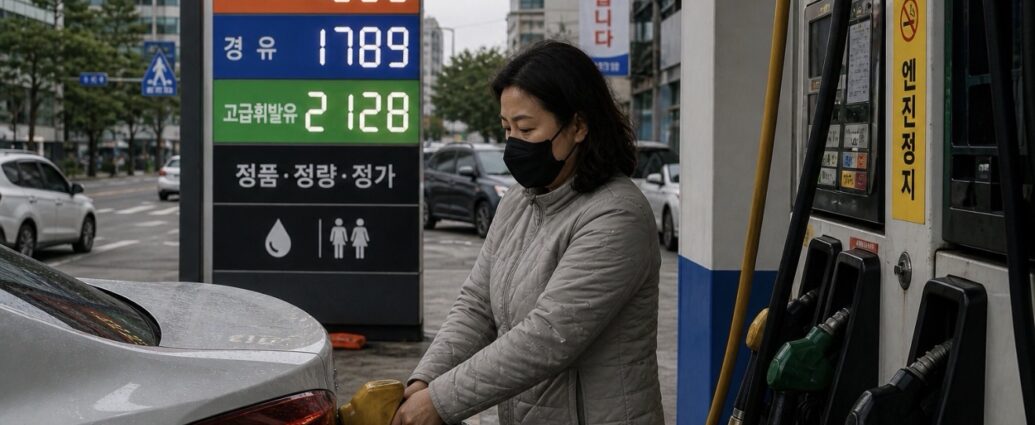
The impact is already visible. Rising energy costs are pushing up fuel prices, increasing electricity bills, and raising operating expenses for industries that rely heavily on imported energy — including manufacturing, shipping, and aviation.
Airlines have entered emergency cost-management modes, while consumers are being encouraged to reduce energy usage in daily life. The ripple effects extend from household budgets to the broader industrial economy that underpins South Korea’s export strength.
What the Government Is Doing
President Lee Jae Myung has framed the situation as a turning point.
“The Republic of Korea must move very quickly toward renewable energy,” he said at a recent public forum, warning that continued reliance on imported fossil fuels puts the country’s long-term stability at risk.
The government is accelerating its push toward clean energy, with increased emphasis on solar, wind, and electric vehicle adoption. Officials have described the current crisis as an opportunity to fundamentally reshape the country’s energy mix.
Kim Sung-hwan, South Korea’s Minister of Climate, Energy and Environment, said the moment should be used to drive a “fundamental energy transition,” calling the situation a catalyst for long-delayed structural change.
The country’s long-term goals include expanding renewable energy’s share of electricity generation and reducing reliance on coal, while also maintaining a significant role for nuclear power.
The Role of Nuclear Power
Nuclear energy remains central to South Korea’s strategy.
Under current plans, multiple new reactors — including large-scale facilities and smaller modular units — are expected to come online over the next decade. These projects are designed to provide stable, domestic energy capacity that is not subject to global supply shocks.
Nuclear already accounts for a substantial share of South Korea’s electricity generation, and expanding that footprint is seen as a key component of energy security.
The Barriers Are Real
Despite the urgency, the transition will not happen overnight.
Renewable energy expansion is already running into infrastructure constraints, particularly around transmission capacity. Building the necessary grid upgrades — including high-voltage lines to major urban centers — will take years and faces regulatory and local resistance challenges.
Fossil fuels still dominate the current energy mix, and shifting that balance requires sustained investment, policy alignment, and time.
What It Means Beyond South Korea
South Korea’s situation reflects a broader reality across Asia.
Countries heavily reliant on imported energy — including Japan — are facing similar pressures as global supply chains are disrupted. The current crisis is effectively stress-testing the region’s energy systems and exposing long-standing vulnerabilities.
For South Korea, however, the response could have lasting implications.
With strong industrial capacity and advanced technology, the country is well positioned to scale clean energy solutions if it can move quickly. The shift could not only improve energy security but also create new economic opportunities in emerging energy industries.
The Iran conflict did not create South Korea’s dependence on imported energy.
But it has made the consequences impossible to ignore — and accelerated a transition that might otherwise have taken decades.
JBizNews Desk
© JBizNews.com. All rights reserved.