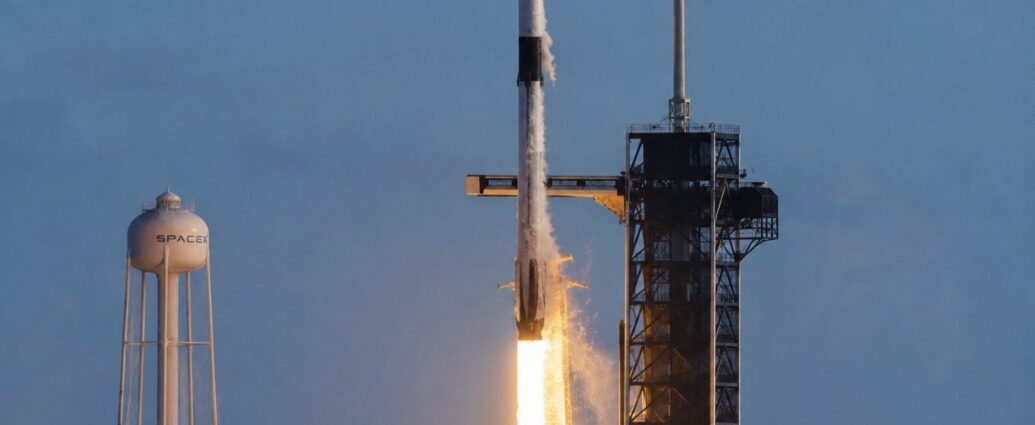
Shares of SpaceX finished Tuesday, July 14, at $136.08 on the Nasdaq Stock Market, down 2.2% on the session and barely a dollar above the $135 price investors paid when Elon Musk’s rocket, satellite and artificial intelligence company went public on June 12. It marked the stock’s third consecutive daily decline, leaving it on the verge of slipping below its initial public offering price—the level many investors view as the key measure of whether a new listing is holding up. Since reaching its post-IPO peak, the company has surrendered roughly one-third of its market value, erasing an estimated $850 billion.
The reversal is remarkable for what was the largest IPO in history. SpaceX priced its shares at $135, opened at $150 on June 12, and finished its first trading session at $160.95, a gain of 19.2%. Within days, the stock surged to $225.64, briefly giving the company a valuation greater than Amazon and Microsoft combined. That record high came on June 16. Today, the company’s market capitalization stands near $1.8 trillion.
What Is Dragging the Stock Down
The recent selloff has come despite positive operational news. The Federal Aviation Administration completed its review of the failed return of a Starship booster following a May test flight, concluding that it had overseen and accepted the company’s findings and corrective actions. The agency cleared SpaceX to move forward with Starship Flight 13, subject to standard safety and licensing requirements, with a launch window scheduled to open Thursday at 6:45 p.m.
Investors, however, continued selling.
One reason appears to be growing competition from China. Over the weekend, the China Aerospace Science and Technology Corporation successfully launched a reusable Long March 10B rocket from the Wenchang Commercial Space Launch Site on Hainan Island and recovered it at sea using a floating capture platform. Chinese officials hailed the mission as a complete success. If the achievement proves repeatable, SpaceX may no longer be the only company operating a proven reusable rocket system—one of the company’s strongest competitive advantages.
Fundamentals have also come under greater scrutiny. SpaceX generated $18.7 billion in revenue last year while posting an operating loss of $4.2 billion, despite carrying an IPO valuation approaching $1.77 trillion. Its prospectus disclosed cumulative losses totaling $41.3 billion since 2002.
Additional setbacks have added pressure. Shares fell 8% after Starlink reduced prices in Memphis amid controversy surrounding a local data center project. The stock also declined 4.4% on July 7 after joining the Nasdaq-100, even as the broader index lost just 1.7%.
Wall Street Remains Bullish
Despite the pullback, most analysts continue to maintain optimistic outlooks.
Evercore ISI analyst Kutgun Maral initiated coverage with an Outperform rating and a $230 price target, describing SpaceX as “an extraordinary company on a real path to reshaping the future of humanity.” His projections call for revenue and EBITDA growth of 106% and 157%, respectively, through 2028, while operating margins expand from 35% to 69%.
Other major firms remain equally positive:
- Bernstein analyst Douglas Harned reiterated a Buy rating with a $239 target.
- Deutsche Bank analyst Edison Yu maintained a Buy rating and a $255 target.
- Morgan Stanley carries a $300 target.
- BofA Securities initiated coverage with a Buy rating and a $235 target, citing dramatic reductions in launch costs—from roughly $10,000–$20,000 per kilogram before Falcon 9 to approximately $2,000 today, with potential costs falling to $50–$100 per kilogram if Starship achieves full reusability.
- Raymond James analyst Brian Gesuale remains the most optimistic, assigning an $800 price target.
Not everyone shares that enthusiasm.
Morgan Stanley Managing Director Adam Jonas has warned that the company may ultimately need to raise approximately $700 billion in debt to pursue its long-term artificial intelligence ambitions. He cautioned investors accustomed to Tesla’s volatility to expect a similarly turbulent ride. One analyst tracked by the BBC sees the stock falling to $115.
Why It Matters Beyond SpaceX
The IPO was unusual because approximately 30% of the offering was allocated to retail investors—far above the 5% to 10% typically reserved for individual buyers. As a result, ordinary investors, not just institutions, are absorbing much of the recent decline.
The offering was also widely viewed as paving the way for future public listings from high-profile artificial intelligence companies including OpenAI and Anthropic, both of which confidentially filed IPO paperwork with the Securities and Exchange Commission this summer without announcing launch dates. If the market continues to struggle with the largest technology IPO ever completed, investment bankers may face a more difficult environment bringing the next generation of AI companies to market.
Operationally, the business continues advancing. Frontier Airlines announced Tuesday that it plans to equip its fleet with Starlink internet service by early 2027.
For investors, attention now turns to two major milestones: Thursday’s Starship Flight 13 launch and the company’s first quarterly earnings report as a public company, expected in early August.
Until then, $135 remains the number Wall Street will be watching most closely.
JBizNews Desk | New York
© JBizNews.com All Rights Reserved. Reproduction or distribution without written permission is prohibited.