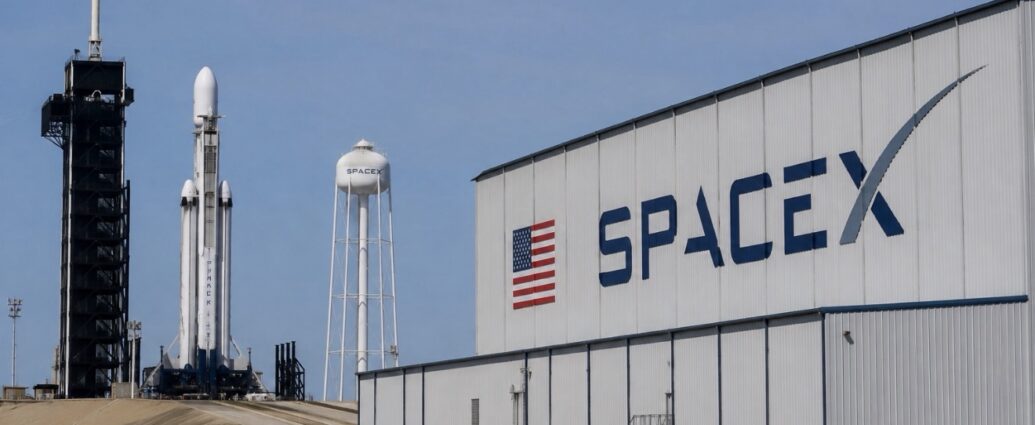
Elon Musk’s SpaceX warned investors in its IPO filing that global shortages of advanced artificial intelligence chips could slow or limit the company’s ambitious plan to build massive AI data centers in space.
The disclosure appeared in the company’s S-1 registration filing submitted to the Securities and Exchange Commission as SpaceX prepares for what could become the largest public offering in financial history.
The company is reportedly targeting a valuation approaching $1.75 trillion ahead of its planned Nasdaq debut under the ticker symbol SPCX.
At the center of the filing is a major strategic shift:
SpaceX is no longer presenting itself simply as a rocket-launch company.
Instead, the company increasingly describes itself as a vertically integrated AI infrastructure platform spanning rockets, satellites, chip manufacturing, orbital computing, broadband communications, and artificial intelligence systems.
The filing repeatedly references “orbital AI” and outlines plans to eventually deploy large-scale AI compute systems directly into orbit.
But SpaceX also acknowledged a major obstacle:
the world may not have enough advanced chips available to support those plans.
To reduce dependence on outside suppliers, SpaceX disclosed that it is working on a chip-manufacturing initiative known internally as “Terafab,” designed to help produce specialized AI hardware for future orbital computing systems.
The filing states that Tesla and Intel are involved through framework agreements tied to the effort.
However, SpaceX also warned investors that neither company is obligated to complete the project and that the factory may not become operational within expected timelines.
That caution matters because AI chips have become one of the most supply-constrained technologies in the global economy.
Demand for advanced processors used in artificial intelligence systems has surged over the past two years as companies race to build massive AI infrastructure platforms.
SpaceX’s vision goes even further than terrestrial AI expansion.
The company plans to begin launching AI compute satellites into sun-synchronous orbit as early as 2028, with long-term ambitions involving what it describes as “orbital AI at scale.”
According to the filing, the ultimate objective would involve deploying up to 100 gigawatts of orbital compute capacity annually — a staggering figure requiring thousands of launches and unprecedented payload volumes.
SpaceX described the effort in the filing as “an incredibly difficult technical challenge.”
The idea behind orbital AI infrastructure is that space-based data centers could eventually operate with access to continuous solar energy while avoiding some of the cooling and land constraints faced by Earth-based facilities.
Musk has publicly promoted the concept for months.
At the World Economic Forum in Davos earlier this year, he argued that space could become the cheapest place in the world to operate AI computing systems within only a few years.
The IPO filing, however, takes a noticeably more cautious tone than Musk’s public comments.
While Musk has often projected confidence about rapid deployment timelines, the S-1 repeatedly highlights technical, manufacturing, and supply-chain risks that could delay execution.
Competition in the sector is also intensifying quickly.
Google-backed projects, Nvidia orbital-compute initiatives, Blue Origin satellite proposals, and multiple venture-funded startups are all pursuing various forms of space-based computing infrastructure.
The race is increasingly viewed inside Silicon Valley and Wall Street as a new frontier tied directly to the global AI boom.
Financially, the filing reveals a company in transition.
SpaceX generated approximately $18.7 billion in revenue during 2025, largely from its Starlink satellite broadband business.
At the same time, the company posted significant losses as it ramped spending on AI-related infrastructure and orbital-compute development.
The filing states that more than three-quarters of recent capital expenditures were directed toward AI infrastructure initiatives.
The broader SpaceX empire has also expanded dramatically following Musk’s merger earlier this year between SpaceX and his artificial-intelligence company xAI.
The combined organization now spans:
- Rockets
- Satellite broadband
- AI models
- Social media platforms
- Developer software tools
- Planned orbital computing systems
Investors evaluating the IPO are effectively being asked to fund one of the most ambitious infrastructure bets ever attempted in the technology sector.
The core question for Wall Street is becoming increasingly clear:
Can Starlink’s profitable satellite business generate enough cash flow to finance Musk’s much larger orbital AI vision before competitors catch up or supply constraints slow the effort?
The filing suggests SpaceX itself recognizes that answer remains uncertain.
When Musk speaks publicly, the future often sounds inevitable.
When SpaceX lawyers write disclosures for regulators and investors, the risks become harder to ignore.
That gap between ambition and execution may ultimately define the company’s IPO story.
JBizNews Desk — New York
© 2026 JBizNews. All Rights Reserved. Reproduction or distribution without written permission is prohibited.