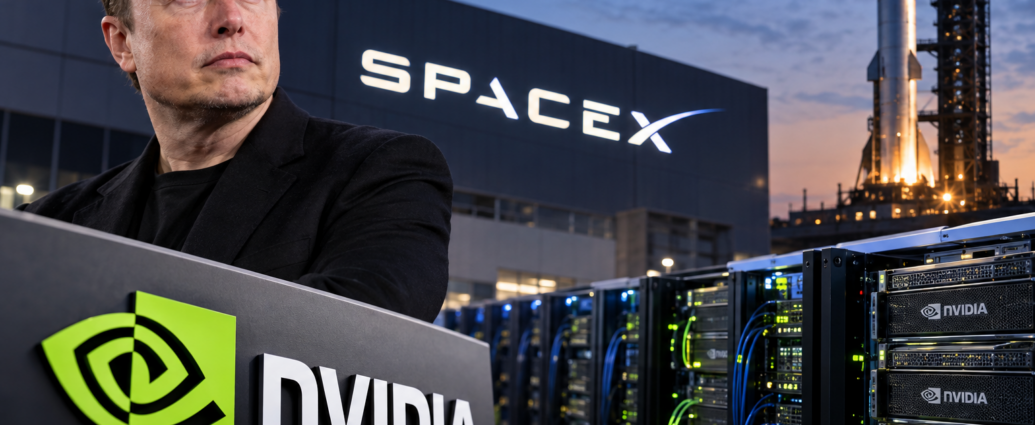
SpaceX is working on a plan to borrow $40 billion to buy computer chips from Nvidia for its artificial intelligence data centers, which would make it one of the largest corporate borrowings of the year.
Under the plan, about $10 billion would come from bank loans and the remaining $30 billion from investment-grade bonds, the kind of debt sold to big institutional investors who are looking for steady, lower-risk returns. Apollo Global Management is leading the financing, and bond giant PIMCO is weighing a stake in the deal. The plan was first reported by the Financial Times. SpaceX has not publicly commented on the details.
SpaceX shares fell about 2% in early trading Wednesday after the news spread.
In plain terms, SpaceX wants to buy a huge number of the most advanced AI chips on the market, and instead of paying cash or selling more stock, it plans to borrow the money and pay it back over time. Selling new stock would shrink the ownership slice of existing shareholders. Borrowing avoids that, but it adds debt and interest payments the company must cover.
The company best known for rockets and Starlink satellite internet has turned into a major AI business. SpaceX absorbed Elon Musk’s artificial intelligence company, xAI, earlier this year, and it now runs large AI data centers in Memphis, Tenn., known as Colossus 1 and Colossus 2. Those facilities rent out computing power to other companies that need it to run AI tools, and they have become a fast-growing source of revenue.
Last month, SpaceX Chief Financial Officer Bret Johnsen said the company believes it is on track to reach $100 billion in annual recurring revenue, a measure of the yearly income it expects from ongoing contracts. He said SpaceX had just closed another computing deal worth about $1.11 billion a month starting Dec. 1, adding roughly $13 billion a year.
That is the problem SpaceX is trying to solve. Demand for AI computing is growing faster than companies can build data centers, and the chips that power them are expensive and in short supply. Musk has said SpaceX will use only Nvidia chips in its AI data centers. To keep up with the contracts it is signing, SpaceX needs to buy chips now, before it collects the revenue those chips will generate. Borrowing lets it close that gap.
The timing is tough. The interest rate on the 10-year U.S. Treasury hit its highest level since 2002 on Wednesday, and corporate borrowing costs tend to rise along with it. That means SpaceX will likely pay more interest on this debt than it would have a year or two ago. An investment-grade rating helps, since it signals to lenders that the company is considered reasonably safe and keeps rates lower than they would be for riskier borrowers.
SpaceX is far from alone. Nvidia, Oracle, Amazon and Alphabet have all raised tens of billions of dollars in debt over the past year to pay for chips, data centers and power. Oracle alone has said it plans to raise as much as $50 billion this year through a mix of debt and stock. The scale of borrowing has raised questions on Wall Street about whether the AI building boom is moving faster than the profits it produces.
For SpaceX, the bet is that its signed contracts and its Starlink internet business will throw off enough cash to cover the payments. Starlink, which beams internet service to homes, airlines, ships and rural areas, remains the company’s steadiest moneymaker.
For everyday Americans, the effects are indirect but real. The money flowing into AI data centers is reshaping the economy, from power demand on local electric grids to the retirement accounts and index funds that now hold large stakes in Nvidia and SpaceX. Nvidia, Apple and Microsoft together make up about 1 of every 5 dollars in the S&P 500, which means the AI spending race has a direct line into the 401(k) plans of millions of workers.
The deal also strengthens the close ties between Musk and Nvidia. Nvidia already holds a large stake in SpaceX, which it received through its earlier investment in xAI. If the financing goes through, a big portion of the $40 billion would flow right back to Nvidia as chip sales.
SpaceX is also preparing for its next major test flight, with the 15th launch of its Starship rocket expected in late October or November.
JBizNews Desk | Wall Street
© JBizNews.com All Rights Reserved. Reproduction or distribution without written permission is prohibited.