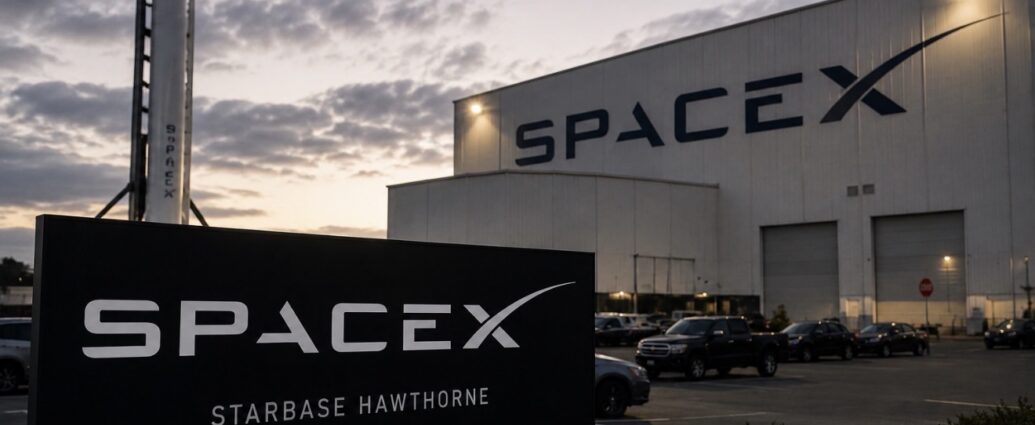
SpaceX has finally put a date on its first report card as a public company, and in doing so it started the clock on one of the largest share-unlock events in market history.
The aerospace and defense contractor announced Aug. 4 as its debut earnings report, a date that also triggers the company’s staggered lock-up structure and lets insiders begin selling earlier than the typical 180-day window. The first tranche frees up to 911.5 million shares—about 20% of eligible locked-up stock—on the second full trading day after the report, roughly Aug. 6. An additional 455.8 million shares would unlock only if the stock closes at least 30% above its IPO price, or $175.50, on five of the 10 trading days leading into the report—a level well out of reach.
The share news gave the stock a rare lift. SpaceX gained 7% on Tuesday, attempting to snap a seven-day losing streak after the announcement. That bounce comes off a rough stretch: the company went public around June 11 on Nasdaq under the ticker SPCX at $135 a share, in an offering that pushed its valuation past $2 trillion and ranked as the largest in U.S. history, yet the stock has since struggled to hold above that IPO price. It has traded around $131, roughly 42% off its post-IPO high, leaving a market value near $1.7 trillion.
The supply looming over the market is enormous. The 911.5 million shares set to become eligible are worth roughly $109 billion—an overhang that exceeds the total raised in the IPO itself. Rather than a single cliff, SpaceX built a staggered schedule, with a larger tranche of about 28% following third-quarter earnings and roughly 40% of all shares freely tradable by early December. Founder Elon Musk’s roughly 6.4 billion shares are locked for a full year, first becoming eligible for transfer on June 12, 2027, with no early-release provisions.
History offers a cautionary parallel. When Facebook’s first post-IPO lock-up expired in August 2012, freeing about 271 million shares, the stock fell more than 6% that day to what was then an all-time low, roughly half its IPO price.
Beyond the supply mechanics, Aug. 4 gives investors their first detailed look at the operating engine. The market will focus on Starlink’s profitability, Falcon 9 cash flow, spending on xAI computing infrastructure, and whether guidance can justify the valuation, with recent Starship and Falcon 9 launch aborts adding to the scrutiny. Investors are also watching the company’s growing compute business: after acquiring Musk’s xAI in February—now operating data centers and a power plant near Memphis—it has signed up customers including Google, Anthropic and Reflection to rent excess capacity.
JBizNews Desk | New York
© JBizNews.com All Rights Reserved. Reproduction or distribution without written permission is prohibited.