The public’s appetite for SpaceX stock was so intense that, on at least one major retail trading platform, investors put more money into the newly public rocket company than into Apple, Microsoft, Tesla, Meta and Google-parent Alphabet combined.
Leif Abraham, co-CEO of the investing platform Public, told CNBC on Monday that demand for SpaceX during its first trading sessions was unlike anything the platform had previously experienced. According to Abraham, the combined activity in five of the market’s most heavily traded technology stocks still could not match the buying interest directed at SpaceX.
The numbers behind the debut help explain why.
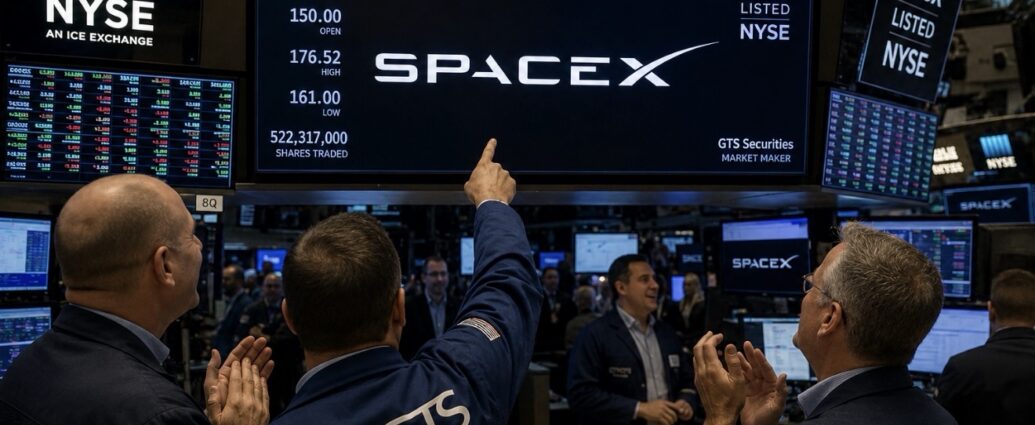
SpaceX began trading Friday on the Nasdaq under the ticker SPCX, and more than 522 million shares changed hands during its first session, according to Benzinga Pro. That translated into an estimated $33 billion in dollar volume, a level of activity rarely seen even among the largest public companies and unprecedented for a stock making its market debut.
To put that figure into perspective, $33 billion is the type of trading volume that on a normal day is spread across hundreds of publicly traded companies. Instead, it was concentrated into a single stock during its first hours on the market.
Separate market data showed SpaceX accounting for roughly 4% of all retail single-stock trading activity that Friday. Trading in SpaceX reportedly ran at about three-and-a-half times the pace of the second-most-active retail stock, Nvidia, underscoring the extent to which the company captured investor attention.
The historic trading activity followed what was already a record-breaking initial public offering.
SpaceX sold shares at $135 each and raised approximately $75 billion, making it the largest IPO ever recorded. The offering surpassed the previous record set by Alibaba, which raised roughly $22 billion when it went public in 2014.
The stock opened at $150, climbed as high as $176.52 during its first day and finished around $161, representing a gain of roughly 19% above its offering price. The rally pushed SpaceX’s market capitalization above $2.1 trillion, immediately placing it among the most valuable public companies in the United States.
What made the offering especially unusual was its focus on individual investors.
SpaceX reserved a record 20% of its IPO shares for retail buyers, a much larger allocation than is typically seen in major public offerings. Most IPOs reserve the overwhelming majority of shares for institutional investors such as mutual funds, hedge funds and pension managers.
The decision was widely viewed as an effort by CEO Elon Musk to allow everyday investors to participate directly in the company’s public debut.
The response was overwhelming.
Ahead of the IPO, retail investors reportedly submitted more than $100 billion in orders, far exceeding the number of shares available. That imbalance between supply and demand helped fuel the surge in trading activity and contributed to the stock’s strong opening performance.
When demand significantly exceeds available shares, investors who receive allocations often trade aggressively after listing, while others who missed out attempt to buy in the open market. The result can create powerful upward momentum, particularly during a company’s first days of trading.
The enthusiasm carried into the new week.
By Monday, shares had climbed more than 15% from their opening levels as investors continued pouring money into the stock. The gains reinforced SpaceX’s status as one of the most closely watched market debuts in modern history.
Still, the same forces driving the rally also create risk.
Stocks fueled by intense retail enthusiasm can experience significant volatility, and market history shows that investor excitement alone does not determine long-term value. Eventually, even the market’s most popular companies must justify their valuations through financial performance and business execution.
For now, however, SpaceX has accomplished something few companies have ever achieved. On platforms where everyday Americans buy and sell stocks, trading activity in the aerospace giant exceeded the combined activity of some of the largest and most recognizable technology companies in the world.
Whether that enthusiasm proves durable remains to be seen. But the opening chapter of SpaceX’s life as a public company has already secured a place in Wall Street history.
JBizNews Desk
© JBizNews.com All Rights Reserved. Reproduction or distribution without written permission is prohibited.