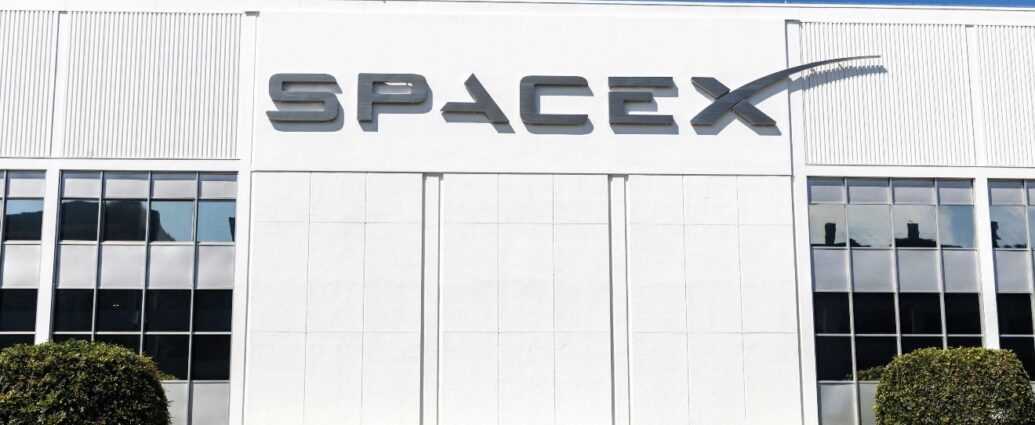
SpaceX has become one of the fastest companies ever added to the Nasdaq-100 Index, but the massive wave of mandatory buying by index funds has done little to support its stock price, highlighting the difference between mechanical demand and investor confidence.
According to Nasdaq’s June 26 announcement, SpaceX officially joined the benchmark index before trading opened on Tuesday, July 7, only 15 trading days after its record-setting June 12 initial public offering. The unusually rapid addition was made possible by new Nasdaq rules that took effect on May 1, allowing exceptionally large newly public companies to qualify for fast-track inclusion.
Previously, newly listed companies often waited months before becoming eligible.
The change reflects SpaceX’s enormous market value.
The company debuted at $135 per share, giving it an estimated valuation of approximately $1.75 trillion, immediately making it one of the world’s largest publicly traded companies.
Its inclusion triggered automatic buying from index funds and exchange-traded funds that track the Nasdaq-100.
More than $800 billion in investment assets are linked to the index, including the widely held Invesco QQQ Trust.
Because passive investment funds are required to mirror the Nasdaq-100’s composition, they had no choice but to purchase SpaceX shares while simultaneously reducing holdings in existing index members such as Apple, Microsoft, Nvidia, Amazon and other technology giants.
JPMorgan estimated the addition required approximately $4.3 billion in buying by the QQQ fund alone.
Across all Nasdaq-100 and related index-tracking products, analysts estimated total passive purchases between $22 billion and $27 billion.
Despite that extraordinary demand, SpaceX shares have struggled.
Rather than rallying following the index inclusion, the stock declined during the week as investors questioned whether its valuation already reflected years of future growth.
The mixed reaction illustrates one of Wall Street’s most important distinctions.
Index inclusion creates demand because investment rules require funds to buy the shares—not necessarily because investors believe the stock has become more attractive.
Once those mandatory purchases are completed, future performance depends primarily on earnings growth, profitability and business execution.
Analysts remain sharply divided.
Morgan Stanley maintained an optimistic outlook with a $300 price target, while Raymond James initiated coverage Tuesday with an $800 target, implying an extraordinary long-term valuation approaching $10.5 trillion if achieved.
Other analysts remain considerably more cautious.
Historical performance also suggests restraint.
Research examining Nasdaq-100 additions since 2020 found that newly added companies have generally underperformed the broader index during the following one to two years after the initial buying pressure subsided.
SpaceX’s own financial results explain some of that caution.
The company reported approximately $4.7 billion in first-quarter revenue, while recording an operating loss of roughly $1.9 billion.
Its Starlink satellite-internet business remained profitable, generating approximately $1.2 billion in operating income, but the broader company continues investing heavily in launch systems, spacecraft development and satellite deployment.
Investors are also watching future share supply.
Only an estimated 3% to 5% of SpaceX shares currently trade publicly.
Additional shares are expected to become available as lock-up restrictions gradually expire following future earnings releases and later this year.
A larger public float could increase the company’s weighting within major stock indexes while simultaneously increasing the number of shares available for trading.
The S&P 500 has not adopted Nasdaq’s accelerated inclusion rules.
As a result, SpaceX is unlikely to qualify for the broader benchmark until 2027, delaying another potentially significant wave of passive investment.
For everyday investors, the episode demonstrates how modern financial markets increasingly operate through passive investing.
Millions of Americans now own SpaceX indirectly through retirement accounts and index funds regardless of whether they intentionally selected the company.
At the same time, index inclusion alone does not guarantee higher share prices.
Ultimately, investors will judge SpaceX based on its ability to grow revenue, improve profitability and execute its ambitious long-term plans in commercial spaceflight, satellite communications and related technologies.
The Nasdaq-100 provided immediate visibility and billions of dollars in automatic demand.
Whether those purchases ultimately justify SpaceX’s valuation will depend on the company’s future financial performance rather than the mechanics of index investing.
JBizNews Desk | New York
© JBizNews.com All Rights Reserved. Reproduction or distribution without written permission is prohibited.