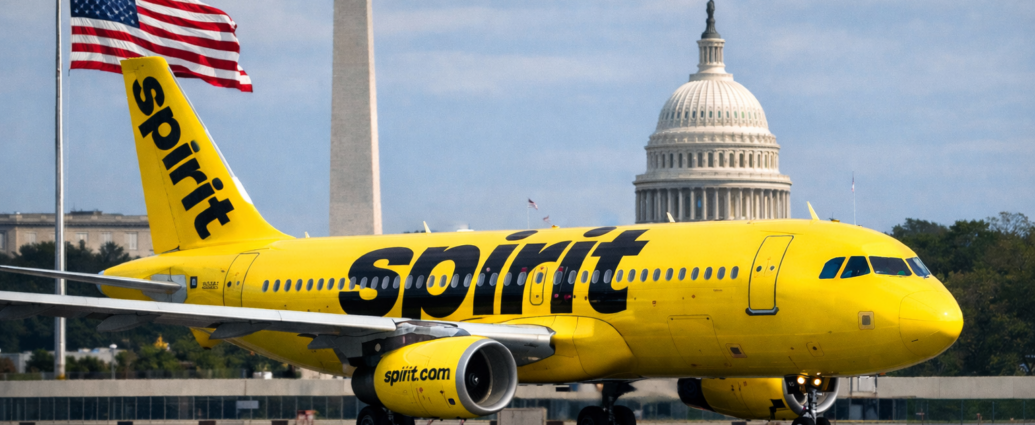
Spirit Airlines is in active discussions with the Trump administration over potential government support, including a possible equity investment, as the struggling ultra-low-cost carrier works through bankruptcy and attempts to stabilize its operations.
People familiar with the matter said the talks include proposals that could allow the U.S. government to take an ownership stake in Spirit Airlines (NYSE: SAVE), underscoring growing concern among policymakers about preserving competition in the U.S. airline industry. The discussions were first reported by The Air Current, while Bloomberg reported that Spirit proposed offering the government equity as part of a broader rescue plan.
Spirit said it is “continuing to evaluate strategic alternatives to strengthen its balance sheet and position the company for long-term success,” but declined to comment on specifics of any government involvement. Individuals close to the process said Treasury Department and economic policy officials are reviewing potential structures, including direct investment or financing support.
The urgency reflects Spirit’s deepening financial challenges. The Florida-based airline filed for bankruptcy protection in August after a prior restructuring effort in late 2024 failed to resolve its debt burden, according to court filings. Rising costs, weaker pricing power, and competitive pressure have eroded margins, forcing the carrier into a more aggressive turnaround strategy.
As part of that effort, Spirit has been working to streamline its business by selling aircraft and refocusing operations on core markets, including Orlando, Fort Lauderdale, and Detroit. In February, the airline reached an agreement with a group of creditors that would allow it to emerge from bankruptcy as a smaller carrier with a reduced fleet and a stronger balance sheet.
“The restructuring plan is a step in the right direction, but execution risk remains high,” said Helane Becker, Managing Director and Senior Airline Analyst at TD Cowen, noting that downsizing alone may not be sufficient in a highly competitive environment. “The challenge is rebuilding a sustainable model while competing against much larger carriers.”
That competition has intensified in recent years. Major airlines including Delta Air Lines (NYSE: DAL), United Airlines Holdings (NASDAQ: UAL), and American Airlines Group (NASDAQ: AAL) have expanded basic economy offerings, directly targeting price-sensitive travelers while also offering premium upgrades and broader route networks. This has narrowed the gap between legacy carriers and ultra-low-cost operators like Spirit.
Spirit’s failed merger with JetBlue Airways, blocked on antitrust grounds, removed a key pathway to scale and financial recovery, leaving the airline to pursue restructuring as a standalone entity.
Within Washington, the potential for government involvement is being evaluated through a competition lens. A person familiar with the discussions said maintaining a viable low-cost airline segment is “critical to ensuring consumers continue to have access to affordable travel options.”
Still, analysts caution that targeted government investment would be controversial outside of a systemic crisis. “This would be a highly unusual move in the current environment,” said Robert Mann, President of R.W. Mann & Company. “Unlike the pandemic, this is a company-specific issue, and policymakers will need to justify why intervention is necessary.”
For consumers, the outcome could have broad implications. Spirit has historically played a key role in keeping fares low across domestic routes. A downsized or weakened carrier could reduce pricing pressure industry-wide, potentially leading to higher ticket costs.
The path forward remains uncertain as negotiations continue, but Spirit’s restructuring efforts combined with potential government backing signal a pivotal moment for the airline—and for how policymakers approach competition and stability in the U.S. aviation sector.
JBizNews Desk