By Julia Parker – JBizNews Desk
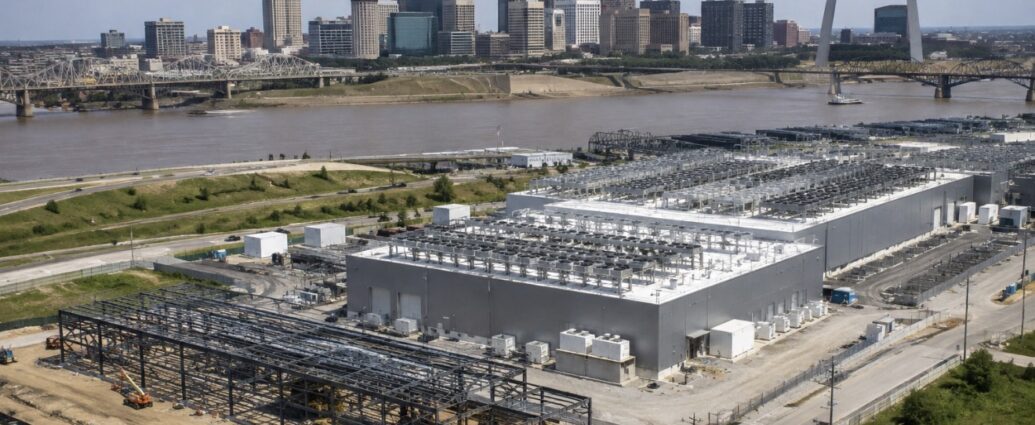
ST. LOUIS — The St. Louis region is advancing a data-center development pipeline valued at about $25 billion, positioning the metro area to compete for artificial-intelligence infrastructure investment that could reshape electricity demand, construction activity, land values and regional economic development priorities.
The push puts St. Louis into a national race for facilities that power AI models, cloud computing and enterprise data storage. For business owners and investors, the stakes extend beyond technology: data centers require major utility upgrades, large construction workforces, tax incentives, fiber connectivity and long-term power contracts.
Regional economic-development officials are marketing the area’s central location, industrial land, freight network and power availability as advantages for operators seeking alternatives to more constrained coastal markets. The projects under discussion include large-scale campuses that could require hundreds of megawatts of electricity, placing Ameren Corporation and other infrastructure providers at the center of the region’s growth strategy.
The investment figure does not mean all projects are fully financed or guaranteed to be built. Data-center developments typically move in phases, with final construction dependent on power interconnection agreements, local approvals, customer commitments and capital-market conditions. Still, the size of the pipeline signals that St. Louis is no longer treating AI infrastructure as a secondary economic-development category.
AI demand has triggered one of the largest capital-spending cycles in the technology sector. Microsoft Corporation, Amazon.com Inc., Alphabet Inc. and Meta Platforms Inc. have committed tens of billions of dollars to cloud and AI infrastructure as corporate customers move more computing workloads to advanced data centers.
At a White House event in January announcing the Stargate AI infrastructure initiative, Sam Altman, chief executive of OpenAI, said, “I think this will be the most important project of this era.” The comment underscored how power, land and data-center capacity have become strategic assets in the AI economy.
For St. Louis, the opportunity is both economic and operational. Data-center construction can generate substantial short-term employment for electricians, engineers, equipment suppliers, concrete contractors and building trades. Once operational, the facilities typically employ fewer workers than factories but can add significant property-tax value and attract suppliers tied to energy, cooling systems, cybersecurity and network infrastructure.
The tradeoff is pressure on the electric grid. Large AI data centers can consume as much power as small cities, forcing utilities and regulators to consider who pays for transmission upgrades, substations and generation capacity. If costs are shifted too broadly, manufacturers, hospitals and small businesses could face higher utility bills.
That makes regulation a key factor. The Missouri Public Service Commission and the Illinois Commerce Commission oversee utility investment and rate cases in the region. Their decisions will influence how quickly power can be delivered to new campuses and how much of the cost is borne by data-center operators versus existing customers.
Water use and local land planning are also likely to draw scrutiny. Some data centers rely on water-intensive cooling systems, though newer designs can reduce consumption. Local governments weighing incentives will face pressure to show that projects deliver measurable tax revenue, job creation and infrastructure benefits.
The competitive landscape is tightening. States including Texas, Ohio, Georgia, Virginia and Arizona have already drawn large data-center commitments, often helped by cheap land, favorable tax treatment and available power. St. Louis is trying to enter that tier before the next wave of AI capacity is locked into other markets.
Investors will watch whether announced interest converts into binding commitments. The most important indicators will be signed power agreements, zoning approvals, utility capital plans and construction starts. Without those milestones, the $25 billion figure remains a pipeline rather than an economic impact.
For now, the region’s message is clear: St. Louis wants to compete for the physical backbone of AI, not just the software and services built on top of it.
JBizNews Desk | St. Louis
© JBizNews.com All Rights Reserved. Reproduction or distribution without written permission is prohibited.