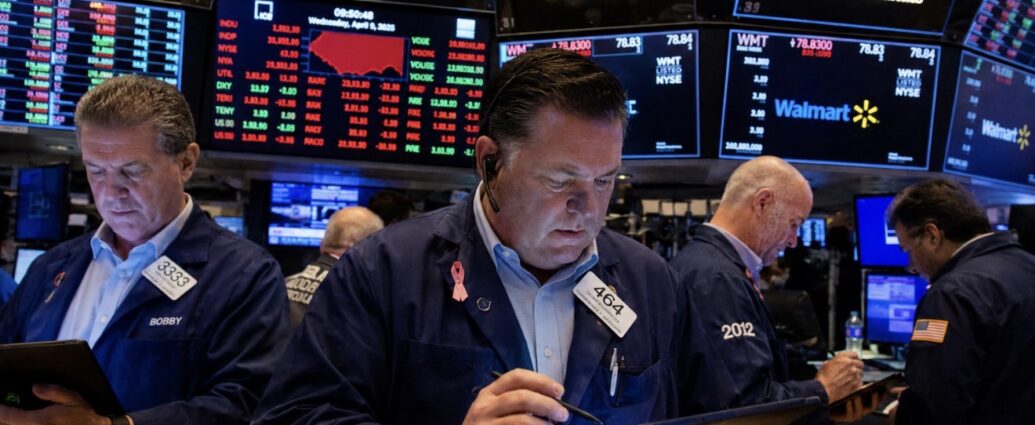
NEW YORK — U.S. stocks dropped from record highs on Wednesday, June 3, 2026, after Iran fired ballistic missiles at Kuwait and Bahrain, reviving fears for Middle East energy supplies and pushing oil to a third straight day of gains. The Dow Jones Industrial Average fell 619.36 points, or 1.21%, to 50,688.43; the S&P 500 lost 0.73% to 7,554.37; and the Nasdaq Composite slid 0.89% to 26,853.98, each retreating a day after closing at all-time highs. Kuwait’s Foreign Ministry said the strike damaged infrastructure and killed at least one person, while U.S. Central Command said American forces hit Iran’s Qeshm Island and tankers bound for Iranian ports.
Oil did the damage. West Texas Intermediate crude rose about 2.7% to roughly $96 a barrel, and Brent crude climbed toward $98, extending a rally driven by the threat to Persian Gulf shipping. The U.S. Dollar Index gained 0.3% to 99.5 as investors reached for safety, the Cboe Volatility Index (VIX) rose toward 16, and gold slipped about 1.2% to roughly $4,468 an ounce as the firmer dollar weighed. The small-cap Russell 2000 was the day’s worst major gauge, down 1.25%, as higher energy costs hit economically sensitive names hardest.
The selloff reached into the bond market. The 10-year Treasury yield ticked up toward 4.45% as the oil spike kept inflation worries alive—and with them, the case for tighter policy. Under new Federal Reserve Chairman Kevin Warsh, who holds his first meeting this month, traders now price in roughly 17 basis points of rate increases by year-end, implying about a 70% chance of a quarter-point hike, with a full hike seen by March 2027. That marks a sharp reversal from the cuts markets expected before the war sent energy prices soaring, and it follows a late-May reading on the PCE Price Index that came in at its highest level in nearly three years.
The data did little to cool the inflation talk. The Labor Department reported Tuesday that job openings rose in April to 7.62 million, the highest since May 2024, a sign of still-firm labor demand. The Federal Reserve’s Beige Book, released Wednesday, said economic activity increased “a bit” in recent weeks while employment was little changed.
Software and cybersecurity stocks led the retreat into the close, several of them sliding ahead of earnings. CrowdStrike had slipped in recent sessions on worries its valuation left no room for error and on new competition after Google Cloud launched an AI threat-defense platform in late May.
After the bell, the company delivered anyway, posting adjusted earnings of $1.10 a share against the $0.88 analysts expected, a 25% beat. Wall Street had been raising the bar going in: JPMorgan analyst Brian Essex lifted his price target to $800 from $475 with an Overweight rating, Evercore ISI analyst Peter Levine raised his to $710 from $395, Benchmark analyst Yi Fu Lee went to $700 from $500 with a Buy rating, and Baird analyst Shrenik Kothari moved to $490 from $460 while maintaining a Neutral rating.
The bigger test for the market’s favorite trade came from chips. Broadcom reported revenue of about $22.19 billion, a hair under the roughly $22.27 billion Wall Street expected, with adjusted earnings of $2.44 a share topping the $2.40 estimate and AI-semiconductor revenue of $10.8 billion. The narrow top-line miss was a potential stressor for a chip sector that has been on a historic run.
Veeva Systems also reported after the close, as did a mix of names beyond tech—retailers Macy’s, PVH, and Petco, along with AI-software firm C3.ai—giving investors a read across consumer and enterprise spending.
Beneath the surface, the damage was broad. Communications, financials, and technology all finished lower, and only energy stocks drew real support as crude climbed. The session marked a pause in a remarkable stretch: the S&P 500 had set a record as recently as Tuesday, when it closed at 7,609.78, capping a month in which AI and semiconductor names carried the index to repeated highs.
The path from here runs through the Middle East. Israeli Prime Minister Benjamin Netanyahu said in a CNBC interview that Israel could strike Iran again, and U.S.-Iran ceasefire talks remained strained. President Donald Trump said a memorandum of understanding to reopen the Strait of Hormuz could be reached within a week, though Iranian media cast doubt on the progress of negotiations.
What to Watch Thursday
Wall Street opens Thursday, June 4, trying to steady itself, and futures will take their first cue from the results that just landed. Whether buyers treat Broadcom’s narrow revenue miss as a chance to add will set the tone for semiconductors, while CrowdStrike’s beat tests a stock that had run up sharply into the print.
The economic calendar centers again on jobs. Challenger, Gray & Christmas releases its monthly tally of announced layoffs in the early morning, and at 8:30 a.m. ET the Labor Department reports weekly initial jobless claims, forecast at about 211,000 against 215,000 the prior week, alongside a revised reading on nonfarm productivity. Federal Reserve Bank of San Francisco President Mary Daly speaks at 12:10 p.m. ET, and investors will parse her remarks for any signal on rate policy under Warsh. The earnings slate lightens, with names such as Ciena and a monthly sales update from Fastenal on tap.
Oil stays the swing factor, with any Strait of Hormuz headline able to move energy prices and the broader market in either direction. It all builds to Friday’s May Employment Report—the week’s marquee event, and a number that could harden the case for a Fed on hold, or tightening, if energy-driven inflation lingers. Until then, expect cautious trading: the claims data at the open, the chip reaction through the session, and the oil tape all day.
Wall Street — JBizNews Desk
© JBizNews.com All Rights Reserved. Reproduction or distribution without written permission is prohibited.