NEW YORK — Thursday, June 4, 2026
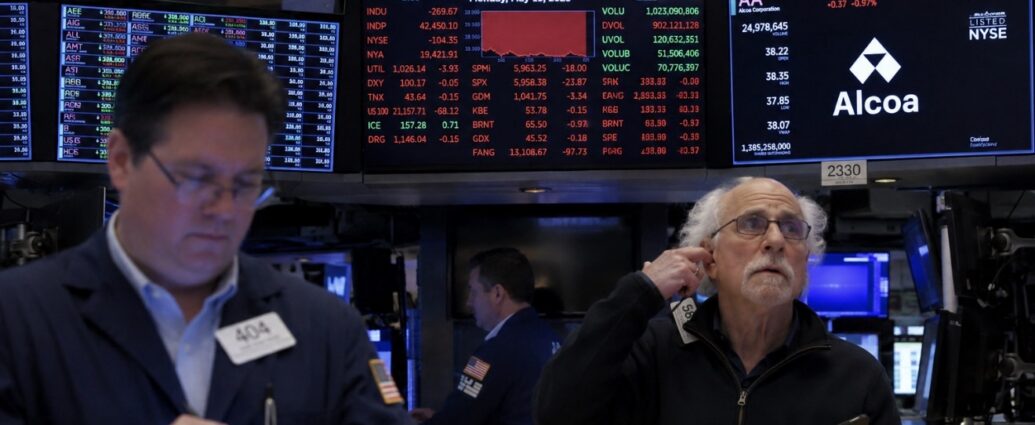
Wall Street’s record-setting run hit a pause Thursday morning as disappointing reactions to several high-profile technology earnings reports weighed on the broader market, while easing tensions on one front of the Middle East conflict helped push oil prices and Treasury yields lower.
After closing sharply lower Wednesday, stocks opened mixed to weaker as investors reassessed lofty valuations in the technology sector and rotated toward more defensive areas of the market. The prior session saw the S&P 500 fall 0.7% to 7,553.68, the Dow Jones Industrial Average drop 1.2% to 50,687.07, and the Nasdaq Composite decline 0.9% to 26,853.98, ending a nine-session winning streak amid renewed concerns about geopolitical risks and energy prices.
The biggest early mover Thursday was Broadcom, whose shares fell roughly 13% after reporting record revenue but delivering an artificial-intelligence outlook that failed to satisfy investors accustomed to increasingly aggressive growth projections. The reaction underscored a recurring theme across Wall Street this year: companies viewed as leaders in AI are being judged not on whether growth is strong, but whether it exceeds already elevated expectations.
The selloff spilled across the semiconductor sector, with companies including Micron Technology trading lower as investors took profits following months of powerful gains driven by AI-related demand.
CrowdStrike Holdings also came under pressure, falling nearly 11% despite posting results that exceeded profit expectations. Investors focused instead on rising expenses associated with AI investments and infrastructure expansion. The reaction highlighted growing concerns that many software companies may face short-term margin pressure as they race to build AI capabilities and defend market share.
Retail and apparel giant PVH Corp., parent company of Calvin Klein and Tommy Hilfiger, suffered one of the steepest declines of the morning, plunging approximately 20%. While the company beat first-quarter earnings estimates, management lowered its full-year outlook, citing softer consumer demand in Europe and ongoing tariff-related pressures. Several analysts subsequently reduced their outlooks on the stock, accelerating the selloff.
Not all sectors participated in the decline.
Investors shifted capital into more defensive and consumer-oriented businesses as oil prices retreated. Axalta Coating Systems rose about 4%, H&R Block gained nearly 4%, and health insurer Centene advanced roughly 3.3% in early trading.
The move reflected a broader rotation underway in markets, with investors temporarily stepping away from high-growth technology names and seeking stability in sectors viewed as less vulnerable to economic and geopolitical uncertainty.
Energy markets provided some relief after several days of heightened volatility.
Oil prices eased following reports that Israel and Lebanon had agreed to a conditional ceasefire, reducing concerns about an immediate expansion of regional conflict. The development helped remove part of the geopolitical premium that had recently driven crude prices higher.
The broader situation remains fragile. Shipping activity through the Strait of Hormuz, the critical waterway that normally handles roughly 20% of global oil and liquefied natural gas flows, remains below pre-conflict levels. Market participants continue to monitor the region closely for signs of further escalation involving Iran and U.S. interests.
Political developments in Washington added another layer of uncertainty. On Wednesday, the Republican-controlled House voted to limit U.S. military involvement in Iran, marking a rare challenge to President Donald Trump’s approach to the conflict. Trump dismissed the measure as a “meaningless vote,” though the debate reflected growing concern among lawmakers about the potential economic and military consequences of a prolonged confrontation.
Economic data also remained in focus.
Investors awaited the latest weekly jobless claims report and productivity data, but attention is increasingly shifting toward Friday’s May employment report, one of the most closely watched indicators for both markets and Federal Reserve policymakers.
Economists currently expect the U.S. economy to have added approximately 85,000 jobs in May, down from roughly 115,000 in April but still representing continued labor-market growth. The report will play a major role in shaping expectations for future Federal Reserve policy.
Several Fed officials, including Tom Barkin, Michelle Bowman, and Mary Daly, were scheduled to speak Thursday, with traders looking for any signals regarding the path of interest rates. Recent inflation readings have softened modestly, helping support hopes that policymakers may eventually gain flexibility later this year.
Looking ahead, investors will also focus on earnings from Lululemon Athletica, scheduled after Thursday’s closing bell. The report is expected to provide another important measure of consumer spending trends, particularly among higher-income households.
For now, Wall Street appears to be entering a period of consolidation after months of gains. Investors are reassessing technology valuations, monitoring developments in the Middle East, and waiting for Friday’s jobs report to provide the next major clue about the direction of the economy and financial markets.
Wall Street — JBizNews Desk
© JBizNews.com All Rights Reserved. Reproduction or distribution without written permission is prohibited.