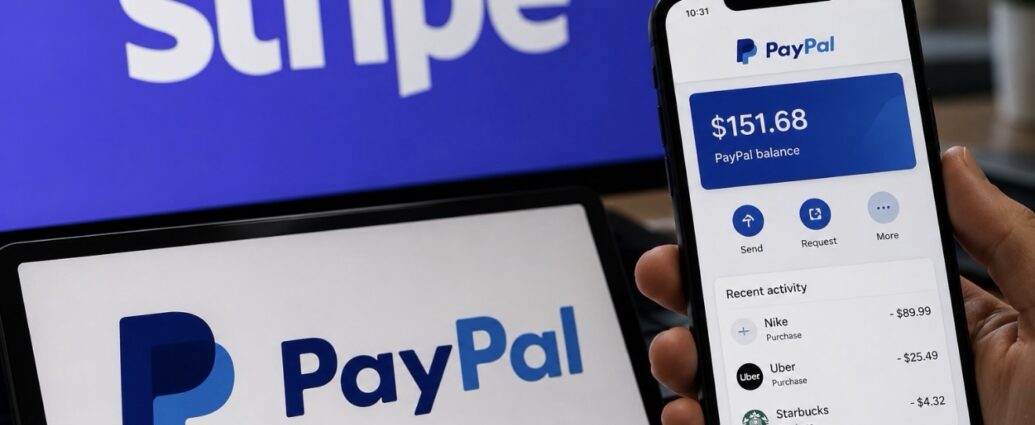
Payments company Stripe and private equity firm Advent International have submitted a joint offer to acquire PayPal Holdings Inc. for $60.50 per share, valuing the digital payments pioneer at more than $53 billion, according to two people with direct knowledge of the discussions on Tuesday, July 14.
Advent International declined to comment. Neither PayPal nor Stripe responded to requests for comment.
Unlike takeover speculation that often circulates on Wall Street, the proposal is backed by approximately $50 billion in committed financing from a group of banks, representing roughly a 28% premium over PayPal’s Tuesday closing share price.
The financing has already been committed, signaling that the proposal represents a serious acquisition effort rather than preliminary interest.
A Bid for the Entire Company
Under the proposal, Stripe and Advent International would each own 50% of PayPal following the acquisition.
Importantly, the buyers are proposing to keep PayPal intact rather than breaking apart its businesses.
That detail surprised many analysts.
For months, Wall Street speculation centered on the possibility that Stripe might pursue only Braintree, PayPal’s enterprise payment-processing platform, while leaving PayPal’s branded checkout business and Venmo separate.
Instead, the proposal seeks ownership of the company’s complete payments ecosystem.
According to people familiar with the matter, Stripe first approached PayPal in early April. The consortium has yet to receive a formal response from PayPal’s board and hopes discussions can advance during the coming weeks.
There is no guarantee a transaction will ultimately occur.
Why PayPal Became a Target
PayPal helped pioneer digital payments more than two decades ago.
Since then, however, competition has intensified as consumers increasingly shifted toward alternatives including Apple Pay, Google Pay, and newer fintech platforms.
The company’s market value tells the story.
PayPal reached a peak valuation of approximately $360 billion during the technology boom of 2021 before falling to roughly $36 billion earlier this year.
Its shares have declined more than 40% over the past twelve months.
Operating performance has also slowed.
PayPal’s branded checkout business—which still generates more than half of company profits—grew only 1% during the fourth quarter of 2025, down from 5% in the previous quarter.
Management attributed much of the slowdown to softer consumer spending among lower- and middle-income households in the United States and weaker demand in Germany, one of PayPal’s largest international markets.
For full-year 2025, revenue increased 4% to $33.2 billion.
Holiday-quarter revenue reached $8.68 billion, missing analysts’ consensus expectation of $8.80 billion.
The company also withdrew financial targets it had established for 2027 only one year earlier.
A New CEO Faces His First Major Decision
PayPal’s board appointed Enrique Lores as President and Chief Executive Officer effective March 1, replacing Alex Chriss.
Jamie Miller served as interim CEO during the transition while David W. Dorman became independent chairman.
At the time of the leadership change, directors stated publicly that the pace of execution under previous management had fallen short of expectations.
Lores, who previously spent more than six years leading HP Inc., immediately began restructuring PayPal and simplifying operations.
The takeover proposal arrives only four months into that turnaround effort, placing the board in a difficult position.
Directors must now decide whether to recommend a premium offer or continue pursuing an independent recovery strategy after years of disappointing shareholder returns.
Stripe Has the Financial Strength
Stripe enters the discussions from a position of strength.
The privately held payments company recently reached a valuation of approximately $159 billion, a 74% increase from the prior year following a tender offer supported by investors including Thrive Capital and Coatue Management.
Earlier this year, Stripe also completed its $1.1 billion acquisition of Bridge, a stablecoin infrastructure company.
On February 17, Bridge received conditional approval from the Office of the Comptroller of the Currency to operate as a federally chartered national trust bank.
PayPal already operates its own U.S. dollar-backed stablecoin, PYUSD, which now carries a market capitalization approaching $4 billion.
Together, the combined companies would control one of the largest digital checkout ecosystems alongside significant stablecoin payment infrastructure.
What It Means for Businesses
Small businesses could face meaningful changes if the acquisition proceeds.
Stripe and PayPal currently compete aggressively for merchants processing online payments.
Fewer independent payment processors could reduce merchants’ negotiating leverage when discussing transaction fees and payment-processing contracts.
Even modest increases in processing costs can significantly affect retailers operating on narrow profit margins.
Regulators are expected to examine the proposal closely.
A merger involving two of the world’s largest digital payments companies would almost certainly attract intense antitrust scrutiny from regulators in both the United States and Europe.
Those regulatory hurdles remain substantial and could ultimately prevent the transaction from moving forward.
A Familiar Story Returns
This is not the first time Stripe has been linked to PayPal.
In February 2026, Bloomberg reported that Stripe was exploring either a full acquisition or the purchase of selected PayPal assets.
That report briefly pushed PayPal shares approximately 7% higher before takeover enthusiasm faded.
This time, however, investors are looking at something materially different.
The proposal includes a specific purchase price, a substantial premium for shareholders and approximately $50 billion of committed financing already secured from lenders.
The next move belongs to PayPal’s board.
JBizNews Desk | New York
© JBizNews.com All Rights Reserved. Reproduction or distribution without written permission is prohibited.