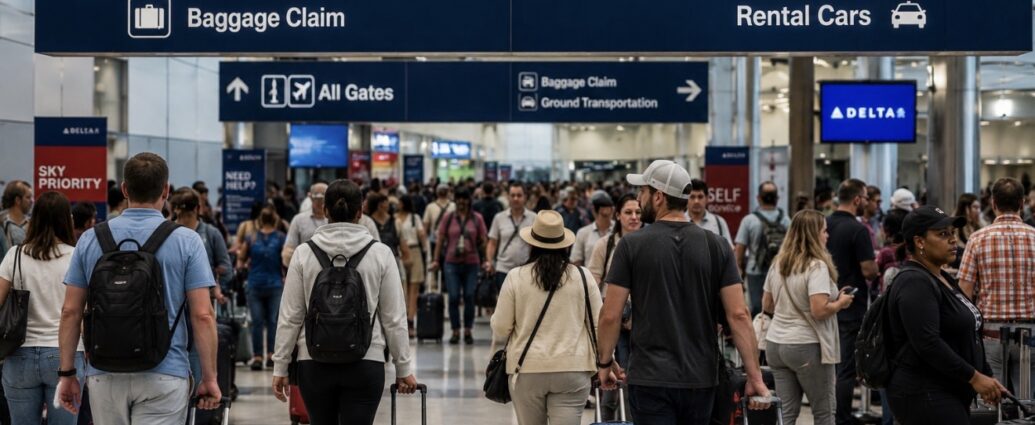
Americans planning summer vacations are paying significantly more this year as higher airfare, hotel rates and gasoline prices drive up the cost of travel across the country.
According to the U.S. Bureau of Labor Statistics, airline fares in May were 26.7% higher than a year earlier, while the U.S. Travel Association’s Travel Price Index showed overall travel costs rising 9.8% year over year—more than twice the pace of overall inflation. Hotel and motel prices climbed another 5.1%.
One of the biggest reasons is higher fuel costs.
Jet fuel prices surged following renewed conflict involving Iran, increasing airline operating expenses that carriers have largely passed on to passengers through higher ticket prices.
Another major factor is the disappearance of one of America’s largest discount airlines.
Spirit Airlines ceased operations on May 2 after multiple bankruptcy filings, removing roughly 2% of domestic airline capacity during one of the busiest travel seasons of the year.
While 2% may sound modest, Spirit concentrated heavily on price-sensitive leisure routes serving cities including Orlando, Fort Lauderdale and Las Vegas, where its low fares helped keep prices down across the industry.
For years economists referred to the company’s influence as the “Spirit Effect.”
Research cited by the U.S. Department of Justice found average fares often fell substantially whenever Spirit entered a market and frequently increased after the airline exited.
With Spirit no longer competing, larger carriers including American Airlines, Delta Air Lines, United Airlines and Southwest Airlines have gained greater pricing power across many domestic routes.
Industry data reflects that shift.
According to the Airlines Reporting Corporation, the average domestic round-trip ticket reached approximately $623 during April, the highest level in nearly four years.
Travel analytics firm Points Path also found domestic airfare for summer travel running roughly 15% higher than last year, while international fares have increased approximately 12%.
Driving vacations have become more expensive as well.
AAA has warned gasoline prices could continue climbing through the summer, while GasBuddy forecasts prices could approach $5 per gallon if geopolitical tensions continue disrupting global oil supplies.
Hotels have also increased prices as strong travel demand meets higher labor, insurance and operating costs.
Despite higher prices, travel demand remains resilient.
Many travelers continue prioritizing vacations, although more families are adjusting plans by booking earlier, traveling during midweek, shortening trips or redeeming airline miles and credit-card reward points to offset higher costs.
Travel experts say Tuesday and Wednesday departures often remain the least expensive options and can save travelers hundreds of dollars compared with weekend flights.
Budget airlines including Frontier, Allegiant, Breeze Airways and Avelo Airlines are expected to expand into some former Spirit markets, but analysts believe meaningful increases in low-cost competition could take several months.
For consumers, the message is clear.
Traveling this summer requires larger budgets than in previous years, particularly for families purchasing multiple airline tickets.
For the travel industry, the combination of higher fuel costs, reduced airline competition and strong consumer demand has created one of the most expensive summer travel seasons in recent years.
Unless fuel prices decline or additional low-cost airline capacity enters the market, travelers should expect elevated airfare and vacation costs to continue through the remainder of the summer.
JBizNews Desk | New York
© JBizNews.com All Rights Reserved. Reproduction or Distribution without Written Permission is Prohibited.