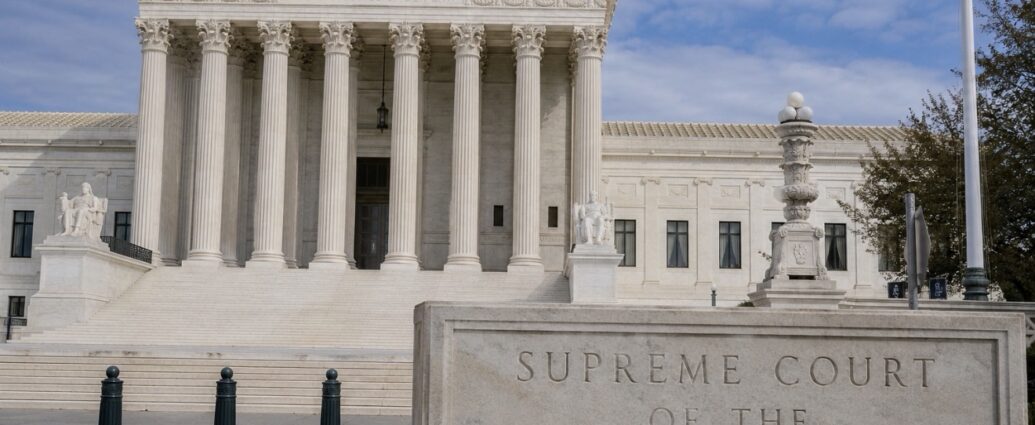
The U.S. Supreme Court is preparing to issue two of the most closely watched decisions of President Donald Trump’s second term, one involving his effort to remove a Federal Reserve governor and the other challenging automatic birthright citizenship. The justices are scheduled to release the final opinions of the term beginning Monday, June 29, at 10 a.m. in Washington, with seven cases still pending. As is customary, the Court has reserved several of its most significant and potentially far-reaching rulings for the final days of the term.
For the business community, the most consequential case involves Trump’s attempt to remove Federal Reserve Governor Lisa Cook. The president has sought Cook’s dismissal over allegations of mortgage fraud, which she denies. While the Court is technically deciding only whether Trump may temporarily remove her while litigation continues, the broader implications extend well beyond one appointment.
The Federal Reserve determines interest rates that directly influence mortgages, auto loans, business financing and credit card borrowing. For decades, financial markets have operated under the assumption that Federal Reserve governors cannot be removed simply because a president disagrees with monetary policy decisions. During oral arguments earlier this year, several justices appeared skeptical of Trump’s authority to remove Cook, and the Court previously declined to immediately allow her dismissal while the case proceeds.
A related dispute involving the Federal Trade Commission could prove equally significant.
That case centers on Rebecca Slaughter, a Democratic FTC commissioner whom Trump removed from office. The administration argues that the Constitution gives the president authority to dismiss senior executive branch officials regardless of statutory job protections enacted by Congress.
A ruling in Trump’s favor would require the Court to overturn a precedent that has stood for approximately 91 years, reshaping the legal foundation supporting many independent federal agencies.
Although the justices have indicated any decision may treat the Federal Reserve differently because of its unique constitutional role, a victory for the administration could significantly expand presidential authority over numerous independent agencies responsible for regulating financial markets, communications, antitrust enforcement, consumer protection and other sectors of the economy.
For investors and corporate leaders, the distinction matters. Preserving Federal Reserve independence while expanding presidential authority over other regulators would leave monetary policy insulated while giving the White House substantially greater influence over agencies that write and enforce many of the rules governing American business.
Financial markets have followed the Cook case closely because any weakening of the Federal Reserve’s independence could alter investor confidence in U.S. monetary policy, particularly as Kevin Warsh begins serving as the central bank’s chairman.
The Court is also expected to rule on Trump’s executive order seeking to limit automatic birthright citizenship.
Signed on the president’s first day back in office, the order would restrict automatic citizenship to children with at least one parent who is either a U.S. citizen or lawful permanent resident. Legal analysts estimate the policy could affect roughly 250,000 children born each year to undocumented immigrants or temporary visa holders.
Every lower court that has reviewed the order has ruled against the administration, citing the 14th Amendment and longstanding interpretations of federal immigration law that recognize citizenship for nearly everyone born on American soil.
During oral arguments in April, several justices appeared skeptical of the administration’s position. Chief Justice John Roberts, responding to arguments that modern circumstances justified a different constitutional interpretation, remarked that “it’s the same Constitution.”
The rulings arrive after a mixed term for the administration before the Court.
The justices previously struck down several of Trump’s tariff actions while also handing the administration important victories on immigration, including allowing the government to end temporary protected status for certain groups of foreign nationals. Throughout the term, the Court’s 6-3 conservative majority has generally favored broader executive authority while occasionally rejecting some of the administration’s most expansive legal arguments.
The decisions expected this week will help define the balance of power between the presidency, Congress and independent federal agencies for years to come. They could influence everything from interest-rate policy and financial regulation to immigration law and the scope of presidential authority over the executive branch.
For businesses, investors and financial markets, the rulings may prove among the most significant legal decisions of the year.
JBizNews Desk
© JBizNews.com All Rights Reserved. Reproduction or distribution without written permission is prohibited.