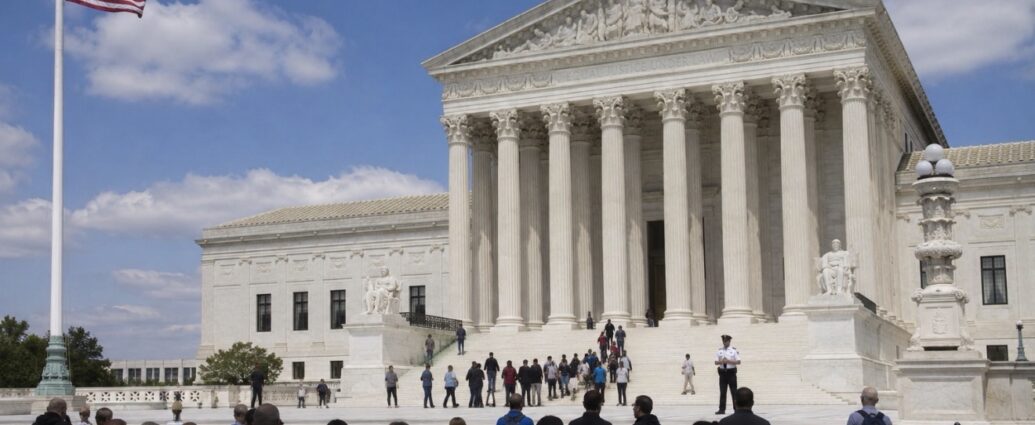
The Supreme Court on Tuesday ruled that nearly every child born on American soil is a citizen at birth, rejecting President Donald Trump’s effort to end birthright citizenship by executive order. Writing for a 6-3 majority in Trump v. Barbara, Chief Justice John Roberts said the 14th Amendment’s promise was deliberate and broad, calling citizenship “the right to have rights” and concluding that the Court keeps that promise today.
The decision strikes down Executive Order 14160, which Trump signed on January 20, 2025, his first day back in office. The order would have denied automatic citizenship to babies born in the United States to parents who were in the country illegally or living here on temporary visas. It never took effect because every lower court that reviewed it ruled against it, but Tuesday’s ruling settles the question and lifts years of legal uncertainty hanging over millions of families and the businesses that employ them.
Roberts was joined by Justices Sonia Sotomayor, Elena Kagan, Amy Coney Barrett, and Ketanji Brown Jackson. Justice Brett Kavanaugh agreed the order was unlawful but wrote separately to say the case should have been decided on statutory grounds, leaving a narrow opening for Congress. Justices Clarence Thomas, Samuel Alito, and Neil Gorsuch dissented, arguing that the amendment requires lawful domicile rather than mere birthplace.
For employers, the ruling brings clarity. Immigration attorneys Nicole Fink and Philip Sholts of Ogletree Deakins wrote Tuesday that the decision preserves the status quo and that companies need not take any action in response. A July 2025 implementation plan from U.S. Citizenship and Immigration Services, which had outlined procedures for checking a parent’s legal status before issuing a child a Social Security number or passport, now has no legal effect. That plan would have transformed what had long been a routine birth certificate into a document requiring additional government verification.
The economic implications are significant. A peer-reviewed study published this spring in the Journal on Migration and Human Security by researchers from Princeton, Cornell, and Notre Dame estimated that individuals who receive citizenship at birth will contribute $7.7 trillion to the U.S. economy through their earnings between 1975 and 2074 while adding more than 3.1 million workers to the labor force. Dr. Phillip Connor, a Princeton research fellow and one of the study’s authors, said roughly two-thirds of those workers hold or are expected to hold jobs requiring at least some college education, and that ending birthright citizenship would have left the country short an estimated 400,000 skilled workers.
Health care leaders also warned of broader economic consequences. Xiao Wang, chief executive of Boundless Immigration, said before the ruling that uncertainty surrounding a child’s citizenship status could discourage foreign-born physicians and nurses from building their careers in the United States. “The first place facing labor shortages will be rural hospitals already struggling to recruit,” he said. According to the study, about 14 percent of birthright citizens working in skilled occupations are employed in health care.
Those figures help explain why many business organizations opposed the executive order. Roughly 71 percent of adults who benefited from birthright citizenship participate in the labor force, while the Migration Policy Institute estimates that approximately 255,000 children are born each year in the United States to noncitizen parents, representing a future source of workers, taxpayers, entrepreneurs, and consumers in an economy where labor-force growth increasingly depends on immigration.
Trump called the outcome a setback but indicated the issue is far from over. Posting on Truth Social, he said his administration would pursue legislation and urged Congress to act quickly. While many constitutional scholars maintain that overturning the ruling would require a constitutional amendment approved by two-thirds of Congress and ratified by 38 states, Kavanaugh’s separate opinion suggested Congress may still have limited statutory authority to address aspects of the issue. House Speaker Mike Johnson told reporters Tuesday that lawmakers would examine possible legislative options.
For the business community, however, the immediate impact is straightforward. Children born in the United States remain citizens at birth, existing hiring, payroll, and employee benefits systems remain unchanged, and employers can continue relying on long-established documentation procedures without implementing new compliance measures.
The case turned on the Court’s landmark 1898 decision in United States v. Wong Kim Ark, which recognized birthright citizenship for a man born in San Francisco to Chinese immigrant parents who themselves were ineligible for citizenship. Roberts wrote that the arguments advanced by the administration were substantially the same as those rejected more than a century ago and concluded that neither the passage of time nor changing circumstances altered the Constitution’s guarantee.
JBizNews Desk | New York
© JBizNews.com All Rights Reserved. Reproduction or distribution without written permission is prohibited.