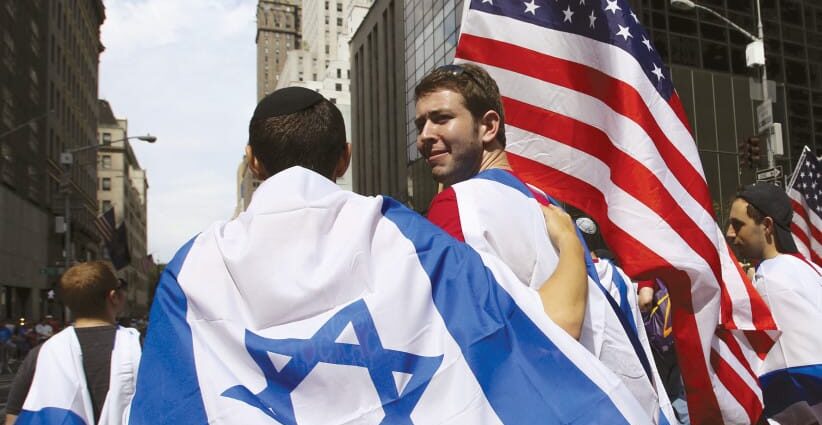
The Jewish Federations of North America (JFNA) on Thursday released its third comprehensive survey tracking Jewish life since the October 7, 2023, attacks. The survey reveals that heightened community engagement has evolved into a sustained behavioral shift rather than a temporary reaction.
Conducted between May 4 and May 27, the poll surveyed 2,836 Jewish Americans using an SMS-to-web methodology managed by research firm Burson.
The study defines the ongoing phenomenon known as the “Surge” by tracking individuals who changed their behavior regarding Jewish life following October 7 across three main categories: communal engagement, educational exploration, and social connection. According to the report, 38% of the American Jewish community is part of the Surge, showing a slight rebound or holding steady compared to previous years.
Mimi Kravetz, chief impact and growth officer at Jewish Federations of North America, noted the persistence of the trend: “Many people expected the increased interest in Jewish life to fade as time went on, but our data shows the Surge sustaining and even building momentum since last year.”
“Jewish Americans are actively creating and seeking Jewish life in many different ways, and Jewish institutions, including Federations, are continuing to respond to this need,” she added.
Ties to Israel, concerns over antisemitism drive surge in American Jewish engagement
The data indicates that the Surge is driven primarily by two core factors: deep emotional attachment to Israel and heightened concern regarding antisemitism. Among those actively surging, 93% report feeling emotionally attached to Israel, compared to 51% of those who never surged, while 75% state that Israel makes them proud to be Jewish. Additionally, 75% of those in the Surge report being targeted online, and 53% state there is a significant amount of antisemitism in the United States today.
When examining how engagement manifested, the report highlights that 29% of American Jews surged socially, 14% educationally, and 13% communally, with significant overlap between categories. Among those engaging communally, 65% connected through a local synagogue or temple, 32% through Chabad, 28% via Jewish or Israel advocacy groups, and 24% through a Jewish federation or foundation. The analysis suggests that informal, social settings such as private Shabbat dinner tables and workplace affinity groups served as primary catalysts, allowing individuals to experience community in a grounding rather than reactive manner.
Despite the positive momentum, the study identified significant barriers to sustained participation, noting that political tension surrounding Israel and antisemitism was cited 140 times as the single largest deterrent. Respondents described feeling alienated from multiple perspectives, with some feeling their criticism of Israel was unwelcome while others felt their communities were insufficiently supportive of the Jewish state. However, the report points out that rather than abandoning Jewish life entirely, most individuals experiencing political friction navigated it by finding alternative congregations or affinity groups that better aligned with their personal values.
Confidence in community safety and institutional preparedness showed notable improvements over the past year.
Fifty-eight percent of respondents stated that they know where to turn if personally targeted by antisemitism, up from 46% in 2025, while awareness of specific community security programs rose from 39% to 57%. Furthermore, 60% of Jewish Americans believe local organizations are effectively providing safety and security, compared to 47% the previous year.
JFNA provided actionable insights based on the survey’s findings for community leaders, advising organizations to leverage informal social structures, foster welcoming environments driven by ordinary peers rather than staff alone, and provide clear entry points for the sizable population of previously disengaged individuals who are still seeking a comfortable fit within the Jewish community.