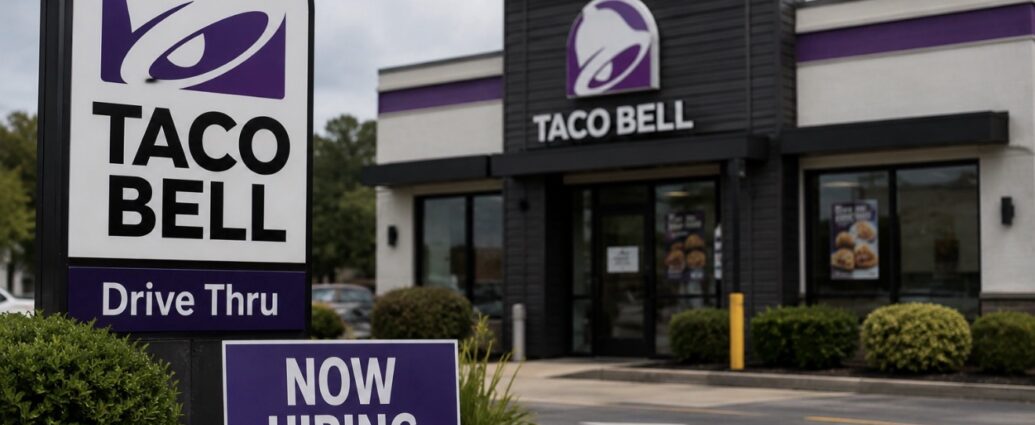
NEW YORK — Taco Bell is facing mounting reputational pressure after the Centers for Disease Control and Prevention expanded its investigation into a multistate cyclospora outbreak to nine states, even as federal health officials continue working to identify the outbreak’s definitive source.
The CDC confirmed July 24 that Illinois, Kansas, Oklahoma and Pennsylvania have been added to the investigation, joining Indiana, Kentucky, Michigan, Ohio and West Virginia. Federal officials have identified approximately 1,644 confirmed exposure events linked to the outbreak, with illnesses beginning between May 13 and July 13. At least 94 people have been hospitalized, although no deaths have been reported.
Beyond the restaurant investigation, the broader public health picture is considerably larger. Since May 1, the CDC has recorded more than 11,500 confirmed and probable cases of cyclosporiasis nationwide, while Michigan alone has reported more than 7,000 probable and suspected infections.
The investigation has become more complicated as evidence continues to evolve.
On July 17, Taylor Farms de Mexico recalled iceberg lettuce sourced from central Mexico. The recall extended beyond restaurants to Marketside-brand lettuce products sold through Walmart and other retail and foodservice distribution channels. Taco Bell responded by removing the affected lettuce identified during the FDA’s traceback investigation from restaurants nationwide.
Days later, however, investigators encountered an unexpected turn. The FDA announced that an earlier laboratory finding initially believed to detect Cyclospora in a sample of Taylor Farms de Mexico lettuce could not be confirmed. As a result, federal investigators have not yet identified a definitive source of the outbreak.
Taco Bell has maintained throughout the investigation that it voluntarily removed certain ingredients as a precaution while emphasizing that regulators had not confirmed a direct link to any single supplier, restaurant or retail location. Although the CDC has associated illnesses with shredded lettuce served at Taco Bell locations, laboratory confirmation connecting the outbreak to a specific product remains unresolved.
Adding to the uncertainty, the FDA announced a separate cyclospora outbreak involving dozens of illnesses with no confirmed food source identified, underscoring the challenges investigators continue to face.
Cyclospora presents unique challenges that make outbreaks especially difficult to solve.
Unlike many foodborne bacteria, the microscopic parasite cannot be routinely grown in laboratory cultures, making product confirmation significantly more difficult. Standard food-safety testing often does not detect the organism, symptoms may not appear for up to two weeks after exposure, and epidemiologists can spend several additional weeks determining whether patients belong to the same outbreak. Fresh produce also offers no reliable “kill step,” as ordinary washing and food preparation practices do not consistently eliminate the parasite.
Those characteristics help explain why confirmed case counts can continue climbing long after contaminated products have disappeared from store shelves.
For Taco Bell, the business challenge extends beyond food safety.
Consumers typically associate illnesses with the restaurant where they purchased their meal rather than the agricultural supplier or produce processor behind the supply chain. As a result, restaurant brands often absorb the greatest reputational damage even when investigators have not identified a definitive source.
Taylor Farms has previously been connected to other high-profile produce investigations, including the 2013 cyclospora outbreak involving packaged salad products and the 2024 E. coli investigation involving slivered onions supplied to McDonald’s Quarter Pounders. In each instance, consumer-facing restaurant brands became the focus of public attention while suppliers remained far less visible.
For restaurants, caterers, grocery chains and institutional food buyers across New York, New Jersey and Connecticut, this investigation carries practical lessons.
First, verify produce sourcing directly with distributors and maintain written documentation identifying where fresh lettuce originates. Second, review supplier contracts to understand recall responsibilities, notification requirements and financial liability before another recall occurs. Finally, examine insurance coverage carefully, as many general liability policies provide only limited protection for product recalls or brand rehabilitation following food-safety incidents.
Pennsylvania’s addition to the investigation also places the outbreak squarely within the broader tri-state produce distribution network, making supplier verification especially important for regional operators.
Federal investigators continue working to determine the outbreak’s confirmed source. Until that process is complete, businesses handling fresh produce should assume the investigation remains active and continue documenting supplier verification, recall procedures and insurance protections. For many operators, the greatest risk is no longer the lettuce itself—it’s being unprepared when the next food-safety alert arrives.
JBizNews Desk | New York
© JBizNews.com All Rights Reserved. Reproduction or distribution without written permission is prohibited.