JBizNews Desk

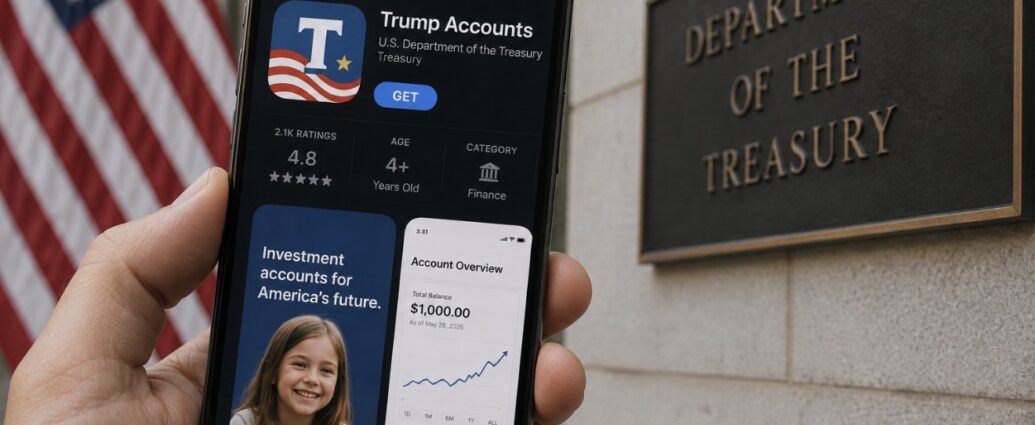
The U.S. Department of the Treasury on Thursday officially launched the new “Trump Accounts” mobile app, opening the primary gateway to a federal savings initiative that will provide tax-advantaged investment accounts — and in many cases a $1,000 government-funded deposit — for millions of American children.

Treasury Secretary Scott Bessent announced the launch Thursday morning, describing the app as a secure and simple tool designed to help families begin building long-term financial savings for children from birth.

The app is now available through major app stores nationwide ahead of the program’s formal July 4 launch.

The accounts function similarly to investment retirement-style accounts for minors, with funds placed into market-tracking investment vehicles intended to grow over time. The program’s most prominent feature is the federal contribution itself: children who are U.S. citizens born between 2025 and 2028 qualify for a one-time $1,000 Treasury-funded deposit beginning July 4.

Children born before 2025 may still open accounts but are not eligible for the government contribution.

Treasury officials said nearly 6 million children have already been enrolled ahead of the launch, although deposits and contributions cannot officially begin until July.

Parents and guardians can begin the setup process immediately through TrumpAccounts.gov using IRS Form 4547 before completing account activation through email verification.

The funds are designed as long-term investment accounts and cannot be freely withdrawn during childhood. Once the child reaches adulthood, the money may be used for major expenses such as education, housing, or other approved life costs.

The program also directly ties Wall Street and private employers into the federal savings initiative.

Treasury confirmed that Bank of New York Mellon and Robinhood partnered on the infrastructure supporting the app and account system. BNY Mellon was also among the first major institutions to pledge matching contributions for children of its U.S.-based employees, with BlackRock later joining the effort.

Employers participating in the program may contribute up to $2,500 annually per employee on a tax-advantaged basis without those contributions counting as taxable income for workers.

Several philanthropists and private organizations have also pledged additional matching contributions for qualifying families in certain states.

For financial firms involved, the program represents more than a government initiative — it potentially creates a generation of first-time investors whose earliest financial relationship begins through federally backed investment accounts connected to private financial institutions.

Supporters describe the program as an attempt to encourage long-term wealth creation and financial literacy from childhood.

Critics, however, have raised broader questions surrounding program costs, investment oversight, and whether lower-income households will continue contributing after the initial government deposit.

For now, the launch marks the moment the initiative moves from legislation and policy discussions into parents’ phones and household finances.

Washington — JBizNews Desk

© JBizNews.com All Rights Reserved. Reproduction or distribution without written permission is prohibited.


By JBizNews Desk | May 15, 2026

Wall Street ended a volatile week on the back foot Friday, with the S&P 500, Dow Jones Industrial Average and Nasdaq Composite all selling off sharply as a two-day Beijing summit between President Donald Trump and Chinese President Xi Jinping produced no major policy breakthroughs, crude prices climbed back above $100 a barrel on renewed Iran war anxiety, and the 10-year Treasury yield spiked to a fresh one-year high. CNBC and TheStreet reported the S&P 500 fell about 1.1% to roughly 7,424, the Dow dropped about 480 points or near 1% to around 49,580 — slipping back below the 50,000 mark it reclaimed just a day earlier — and the Nasdaq Composite slid 1.3% to about 26,300. The small-cap Russell 2000 dropped roughly 2.1% as risk-off trading swept through cyclicals. The selloff threatened to end what had been a seven-week winning streak for the S&P 500, which only Thursday had closed above 7,500 for the first time in history.

The catalyst was the conclusion of President Donald Trump’s trip to Beijing, where he met with Xi Jinping alongside 16 senior U.S. executives. Trump told reporters the talks produced “fantastic” trade deals, but the headline announcements landed below Street expectations. The president said China agreed to purchase 200 Boeing aircraft equipped with GE Aerospace engines, with a path to as many as 750 over time. Jefferies analysts had been positioned for a deal as large as 500 planes, and Boeing Co. shares fell 2.8% to $222.70. Trump also said China had committed to buying U.S. crude oil, naming Texas, Louisiana and Alaska as origin points, and oil prices firmed on the news. WTI crude rose about 4% to roughly $101 a barrel while Brent climbed 1.5% to $107.30, both still trading near war-era highs reached after Iran closed the Strait of Hormuz on March 4. Secretary of State Marco Rubio said Trump raised the Iran war and the Hormuz blockade with Xi but stressed Washington was not asking Beijing to mediate.

The bond market did the heaviest lifting in shaping the Friday tape. The 10-year Treasury yield jumped nine basis points to 4.55%, its highest in a year, as traders priced in stickier inflation tied to the Iran energy shock. CME FedWatch data showed odds of a 2026 Federal Reserve rate hike climbing to roughly 45%, up from just 1% a month ago, with markets now seeing a quarter-point move to 3.75%–4% as the most likely next step. The repricing landed on the same day Jerome Powell’s term as Fed chair expired, with Kevin Warsh preparing to take the gavel. Dan Niles of Niles Investment Management told CNBC that 10 of the last 12 recessions were preceded by oil spikes and warned the current move “is starting to get uncomfortable.”

Technology stocks bore the brunt of the rotation after weeks of record-setting AI gains. Intel Corp. sank roughly 5%, Advanced Micro Devices Inc. lost 3%, Micron Technology Inc. fell 4% and Nvidia Corp. dropped 2% ahead of its earnings report next week. Marvell Technology, Arm Holdings and ASML Holding NV each shed 4% to 5%. Cerebras Systems, which surged 75% in its Nasdaq debut Thursday in a $5.55 billion IPO — the largest U.S. tech offering since Uber in 2019 — gave back about 4%. Adam Crisafulli of Vital Knowledge said the chip group “has witnessed an extremely unsustainable move in recent weeks and remains vulnerable to profit taking regardless of the headlines.” Bucking the trend, Microsoft Corp. advanced after Bill Ackman’s Pershing Square disclosed a new position, calling the valuation “broadly in line with the market multiple.”

The week’s biggest single-name story was Cisco Systems Inc., which jumped 13.4% Thursday after reporting fiscal third-quarter revenue of $15.84 billion, up 12% year over year, and lifting its fiscal 2026 AI infrastructure orders guidance to $9 billion from $5 billion. Piper Sandler, Citi, Bank of America and KeyBanc raised price targets, while HSBC analyst Stephen Bersey upgraded Cisco to Buy with a $137 target. On Friday, Morgan Stanley reiterated Netflix Inc. as overweight following the streamer’s upfront and kept a buy rating on Applied Materials Inc., while TD Cowen reiterated Buy on Nvidia with a $275 target.

Economic data reinforced the inflation narrative driving the bond move. April CPI released Tuesday showed energy lifting headline prices, and PPI data flagged sticky services inflation. Retail sales rose 0.5% from March to April, though CNN noted much of the gain reflected higher prices rather than higher unit volumes. Joe Brusuelas, chief economist at RSM US, told CNN that “the war has come home, and Americans can feel it and see it in their grocery basket,” with polling showing 75% of Americans say the Iran war has hurt their finances.

Corporate cost discipline also drew attention. Starbucks Corp. said it will lay off 300 corporate employees, its third round of cuts under CEO Brian Niccol, taking $400 million in restructuring charges. Verizon Communications Inc. CFO Tony Skiadas confirmed a fresh round of layoffs as the carrier targets $5 billion in operating expense savings by the end of 2026. Investors head into next week eyeing earnings from Nvidia, Home Depot Inc., Toll Brothers Inc. and Cava Group Inc., alongside April housing starts and building permits.

JBizNews Desk
© JBizNews.com. All rights reserved. This article is original reporting by JBizNews Desk. Unauthorized reproduction or redistribution is strictly prohibited.

ATTOM reported that 43.3% of mortgaged U.S. residential properties were considered equity-rich in the first quarter of 2026.

The figure dropped from 44.6% in the previous quarter — marking the lowest equity-rich rate since the fourth quarter of 2021.

Meanwhile, 3.2% of mortgaged residential properties were classified as seriously underwater in the first quarter. Those properties had combined loan balances at least 25% higher than their estimated market value.

That share increased from 3% in the prior quarter and 2.8% a year earlier.

“Homeowner equity remains relatively strong overall, but we’re seeing signs of moderation,” ATTOM stated in the report. “As mortgage rates have risen and home prices have cooled, the share of equity-rich homes has declined in most markets while the rate of seriously underwater properties is edging up across much of the country.”

Equity-rich share falls in most states

The share of equity-rich homes rose in only three states compared with the fourth quarter of 2025 and in six states compared with the first quarter of 2025.

States with year-over-year increases included Illinois (up from 31.5% to 33.5%), Alaska (up from 31.7% to 33.5%), South Dakota (up from 51.3% to 52.4%), North Dakota (up from 31.9% to 32.8%), New York (up from 54.1% to 54.4%) and Wisconsin (up from 49.3% to 49.5%).

States with the largest year-over-year declines were Florida (down from 49.3% to 43.2%), Arizona (down from 49.8% to 44.2%), Colorado (down from 45.8% to 40.5%), North Carolina (down from 47.2% to 42.1%) and Texas (down from 47.4% to 42.5%).

Vermont had the highest share of equity-rich homes at 85.7%, followed by New Hampshire (58.1%), Montana (57.7%), Rhode Island (57.2%) and Hawaii (55.8%).

Seriously underwater rates rise broadly

The share of seriously underwater mortgaged properties increased quarter-over-quarter in 44 states and the District of Columbia.

Markets with the largest annual increases included the District of Columbia (up from 3.8% to 5.3%), Mississippi (up from 6.6% to 8%), Louisiana (up from 10.5% to 11.8%), Kentucky (up from 7.3% to 8.5%) and Oklahoma (up from 5.5% to 6.6%).

States with year-over-year declines in seriously underwater properties were North Dakota (down from 4.8% to 4.3%), South Dakota (down from 3.4% to 3%), South Carolina (down from 3.8% to 3.6%) and Wyoming (down from 2.5% to 2.4%).

Louisiana had the highest share of seriously underwater homes at 11.8%, followed by Kentucky (8.5%), Mississippi (8%), Oklahoma (6.6%) and Arkansas (6.4%).

Metro areas show widespread declines

The share of equity-rich homes fell quarter-over-quarter in 93 of 107 metropolitan statistical areas (87%), which included metros with populations of at least 500,000.

Year-over-year, equity-rich shares declined in 92 metros, or 86%.

San Jose, California, had the highest rate of equity-rich homes at 65.2%, followed by Los Angeles (59.3%), San Diego (58.2%), Portland, Maine (57.9%) and Buffalo, New York (56.7%).

The lowest rates were in Baton Rouge, Louisiana (17.4%); New Orleans (19.1%); Little Rock, Arkansas (23.7%); Jackson, Mississippi (25.6%); and Baltimore (26.9%).

Baton Rouge also had the highest rate of seriously underwater homes at 11.9%, followed by Jackson (10.4%), New Orleans (10.2%), Little Rock (7.1%) and Memphis, Tennessee (7%).

Michigan counties lead in equity-rich properties

Of the 30 counties with the highest share of equity-rich properties, 23 were in Midwestern states — including 11 in Michigan, seven in Wisconsin and four in Indiana.

The counties with the highest proportions of equity-rich homes were Benzie County, Michigan (94.5%); Manistee County, Michigan (92.3%); Marquette County, Michigan (91.2%); Portage County, Wisconsin (89.5%); and Chippewa County, Michigan (89.5%).

Lowest rates were in Vernon Parish, Louisiana (6.2%); Ascension Parish, Louisiana (7.2%); Saint Bernard Parish, Louisiana (7.2%); Iberville Parish, Louisiana (8.7%); and Greenup County, Kentucky (10.6%).

At least half of mortgaged properties were equity-rich in 28.2% — 2,564 — of the 9,084 ZIP codes included in the analysis.

This article was generated using HousingWire Automation and reviewed by a HousingWire editor before publication. The system helps convert company announcements and industry data into HousingWire-style news coverage.

This post was originally published on here

JBizNews Desk | May 10, 2026

Jim Farley, CEO of Ford Motor Company, has spent years sounding the alarm about a workforce crisis he believes most of corporate America and Washington are still not taking seriously enough.

This week, in an exclusive interview with Fortune, he made it personal — revealing that his own Gen Z son has chosen to spend the summer working as a fabricator in North Carolina rather than taking summer courses, and arguing that the story of one young man’s career choice is a microcosm of a much larger economic problem.

“He feels like that’s more fulfilling than doing summer school at some fancy college,” Farley told Fortune.

The skilled-trade shortage — the gap between the jobs America desperately needs filled and the workers available to fill them — remains, in Farley’s words, “full-blown.”

He placed the country in “the second or third inning” of grappling with it seriously, noting that awareness has improved but solutions remain fragmented.

The “second or third inning” framing is significant.

In baseball terms, the game is barely underway.

Farley is not describing a problem that is close to being solved.

He is describing one that has barely been confronted.

Ford’s Problem — and America’s

The numbers behind Farley’s urgency are concrete.

As of January 2026, Ford had 5,000 open mechanic positions paying roughly $120,000 annually — positions Farley says he simply cannot find workers to fill.

Those are not entry-level jobs.

They are skilled, well-compensated careers — paying nearly double the American worker’s median salary — going begging because the pipeline of trained tradespeople has been systematically neglected for decades.

The country is already short:

  • 600,000 factory workers
  • 500,000 construction workers

Farley wrote in a LinkedIn post last June that America will need 400,000 auto technicians over the next three years alone.

In total, Farley has put the national blue-collar job opening at more than 1 million unfilled positions across emergency services, trucking, factory work, plumbing, electrical work, and skilled trades.

“So many of the real problems are in small companies and small businesses that don’t have the funding,” Farley said.

“Trade school is often offered as an option, but it’s extremely expensive. Not everyone can afford it.”

That last point cuts directly to the equity dimension of the shortage.

The conventional solution — more vocational training — runs directly into the same affordability barrier that has made four-year college increasingly inaccessible for working-class families.

Farley has argued that fixing the blue-collar shortage requires not just cultural change but systemic policy investment:

  • more funding for vocational education
  • expanded apprenticeship pipelines
  • regulatory reform that makes it easier for small businesses to train and retain skilled workers

The AI Paradox

The deeper irony at the heart of Farley’s argument is one that has gained significant traction in 2026:

The same artificial intelligence boom that is eliminating white-collar entry-level jobs is simultaneously creating enormous new demand for the blue-collar workers America has spent decades undervaluing.

What Farley calls the “essential economy” — the blue-collar sectors that get things “moved, built, or fixed” — represents $12 trillion in U.S. GDP, according to the Aspen Institute.

But it is chronically understaffed and undervalued.

AI could eliminate half of all white-collar jobs in the U.S. within a decade, Farley has warned — gutting entry-level tech roles like junior programming and clerical work, the rungs many young Americans have been told to climb.

Meanwhile, the skilled tradespeople needed to build the data centers that will run those AI systems simply do not exist in sufficient numbers.

According to a March 2026 labor market report, the data center industry alone faces a projected shortfall of up to 499,000 workers, with construction labor costs rising 8% to 12% year over year.

“I think our story is just very similar to what’s going to be happening across the country with linemen, electricians, plumbers,” Farley told Fortune.

“It won’t be just for data centers, it’ll be for transmission lines, off-grid energy sources.”

Ford is experiencing this tension internally.

As the company converts its BlueOval SK battery plant in Glendale, Kentucky — originally built to produce EV batteries — into a dedicated energy storage facility, workers are now learning lithium iron phosphate chemistry, skills most never anticipated needing when they took the job.

“We are ourselves finding skilled trade shortages as we convert our automotive battery plants to energy storage battery plants in Kentucky and Michigan,” Farley said.

The Cultural Shift That’s Underway

Farley is not alone in making this case anymore — and that may be the most meaningful development of 2026.

For Farley, the macro argument and the personal one have become inseparable.

Figures ranging from BlackRock CEO Larry Fink to JPMorgan CEO Jamie Dimon are now publicly sounding the alarm about skilled-labor shortages threatening America’s growth ambitions.

The Ad Council is mobilizing a paid advertising campaign around the issue.

Carhartt CEO Linda Hubbard, who appeared alongside Farley in this week’s Fortune interview, said:

“It does seem that business is picking up the mantle and saying, ‘Yeah, we need to move this forward.’”

The cultural data supports the momentum.

A November 2025 NBC News poll found that 63% of Americans now say a four-year degree is “not worth the cost” — up from 47% in 2017.

Between 2011 and 2023, roughly 2 million fewer students enrolled in four-year universities.

In the first quarter of 2024, Gen Z made up nearly 25% of all new hires in skilled trades.

A February 2026 survey found 60% of Gen Zers plan to pursue skilled-trade work this year.

For American businesses trying to hire, expand, and compete — in manufacturing, construction, energy, automotive, or any sector that depends on physical labor and technical skill — Farley’s “second or third inning” assessment carries a direct message:

Plan for the shortage to get worse before it gets better, because the workforce pipeline that would solve it is still being built from scratch.

© JBizNews.com. All rights reserved. This article is original reporting by JBizNews Desk. Unauthorized reproduction or redistribution is strictly prohibited.

JBizNews Desk | Friday, May 8, 2026

The U.S. government is borrowing money at a pace once associated only with major wars and economic crises — and new federal data released this week shows the scale of the problem is accelerating.

According to the latest estimates from the Executive Office of the President and Treasury Department refinancing documents released under Treasury Secretary Scott Bessent, the federal government is on track to run a deficit of approximately $2.06 trillion during the current fiscal year alone.

That works out to roughly:

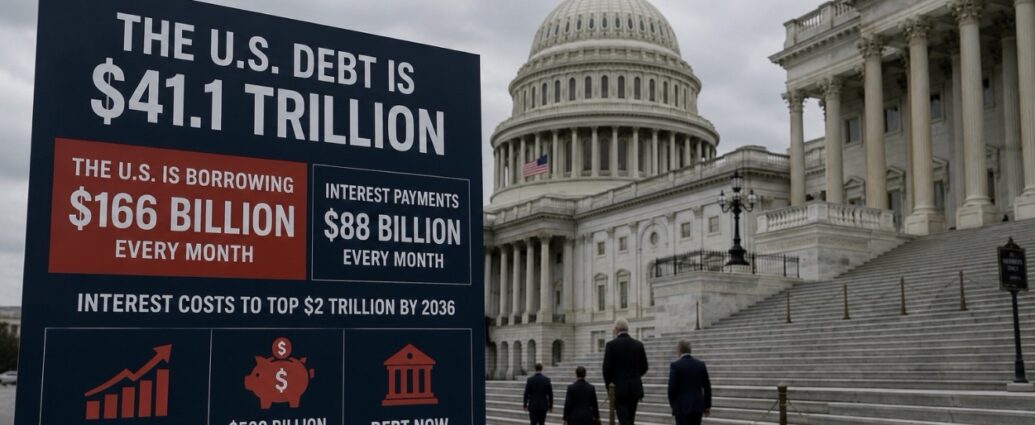
  • $166 billion borrowed every month
  • More than $5.4 billion every day
  • About $225 million every hour

The administration is already projecting the deficit will rise further to approximately $2.17 trillion by fiscal year 2027, continuing a borrowing trend that many economists and fiscal watchdogs increasingly warn may become structurally unsustainable.

America’s Interest Bill Is Exploding

Even more alarming to budget analysts is the cost of servicing the debt itself.

The Congressional Budget Office’s preliminary estimates show the Treasury paid nearly $530 billion in interest payments during just the first six months of the fiscal year between October 2025 and March 2026.

That translates to:

  • More than $88 billion per month
  • Roughly $22 billion every week
  • Nearly $3 billion every single day simply to pay interest on existing debt

Interest costs are now among the fastest-growing categories in the federal budget and are increasingly approaching the scale of major government spending programs.

The CBO projects net interest expenses will total approximately $16.2 trillion over the next decade, climbing from around $1 trillion annually in 2026 to more than $2.1 trillion per year by 2036 if current fiscal policies remain largely unchanged.

Debt Has Officially Surpassed the Economy

The U.S. national debt officially surpassed 100% of gross domestic product earlier this year, crossing a threshold historically associated with periods of severe fiscal strain.

Federal debt held by the public is projected to rise from roughly 101% of GDP in 2026 to approximately 120% by 2036, according to Congressional Budget Office projections — exceeding the prior post-World War II record set in 1946.

The current debt ceiling now stands at $41.1 trillion, following legislation signed into law on July 4, 2025.

Federal spending this year is projected to total approximately $7.4 trillion, or 23.3% of the economy — well above the long-term historical average.

Fiscal Watchdogs Warn of Growing Risk

Budget experts across the political spectrum are increasingly warning that trillion-dollar deficits are no longer temporary emergency measures — they are becoming permanent features of the federal budget.

“$2 trillion deficits used to be unheard of, and then they only occurred during major recessions,” said Maya MacGuineas, president of the Committee for a Responsible Federal Budget. “It’s beyond scary that $2 trillion deficits are now the norm.”

MacGuineas warned that financial markets may eventually lose patience with America’s borrowing trajectory.

“Markets will only tolerate our unsustainable borrowing for so long. The risk of a fiscal crisis gets higher as the days pass,” she said.

Why This Matters to Everyday Americans

The consequences extend far beyond Washington.

Large-scale government borrowing competes directly with consumers and businesses for available capital in financial markets, putting upward pressure on interest rates across the economy.

That means:

  • Higher mortgage rates
  • More expensive auto loans
  • Higher credit card interest
  • Increased borrowing costs for small businesses
  • Reduced private-sector investment

For millions of Americans already struggling with elevated housing costs and financing expenses, the federal deficit increasingly affects daily life in tangible ways.

War Spending Adds New Pressure

The ongoing Iran conflict has introduced an additional layer of fiscal strain.

Military deployments, weapons production increases, naval operations in the Strait of Hormuz, and expanded defense requests are being financed almost entirely through additional borrowing rather than offsetting revenue measures or spending cuts elsewhere in the budget.

That means wartime costs are now being layered onto an already deteriorating long-term fiscal picture.

For investors and businesses, the implications are significant.

The longer deficits remain near or above $2 trillion annually, the greater the pressure on the Federal Reserve to maintain elevated interest rates, potentially slowing economic growth while increasing financing costs throughout the economy.

What once sounded like an abstract debate over federal debt is increasingly becoming a direct economic reality for households, borrowers, investors, and businesses across the country.

And according to the government’s own projections, the numbers are only getting larger.

© JBizNews.com. All rights reserved. This article is original reporting by JBizNews Desk. Unauthorized reproduction or redistribution is strictly prohibited.

JBizNews Desk | May 7, 2026

Wall Street’s Crypto Reversal Goes Public

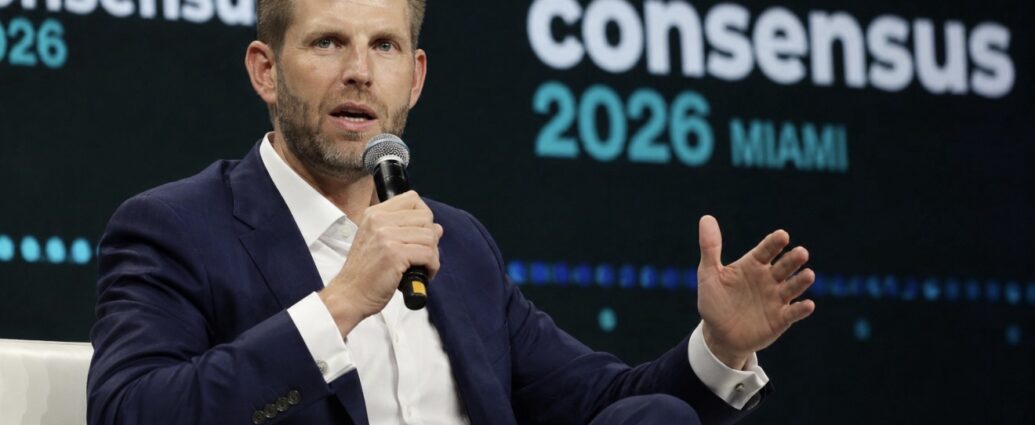
Eric Trump used one of the crypto industry’s biggest global stages Wednesday to deliver a message aimed directly at traditional banking giants: the fight against Bitcoin is over, and Wall Street lost.

Speaking at CoinDesk’s Consensus Miami 2026 conference before thousands of attendees representing more than 100 countries, Trump pointed to JPMorgan Chase as the clearest example of how dramatically the financial establishment has reversed course on cryptocurrency.

Just 18 months ago, major banks were still publicly attacking Bitcoin and warning clients against it. Now, according to Trump, many of those same institutions are actively building crypto businesses and integrating digital assets into mainstream finance.

“The financial institutions all realize that they’ve lost and they can no longer push back,” Trump said during the conference. “Instead of fighting against the tide, they’re swimming with it for the first time.”

The symbolism surrounding JPMorgan’s presence at the conference was difficult to ignore. The bank — whose CEO Jamie Dimon repeatedly mocked Bitcoin in previous years and once referred to it as a “fraud” and “joke asset” — appeared at Consensus Miami as an official sponsor through its blockchain division, Kinexys.

Trump argued the shift represents a broader acknowledgment from Wall Street that crypto is no longer viewed as a fringe experiment but as a permanent part of the financial system.

He also pointed to Bank of America’s Merrill division and Charles Schwab as firms now embracing digital assets after years of skepticism and resistance.

Personal Fallout From Banking Deplatforming

Trump said his interest in crypto intensified after major financial institutions allegedly cut ties with the Trump Organization following January 6, 2021.

He claimed more than 350 Trump Organization bank accounts were closed during that period, describing the experience as proof that traditional financial infrastructure can be weaponized against individuals and businesses with little warning or recourse.

That experience, Trump said, became one of the driving motivations behind the creation of American Bitcoin Corp. (ABTC), where he serves as Co-Founder and Chief Strategy Officer.

“This ecosystem of Bitcoin and crypto is definitely helping the United States and the whole world,” Trump said, reiterating his long-standing prediction that Bitcoin could eventually reach $1 million per coin.

American Bitcoin Expands Despite Market Losses

Trump’s remarks came the same evening American Bitcoin released its first-quarter 2026 financial results, which showed record Bitcoin production and sharply improved mining efficiency — even as falling cryptocurrency prices pushed the company into a major quarterly loss.

The company said its core strategy remains straightforward: accumulate as much Bitcoin as possible at the lowest production cost in the industry.

American Bitcoin reported mining Bitcoin during the quarter at an average cost of roughly $36,200 per coin, a major improvement from approximately $46,900 in the fourth quarter of 2025. The company said it is effectively acquiring Bitcoin at roughly half of prevailing market prices through its mining operations.

ABTC mined 817 Bitcoin during the first quarter, the strongest quarterly production in company history, while increasing its Bitcoin reserves by roughly 30%.

The company ended March holding approximately 7,021 BTC on its balance sheet and now reportedly controls more than 7,300 Bitcoin, placing it among the world’s larger publicly traded Bitcoin holders.

American Bitcoin also disclosed that it currently operates nearly 90,000 mining machines, reflecting the growing industrial scale of large U.S.-based crypto mining operations.

Accounting Losses Overshadow Operating Gains

Despite the operational growth, the financial results themselves were more complicated.

Revenue fell to $62.1 million, down from $78.3 million in the previous quarter, largely because Bitcoin prices dropped roughly 22% during the reporting period.

The company reported a net loss of $81.8 million, or $0.08 per share, missing analyst expectations that had projected a modest profit.

However, company executives emphasized that most of the reported loss came from accounting adjustments rather than operational weakness.

American Bitcoin recorded a $117.2 million non-cash markdown tied to the declining value of its Bitcoin holdings under accounting rules. That loss was partially offset by a $37.3 million gain tied to derivatives connected to a mining equipment purchase agreement.

Even with the Bitcoin price decline, the company maintained a mining gross margin above 52%, highlighting the profitability of its underlying mining operations before accounting adjustments.

American Bitcoin CEO Mike Ho said the company remained operationally profitable during the quarter when excluding non-cash Bitcoin valuation changes. He also noted the company did not sell any Bitcoin holdings during the period despite the price decline.

Bitcoin’s Mainstream Shift Accelerates

The broader backdrop to Trump’s comments is the increasingly rapid integration of crypto into mainstream finance.

Over the last year, banks, hedge funds, pension managers, and public corporations have accelerated investments into Bitcoin infrastructure, custody services, tokenization projects, and blockchain-based payment systems following the success of spot Bitcoin ETFs and rising institutional demand.

The shift has transformed Bitcoin from a once-controversial outsider asset into an increasingly normalized part of institutional finance — even among many firms that spent years publicly criticizing the industry.

ABTC shares fell roughly 1.6% in after-hours trading Wednesday after closing the regular session up 1.63% at $1.25.

Bitcoin itself traded near $81,058 late Wednesday, down roughly 0.5% on the day.

JBizNews Desk

© JBizNews.com. All rights reserved. This article is original reporting by JBizNews Desk. Unauthorized reproduction or redistribution is strictly prohibited.