A senior World Bank delegation is preparing to travel to Caracas in the coming days for the first formal meetings with Venezuelan officials since the institution restored relations with the country last month, marking a major milestone in Venezuela’s gradual reintegration into the global financial system.

According to people familiar with the matter cited by Bloomberg News, the mission will be led by Susana Cordeiro Guerra, the World Bank’s vice president for Latin America and the Caribbean, and will focus on rebuilding economic coordination after years of institutional isolation.

The visit represents the most concrete step yet in Venezuela’s reentry into international financial markets following the Trump administration’s January-backed political transition that removed former President Nicolás Maduro and recognized acting President Delcy Rodríguez.

World Bank and IMF Resume Venezuela Relations

The World Bank formally announced on April 16 that it would resume dealings with Venezuela for the first time since 2019, when relations were suspended amid international disputes over whether Maduro or opposition leader Juan Guaidó should be recognized as the country’s legitimate leader.

The International Monetary Fund simultaneously resumed formal recognition of the Rodríguez administration after IMF member countries representing a majority of voting power backed the transition.

Venezuela has been a member of the World Bank since 1946, but the institution has not extended new financing to the country since 2005 and has maintained no active lending programs during the years-long political and economic crisis.

The Caracas mission is expected to focus heavily on rebuilding baseline macroeconomic data — a process made difficult by years of limited transparency and institutional breakdown inside Venezuela.

Officials from the World Bank and IMF are expected to meet with representatives from Venezuela’s Finance Ministry and Central Bank to begin assembling the economic data required before any future lending programs can move forward.

Washington Pushes Venezuela Financial Reintegration

Treasury Secretary Scott Bessent said last month that the United States is working to reintegrate Venezuela into the global financial system “in a way that looks more like a normal economy.”

Washington also eased sanctions on Venezuela’s Central Bank earlier this year as part of the broader normalization process.

At roughly the same time, Maduro’s former sister-in-law stepped down as Central Bank president, with Vice President Luis Perez assuming leadership of the institution.

The financial implications are enormous.

Rodríguez has formally requested access to approximately $5 billion in IMF Special Drawing Rights — reserve assets that analysts at JPMorgan estimate Venezuela currently holds but has been unable to fully access during the years of sanctions and political isolation.

The acting government said the funds would be directed toward rebuilding electricity systems, water infrastructure, and public services that deteriorated sharply during the Maduro years.

Wall Street Bets on Venezuela Return

Global investors have already begun positioning aggressively for Venezuela’s potential return to financial markets.

Emerging-market bond traders have driven Venezuelan sovereign debt prices sharply higher over recent months as Washington and Caracas signaled greater willingness to negotiate.

Analysts estimate Venezuela’s total external debt at roughly $150 billion, including approximately $60 billion in defaulted sovereign bonds.

Major Wall Street firms including JPMorgan, Goldman Sachs, Bank of America, and Morgan Stanley are reportedly operating active Venezuela-focused trading desks as investors anticipate a possible sovereign debt restructuring process.

Any large-scale restructuring would likely require formal IMF involvement and a comprehensive debt sustainability analysis.

Still, major political risks remain.

Rodríguez’s approval ratings have reportedly weakened in recent polling, while opposition leader María Corina Machado has vowed publicly to return to Venezuela and challenge the current political arrangement.

Chevron Expands Venezuelan Oil Operations

The energy sector has emerged as the fastest-moving part of Venezuela’s reopening.

Earlier this month, Chevron Corp. reached a major agreement with the Venezuelan government to increase crude production in the country — the most significant Western oil expansion inside Venezuela since sanctions were imposed during the Maduro era.

The agreement aligns with broader U.S. strategic goals of expanding Western energy supply sources amid elevated oil prices and ongoing disruptions in the Strait of Hormuz tied to the conflict involving Iran.

Venezuela possesses the world’s largest proven crude reserves but currently produces only a fraction of its historical output following years of underinvestment, sanctions, and infrastructure deterioration.

U.S. policymakers increasingly view expanded Venezuelan production as a potential partial offset to Middle East supply risks.

Signs of Broader Economic Reopening

Additional normalization measures have accelerated in recent weeks.

Commercial flights between the United States and Venezuela have resumed, U.S. corporate delegations have begun traveling back to Caracas, and Washington has signaled openness to additional sanctions relief tied to continued political and economic reforms.

The World Bank mission is now viewed as a critical next step in determining whether Venezuela can rebuild enough institutional credibility to attract large-scale international capital again.

For global investors, oil markets, and emerging-market lenders, the stakes extend far beyond Caracas itself.

A successful reintegration into the World Bank and IMF framework could unlock billions of dollars in financing, trigger one of the world’s largest sovereign debt restructurings, and reopen one of the planet’s largest oil-producing regions to expanded Western investment.

The decisions made over the coming months — beginning with the World Bank’s visit — could shape Venezuela’s economic future for years.

JBizNews Desk

© JBizNews.com. All rights reserved. This article is original reporting by JBizNews Desk. Unauthorized reproduction or redistribution is strictly prohibited.

By JBizNews Desk | May 18, 2026

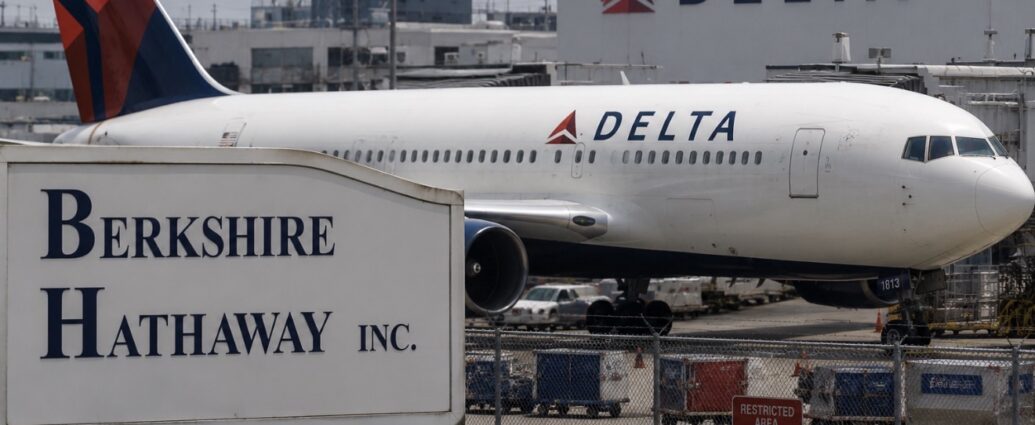
Berkshire Hathaway disclosed a new 39,809,456-share, $2.65 billion stake in Delta Air Lines in its first Form 13F filing of the Greg Abel era Friday afternoon, ending a six-year Warren Buffett-era boycott of the airline sector and giving the Atlanta-based carrier one of the most influential institutional endorsements on Wall Street at a moment when fuel costs, regional consolidation and the Iran war are rapidly reshaping the U.S. aviation industry.

The filing, posted to the U.S. Securities and Exchange Commission’s EDGAR system, showed the new position represents roughly 6.1% of Delta’s outstanding shares and ranks as Berkshire’s 14th-largest holding at the end of the first quarter. Delta shares jumped approximately 3% in after-hours trading following the disclosure.

The symbolism surrounding the investment is difficult to overstate. Berkshire entered 2020 holding multibillion-dollar positions in Delta, American Airlines, United Airlines and Southwest Airlines, only for Warren Buffett to liquidate the entire roughly $4 billion airline portfolio during the depths of the COVID-19 pandemic in April 2020. Buffett told shareholders at the time that “the world has changed for the airlines,” effectively declaring the industry structurally damaged after global travel collapsed.

The airline exit became one of the defining late-era Buffett calls. Buffett had long carried deep skepticism toward airlines, once famously joking that “a farsighted capitalist at Kitty Hawk would have shot Orville Wright down.” He also repeatedly described his earlier investment in US Air preferred stock during the late 1980s as one of the worst trades of his career.

The new Delta position therefore marks not only Berkshire’s return to aviation, but one of the clearest signs yet that Abel intends to reshape parts of the Berkshire portfolio in ways Buffett would likely not have pursued himself.

The choice of Delta specifically appears deliberate.

Under CEO Ed Bastian, Delta has spent the past several years distinguishing itself from the broader airline industry on many of the operational and financial metrics Berkshire historically values most highly: free-cash-flow generation, pricing discipline, premium-cabin revenue growth and loyalty-program monetization.

Delta generated roughly $4.3 billion in free cash flow during fiscal 2025 and produced approximately $1.3 billion in adjusted operating cash flow during the first quarter of 2026 on revenue of $13.7 billion. The airline has guided toward between $7 billion and $7.5 billion in free cash flow for the current fiscal year.

One of the most strategically attractive pieces of Delta’s business is its co-branded relationship with American Express, which now generates more than $7 billion annually for the airline through SkyMiles loyalty-card partnerships and related fee streams. That agreement — extended through 2029 — increasingly resembles the type of stable, contracted cash-flow business Berkshire traditionally favors.

The broader industry backdrop may also have strengthened Delta’s appeal.

The Iran war and continuing closure of the Strait of Hormuz have approximately doubled domestic jet-fuel costs since February, pressuring the weakest airlines and accelerating consolidation across the sector. Spirit Airlines shut down operations earlier this month after prolonged financial strain, while low-cost carriers including JetBlue Airways, Frontier Group Holdings and Allegiant Travel continue facing margin pressure from fuel, labor and financing costs.

At the same time, short-haul regional flying is steadily disappearing from the U.S. aviation system. According to aviation analytics firm OAG, flights under 250 nautical miles have fallen roughly 11% over the past decade, a trend now accelerating as airlines prioritize longer and more profitable routes.

Delta is structurally positioned to benefit from those shifts. The airline operates one of the industry’s strongest international networks and maintains dominant hub positions in Atlanta, Detroit, Minneapolis-St. Paul, Salt Lake City and John F. Kennedy International Airport in New York. Delta has also invested aggressively in newer aircraft including the Airbus A321neo and A330neo, which offer materially better fuel efficiency than older fleets.

Wall Street analysts increasingly view Delta as the strongest operator among the traditional U.S. legacy airlines.

The carrier currently trades at roughly six times forward earnings, below its own historical valuation averages and at a discount to many industrial and transportation peers. Delta has also reduced debt by more than $20 billion from pandemic-era peaks, and both S&P Global Ratings and Fitch Ratings restored the airline’s investment-grade credit rating earlier this year.

Susquehanna analyst Christopher Stathoulopoulos wrote Friday that Berkshire’s investment “validates the premium-airline thesis that has been visible in Delta’s numbers for two years but underappreciated by the broader market.”

Delta’s current market capitalization stands near $42 billion, compared with roughly $30 billion for United Airlines and approximately $9 billion for American Airlines.

The Delta investment also stands out because of what Berkshire simultaneously sold.

The same 13F filing showed Berkshire fully exited positions in Visa, Mastercard, Amazon.com, UnitedHealth Group, Aon and Domino’s Pizza during the quarter while modestly increasing its holdings in Alphabet and initiating a smaller new position in Macy’s.

Berkshire ended the quarter holding a record $397 billion in cash and short-term Treasury bills after remaining a net seller of equities overall. Against that backdrop, the Delta investment represented roughly one-third of Berkshire’s net new equity capital deployment during the quarter — a significant conviction signal from Abel’s investment team.

The filing also comes after the departure earlier this year of former Buffett lieutenant Todd Combs, who left Berkshire to join JPMorgan Chase. That departure further shifts portfolio influence toward Abel as Berkshire transitions into the post-Buffett era.

For Delta, the endorsement arrives ahead of a closely watched June Investor Day where management is expected to outline updated long-term strategy and capital-allocation targets.

CEO Ed Bastian said Friday evening that Delta “appreciates Berkshire Hathaway’s confidence in our long-term strategy.”

For Greg Abel, the message embedded in the filing may be even more important than the investment itself.

The post-Buffett Berkshire appears willing to break with Buffett orthodoxy when the numbers justify it — and willing to commit real capital behind that conviction.

JBizNews Desk
© JBizNews.com. All rights reserved. This article is original reporting by JBizNews Desk. Unauthorized reproduction or redistribution is strictly prohibited.
For decades, large corporations were built around a familiar workforce structure: senior leadership at the top, experienced managers and professionals beneath them, and large pools of junior employees handling research, spreadsheets, presentations, scheduling, note-taking, customer responses, formatting, and administrative work.

Artificial intelligence is now rapidly reshaping that model — and dramatically increasing the value of experienced employees who know how to use the technology effectively.

Increasingly, companies are discovering that a properly trained employee using multiple AI systems simultaneously can now perform the functional output that once required several junior workers, assistants, researchers, coordinators, or support staff. Employees using platforms such as ChatGPT, Claude, Gemini, Microsoft Copilot, and other enterprise AI systems are increasingly acting as orchestrators of multiple virtual assistants at once — drafting communications, conducting research, analyzing data, preparing presentations, summarizing meetings, refining proposals, and managing workflow streams simultaneously.

The result is not simply faster work, but a fundamental multiplication of employee productivity that is dramatically increasing the value of experienced workers while creating substantial long-term savings for employers.

Inside corporate America, experienced employees who know how to direct AI systems effectively are increasingly becoming some of the most valuable assets inside organizations. The combination of institutional knowledge, human judgment, AI-assisted communication, and productivity enhancement is allowing companies to operate faster, leaner, and more efficiently than ever before.

Many executives now describe these systems as personalized virtual assistants for employees — tools that allow one trained worker to complete tasks that once required interns, assistants, analysts, or even entire support teams.

One of the clearest examples came this week from Citadel founder and CEO Ken Griffin, who described how dramatically AI capabilities have advanced in a short period of time. Speaking at the Stanford Leadership Forum, Griffin said modern “agentic AI” systems are now performing work inside Citadel that previously required teams of finance professionals holding master’s and doctoral degrees — completing in hours or days what previously consumed weeks or months. Griffin said the productivity of the firm’s AI toolkit had undergone what he called a “step change” over the past nine months.

The financial implications for employers are becoming increasingly difficult to ignore.

A mid-level office employee earning roughly $90,000 annually who is trained to orchestrate multiple AI assistants across communication, research, analysis, and document preparation can generate between $30,000 and $90,000 or more in additional productive value each year, depending on role, workflow, and the depth of AI integration.

For a small business with 25 trained employees earning an average of $60,000, AI-driven productivity gains can translate into approximately $750,000 to more than $1.5 million in additional annual productive value through faster workflow, reduced administrative burden, stronger communication efficiency, and fewer support hires.

Mid-sized companies with 500 trained employees earning an average salary of $75,000 can potentially recover roughly $15 million to $30 million annually in labor efficiency, workflow acceleration, customer responsiveness, and operational productivity.

Applied across a Fortune 500 employer with 20,000 professional employees, the same multiplier effect can imply between $700 million and $1.5 billion or more in annual labor efficiency without proportional increases in staffing levels.

The multiplier effect has also become visible in public corporate disclosures.

Klarna, the global payments firm, reported that its AI assistant handled 2.3 million customer conversations in its first month of deployment — performing the equivalent work of 700 full-time agents and contributing an estimated $40 million in profit improvement, according to disclosures from CEO Sebastian Siemiatkowski. Klarna has since adopted a hybrid model, with humans handling complex cases and AI managing routine inquiries, but the scale of the productivity gains underscored how dramatically AI can multiply workforce output.

Inside many offices, communication itself is becoming one of the largest areas of productivity improvement.

Employees are increasingly using AI to draft emails, summarize meetings, organize follow-ups, refine presentations, prepare reports, respond to customers, and improve the speed and professionalism of daily communication.

For businesses, that creates both productivity gains and direct revenue opportunities.

Sales teams can respond to prospects faster and with more personalized outreach. Customer-service departments can handle higher volumes with quicker turnaround times. Managers can coordinate projects more efficiently. Executives can prepare polished communications in minutes instead of hours. Marketing teams can produce campaigns, presentations, proposals, and client-facing materials dramatically faster than before.

Corporate leaders increasingly view AI-enhanced communication as one of the technology’s most valuable benefits because faster and more effective communication often translates directly into stronger customer relationships, quicker deal flow, improved responsiveness, and ultimately more business.

For many executives, the conclusion is becoming increasingly difficult to ignore:

AI is evolving into a personalized virtual assistant for every trained employee — one that never sleeps, scales instantly, improves communication, accelerates workflow, and allows experienced workers to deliver dramatically greater value to the companies they serve, while employees who fail to learn how to use the technology increasingly risk being replaced by those who do.

By comparison, enterprise AI subscriptions often cost only a few hundred dollars annually per employee, making the economics increasingly compelling for employers.

That economic reality is now beginning to reshape hiring itself.

A new CEO Agenda 2026 survey released by the Oliver Wyman Forum in partnership with the New York Stock Exchange — based on responses from 415 chief executives representing roughly 10% of global market capitalization — found that 43% of CEOs plan to deprioritize hiring for junior roles over the next year, up sharply from just 17% a year earlier.

The survey also found that 34% of CEOs expect staffing to tilt toward more mid-level employees, signaling that companies increasingly view AI-trained professionals as a more efficient path to growth than the traditional model built around large classes of entry-level support staff. Among advanced AI deployment leaders, 49% said their AI investments are already meeting or exceeding expectations, compared with just 17% among slower adopters.

Academic research is increasingly validating the productivity gains executives say they are already seeing inside companies.

A landmark study by Erik Brynjolfsson of Stanford University, Danielle Li of MIT Sloan, and Lindsey Raymond of MIT — published as National Bureau of Economic Research Working Paper 31161 and later peer-reviewed in The Quarterly Journal of Economics — tracked 5,179 customer support agents and found workers using generative AI resolved 14% more tasks per hour on average, with gains reaching 34% for less-experienced employees.

A separate study led by Harvard Business School postdoctoral fellow Fabrizio Dell’Acqua, conducted alongside Karim Lakhani, Edward McFowland III, Ethan Mollick, Katherine Kellogg, and researchers at Boston Consulting Group and Warwick Business School, examined 758 BCG consultants. Consultants using GPT-4 completed 12.2% more tasks, worked 25.1% faster, and produced output rated 40% higher in quality than colleagues who did not use AI. The lowest-performing consultants improved by 43%, meaning AI lifted less-skilled workers significantly closer to the output of top performers.

Those figures, however, largely reflect gains from a single AI platform operating across controlled tasks. Inside real workplaces, where trained employees increasingly route different streams of work to multiple AI assistants simultaneously, executives say the compounding productivity effect is substantially larger.

Those firm-level gains broadly align with projections from the McKinsey Global Institute, which estimated that generative AI could create the equivalent of $2.6 trillion to $4.4 trillion in annual global value across 63 enterprise use cases — roughly the size of the United Kingdom’s entire economy. McKinsey senior partners Alex Singla and Alexander Sukharevsky, who oversee the firm’s AI division QuantumBlack, identified customer operations, marketing and sales, software engineering, and research and development as the largest sources of economic value.

Independent academic research also suggests the workforce restructuring is already underway. A Harvard University working paper by researchers Seyed Mahdi Hosseini Maasoum and Guy Lichtinger, drawing on data from nearly 285,000 firms, found companies adopting generative AI reduced junior-level hiring by roughly 7.7% relative to non-adopting firms, while senior-level employment continued to grow.

A separate Stanford University study by Brynjolfsson and colleagues at the Digital Economy Lab, updated in November, found a 16% relative decline in employment for early-career workers in occupations most exposed to AI automation — a decline researchers attributed primarily to slower hiring of new entrants rather than widespread layoffs.

For many executives, the conclusion is becoming increasingly difficult to ignore.

JBizNews Desk

© JBizNews.com. All rights reserved. This article is original reporting by JBizNews Desk. Unauthorized reproduction or redistribution is strictly prohibited.

By JBizNews Desk | May 18, 2026

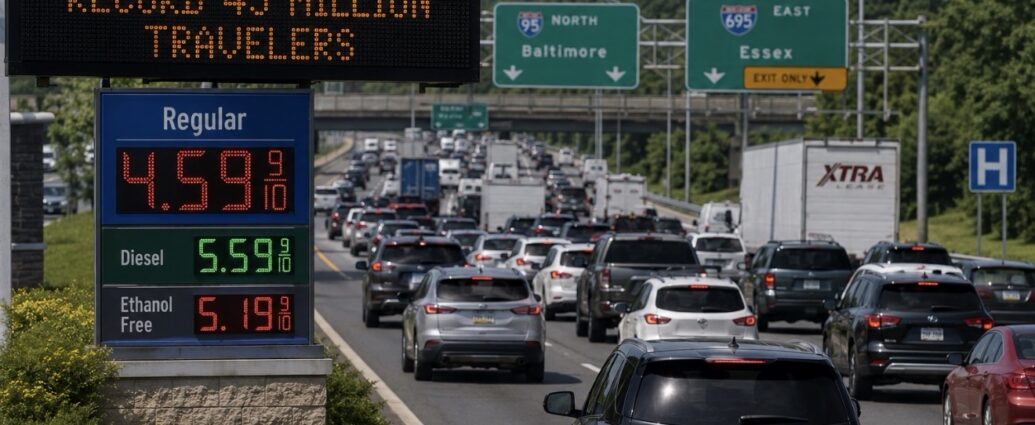
A record 45 million Americans are expected to travel at least 50 miles from home during the Memorial Day holiday weekend despite gasoline prices hovering above $4.50 a gallon, underscoring the remarkable resilience of U.S. consumer travel demand even as inflation, elevated borrowing costs and the Iran-driven energy shock continue squeezing household budgets. The forecast, released Monday by the American Automobile Association, covers travel between Thursday, May 21, and Monday, May 25 and surpasses last year’s 44.8 million travelers, setting a new Memorial Day record.

The surge comes against one of the most difficult fuel-price environments Americans have faced outside the 2022 energy crisis. National average gasoline prices are now roughly $4.50 per gallon, according to AAA data, up sharply from about $3.17 during Memorial Day weekend last year and only modestly below the all-time seasonal highs reached in June 2022. The price increase is being driven largely by the ongoing Iran conflict and the continuing closure of the Strait of Hormuz, which has disrupted global oil flows for more than two months and pushed crude oil back above $100 a barrel.

Despite the pressure, Americans are still traveling. AAA projects 39.1 million people will drive during the holiday period, while 3.66 million are expected to fly and millions more will travel by train, cruise and bus. The scale of the demand has surprised even energy analysts who expected fuel costs to meaningfully suppress discretionary travel this spring.

Patrick De Haan, head of petroleum analysis at GasBuddy, told Bloomberg that holiday travel behavior remains unusually resistant to gasoline-price spikes. “People aren’t going to want to restrict their travel on holidays,” De Haan said. “Even if gas is $6 a gallon, it’s the holidays where people are still going to travel.”

AAA Vice President of Travel Stacey Barber said the organization continues seeing strong leisure demand despite worsening economic pressure. “Travel demand remains strong, and despite higher fuel prices, many people are prioritizing leisure travel during holiday breaks,” Barber said in the agency’s release.

The resilience, however, is not without limits. AAA noted that the growth rate in Memorial Day travel this year is the slowest outside the pandemic period since 2010. Adrienne Woodland, spokeswoman for AAA — The Auto Club Group, said rising fuel prices and persistent inflation are causing many consumers to modify behavior even if they are not canceling trips outright.

“Although travel demand remains strong, higher fuel prices and persistent inflation may cause some travelers to shorten trips, delay plans, or stay closer to home,” Woodland said.

Michigan offers one of the clearest examples of the pressure consumers are absorbing. Average gasoline prices there have climbed to roughly $4.73 per gallon from $3.20 a year earlier. Similar increases are visible across much of the Midwest and Northeast.

Air travel has so far remained comparatively resilient. AAA said average airline ticket prices are still roughly 6% lower for travelers who booked early, though much of that pricing was locked in before the recent surge in jet fuel costs that has rattled airline balance sheets and contributed to the shutdown of Spirit Airlines earlier this month. Car-rental demand is also surging, with Hertz telling AAA that Thursday and Friday are expected to be the busiest pickup days of the weekend.

Among domestic destinations, Orlando, Seattle, New York City, Las Vegas and Miami rank among the most popular travel markets. Internationally, Rome, Paris, London, Athens and Vancouver are seeing strong booking activity as Americans continue prioritizing travel experiences despite broader financial strain.

The transportation system itself is expected to be heavily stressed. Traffic analytics firm INRIX warned that congestion in major metropolitan areas could more than double during peak departure and return windows. Last Memorial Day weekend, AAA roadside assistance crews responded to more than 350,000 emergency calls involving dead batteries, flat tires and empty fuel tanks. Similar or even heavier volumes are expected this year.

Beneath the headline numbers sits a broader economic trend increasingly referred to by economists as the “experience premium.” Consumers appear willing to continue spending aggressively on vacations, dining and entertainment while simultaneously cutting back on large durable purchases such as appliances, furniture and home upgrades.

Recent earnings calls across corporate America reflect the shift. Whirlpool Corp. warned earlier this month that consumers are delaying purchases of refrigerators and washing machines. At the same time, Royal Caribbean Group, Carnival Corp. and Norwegian Cruise Line Holdings all reported record booking trends and particularly strong demand for family and multigenerational vacations.

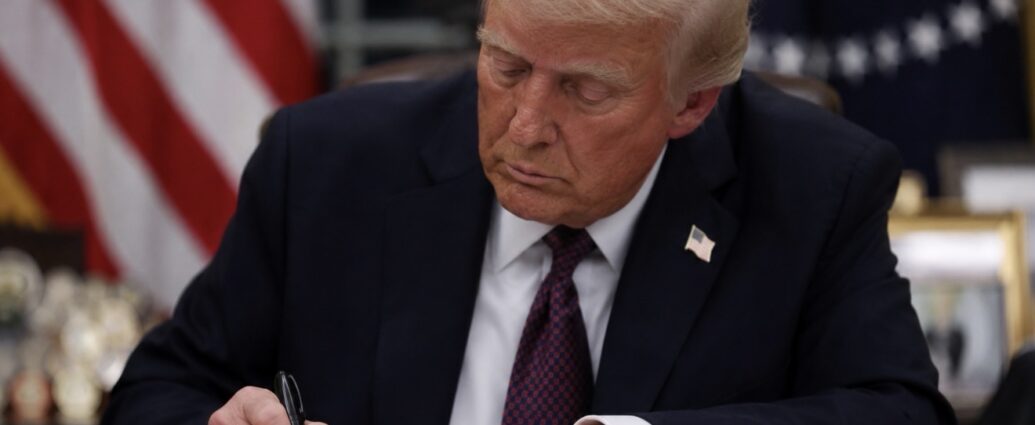
The political implications are also growing. President Donald Trump publicly voiced support Monday for a temporary federal gasoline tax holiday, targeting the 18.4-cent-per-gallon federal fuel tax that finances the Highway Trust Fund. Analysts at the Tax Foundation estimate the actual savings at the pump would likely be closer to 12 to 15 cents per gallon after accounting for refinery and distribution pricing dynamics, and any change would require congressional approval.

Diesel prices remain another major concern. National diesel averages are hovering within roughly 20 cents of record highs, creating additional inflation pressure across trucking, shipping, food distribution and logistics networks. Meanwhile, rising jet fuel prices have already prompted airlines to cut marginal routes, particularly short-haul regional service.

The broader takeaway for investors and policymakers is increasingly clear: Americans are still traveling, but they are paying substantially more to do it and quietly making trade-offs elsewhere in their budgets to keep those vacations intact.

Whether that resilience survives through the July 4 travel season — traditionally the peak period for summer fuel demand — may become one of the clearest indicators of how much strain the U.S. consumer can ultimately absorb.

JBizNews Desk
© JBizNews.com. All rights reserved. This article is original reporting by JBizNews Desk. Unauthorized reproduction or redistribution is strictly prohibited.
Banks underwriting corporate borrowings in the U.S. leveraged loan market raised the size of at least six proposed deals by a combined $2.6 billion ahead of investor commitment deadlines Thursday, Bloomberg reported, in the clearest sign yet that demand for risky dollar-denominated debt has heated into a full-blown imbalance — with funds, collateralized loan obligation managers, and private-credit pools chasing more paper than the market is currently producing.

The Thursday upsizes, tracked by Bloomberg, mark a deepening of a trend that has been building for months. Strong inflows into CLO funds and exchange-traded products, combined with stretched cash piles at private-credit shops and reignited buyout activity, have created the most lender-friendly conditions for borrowers since the post-pandemic refinancing wave.

Banks running syndicated processes have been able to widen ticket sizes, tighten pricing, and pull deals forward — a dynamic that has fed back through the secondary market into ever-richer pricing on existing loans.

The numbers tell the story.

Through the first stretch of 2026, $77 billion in U.S. leveraged loans has priced across 54 deals, alongside $22.6 billion in high-yield bond issuance across 20 deals, according to data published by Octus.

Bank of America strategists project full-year 2026 leveraged loan issuance to climb 10% to roughly $470 billion, fueled by a doubling of merger-and-acquisition and leveraged-buyout volume to about $260 billion.

JPMorgan Chase analysts have separately estimated that M&A and LBO debt issuance could reach $80 billion in high-yield bonds and $225 billion in loans this year.

The pipeline backing those forecasts is already visible.

The roughly $55 billion take-private of Electronic Arts by Silver Lake is expected to bring $20 billion of debt to the syndicated loan market in the months ahead, led by JPMorgan.

Blackstone and TPG’s $18.3 billion buyout of medical-diagnostics company Hologic will require another $12 billion of debt.

Air Lease is being taken private in a $28 billion deal, and Bloomberg has calculated that banks have already underwritten roughly $65 billion of leveraged-buyout debt scheduled to come to market in 2026.

Borrowers, in many cases, are pricing those packages at the tightest spreads in years.

The pricing reflects the supply-demand mismatch.

The average institutional loan margin in the third quarter of 2025 was just 3.13%, the lowest quarterly average on record, according to Debtwire data.

Average bids in the secondary market are running at 95 to 97 cents on the dollar.

Roughly 40% of outstanding institutional loans are trading at or above par, leaving managers of CLOs — the dominant institutional buyer of leveraged loans — scrambling for newly priced paper at any kind of yield premium.

CLO issuance in the U.S. reached a record $472 billion of broadly syndicated CLO volume in 2025 across more than 1,000 transactions, plus another $84.7 billion in private-credit CLOs, per Octus.

“This year is really the perfect storm for credit because we have a fiscal expansion and simultaneously also have monetary easing,” Neha Khoda, head of U.S. credit strategy at Bank of America, said at a recent industry roundtable. “Historically, whenever we’ve seen these happen concurrently, it’s been good for credit.”

Michael Marzouk, a loan portfolio manager at Aristotle Pacific Capital, told industry attendees that corporate fundamentals “remain in good shape” and that easing should help spur further M&A activity off trough levels.

Adam Abbas, head of fixed income at Oakmark, said he expects buy-side investors to migrate from high-yield bonds into leveraged loans as the asset class normalizes.

The risks, however, are creeping back into view.

Loans priced below 90 cents on the dollar climbed to 9.4% of the market in November, matching a mid-year peak.

The September 2025 blowups of Tricolor and First Brands have left what one Deutsche Bank analyst, Jamie Flannick, described as “a fog hanging over” the leveraged finance market.

Covenant-lite loan issuance is rising, which reduces lender protections and historically lowers recoveries in defaults.

Moody’s forecasts speculative-grade defaults to decline to 3.0% in the U.S. and 2.4% in Europe by October 2026 — down from 5.3% and 3.8% a year earlier — but warns that tariff shifts, inflation and geopolitical tensions could disrupt the base case.

With the Strait of Hormuz still closed and second-quarter inflation now forecast at 6% by the Federal Reserve Bank of Philadelphia’s Survey of Professional Forecasters, the macro backdrop is far from clean.

The other complication is CLO profit math.

Spreads on the underlying loan paper have compressed so much that Morgan Stanley strategists recently estimated CLO equity arbitrage is at its slimmest level in about a year.

Tom Majewski, founder of Eagle Point Credit, captured the trade-off at the Opal Group’s annual industry conference in Dana Point, California: “Picture a wall of sand coming at you from one side and you’re trying to move boulders on the other.”

Strategists at Citigroup, led by Michael Anderson and Steph Choe, have noted that the AI capital-expenditure cycle — which is on track to draw an estimated $150 billion from leveraged finance markets over the next five years for data centers — is itself “a mixed bag for credit,” boosting corporate animal spirits while threatening incumbent business models.

For now, the imbalance is producing more — and bigger — deals.

Until either the Federal Reserve signals a clearer pause, the AI-driven capex cycle slows, or a fresh credit event tightens risk appetite, borrowers and bankers appear set to keep pushing the limits of what investors will absorb.

JBizNews Desk
© JBizNews.com. All rights reserved. This article is original reporting by JBizNews Desk. Unauthorized reproduction or redistribution is strictly prohibited.

WASHINGTON — May 14, 2026 — President Donald Trump disclosed 3,642 securities transactions during the first quarter of 2026 with an aggregate notional value of between $220 million and roughly $750 million, according to a 113-page Office of Government Ethics Form 278-T filing made public Thursday — a trading footprint that breaks roughly six decades of presidential blind-trust norms and that lands at exactly the moment Trump is leading a high-stakes summit in Beijing alongside Nvidia Corp. chief executive Jensen Huang and a delegation of U.S. corporate leaders whose companies feature prominently in the disclosure. The filing, certified by Trump on May 8 and received by OGE on May 12, includes a handwritten notation on the cover page reading “Filer paid late fees,” indicating the legally required 30-to-45-day reporting window was exceeded.

The single most consequential purchase listed in the filing is a position of $1 million to $5 million in Nvidia, bought before Huang was added to the Beijing trip and before Trump-Xi summit discussions of AI chip export policy and U.S.-China semiconductor relations. Nvidia closed at a record high Thursday after Cantor Fitzgerald raised its price target to $350 from $300. Trump also bought $1 million to $5 million of Boeing Co. stock during the quarter — a position the company’s commercial aircraft division saw vindicated this week when Trump told Fox News during the Beijing trip that China had agreed to purchase 200 Boeing jets, a deal that would represent one of the largest commercial aircraft orders in years. Boeing shares have risen 8.84% over the past month on summit anticipation, with the company’s order backlog already at a record $695 billion.

The disclosure spans virtually every sector of U.S. policy currently driven from the White House. In the AI and semiconductor complex, Trump added $1 million-to-$5 million positions in Microsoft Corp., Oracle Corp., Broadcom Inc., Apple Inc., Synopsys Inc., Cadence Design Systems Inc., Texas Instruments Inc., SanDisk Corp., Intel Corp., and Dell Technologies Inc. In financial services, the president added JPMorgan Chase & Co., Goldman Sachs Group Inc., Visa Inc., and Bank of America Corp. In defense and aerospace, beyond Boeing, he added GE Aerospace and Palantir Technologies Inc. In the digital-asset and retail-investing complex — sectors where his administration is actively rolling out new policy — he bought Coinbase Global Inc., Robinhood Markets Inc., and SoFi Technologies Inc., alongside a $1 million-to-$5 million position in an unnamed S&P 500 index fund. Aggregate purchases in Oracle alone are estimated at $2.2 million to $10.6 million, with Microsoft at $2.4 million to $8.1 million, Amazon.com Inc. at $2.5 million to $8.3 million, and Nvidia at $1.8 million to $6.6 million, according to a line-by-line review of the filing by Benzinga.

The disclosure also shows large sales — between $5 million and $25 million each in Microsoft, Amazon, and Meta Platforms Inc. — alongside the new purchases in those same names, indicating active rebalancing rather than directional exit. International exposure was added through 19 transactions across nine ETFs concentrated in a seven-trading-day window between January 29 and March 10, with the largest single foreign-linked position in the iShares Core MSCI Emerging Markets ETF, ticker IEMG.

The most contested individual position involves Dell Technologies. The filing records multiple seven-figure Dell purchases beginning February 10. On May 8 — the same day Trump certified the disclosure — the president publicly praised Dell at a White House event, and the stock rose roughly 12% that session. The Dell family separately pledged $6.25 billion to the administration’s Trump Accounts retirement program in December 2025, a program for which Robinhood — another stock added in the disclosure — serves as initial trustee. Ethics critics have flagged the overlap.

The trading footprint is a sharp departure from modern presidential practice. Lyndon B. Johnson set the post-war template by placing personal holdings in a qualified blind trust, and every president since has followed some version of that model. Jimmy Carter went further and liquidated his peanut farm. Barack Obama held Treasury notes and broad index funds. Joseph R. Biden used a blind-trust arrangement throughout his term. Trump’s assets are held in a trust controlled by his children, and several entries in the new filing indicate that a broker acted as agent on specific transactions, but the disclosure does not identify the relevant accounts or specify who placed individual trades. A spokesperson for the Office of Government Ethics declined to address whether the filings reflect direct trading by the president or activity conducted through managed or discretionary structures, stating only that the agency is committed to transparency and citizen oversight. The White House has defended the disclosures as full compliance with the STOCK Act.

For markets, the disclosure tightens an already complicated political-economy loop. Trump has personally rebuked New York City Mayor Zohran Mamdani’s tax-the-rich rhetoric, threatened tariffs on multiple major U.S. trading partners, and is currently negotiating a tariff rollback with China worth roughly $30 billion in non-critical trade categories — all while his Q1 disclosure shows him with new direct exposure to the U.S. and international companies most affected by those decisions. Nvidia, Apple, Microsoft, and Oracle alone are sensitive to executive tariff and trade policy in ways that the broad reporting bands of the 278-T format may obscure. Congressional ethics committees and the public will now determine whether the pattern triggers a formal review or simply becomes the new baseline.

JBizNews Desk

© JBizNews.com. All rights reserved. This article is original reporting by JBizNews Desk. Unauthorized reproduction or redistribution is strictly prohibited.

NEW YORK — Just a few years ago, some of America’s largest companies declared the college degree outdated.

Executives championed “skills-first hiring,” recruiters celebrated nontraditional talent pipelines, and major employers including IBM, Google, Apple, and Tesla publicly scaled back degree requirements across large portions of their workforce.

Now, the pendulum is quietly swinging back.

As artificial intelligence rapidly reshapes the labor market, employers are increasingly reinstating college degree expectations and GPA filters — reversing one of the defining hiring trends of the post-pandemic economy and creating new uncertainty for millions of workers who entered the workforce through alternative pathways.

The shift, highlighted in new reporting from Fortune, reflects growing concern among hiring managers that AI is fundamentally changing which human skills remain valuable — and how employers identify candidates most likely to succeed alongside increasingly powerful automation systems.

“Employers are increasingly turning to degree and GPA,” one recruiter told Fortune, describing a noticeable retreat from the “talent is everywhere” philosophy that dominated hiring discussions between 2021 and 2023.

During that period, an unusually tight labor market forced companies to widen recruiting pools aggressively.

Major corporations reduced credential requirements, embraced boot camps and certification programs, and promoted the idea that demonstrated skills mattered more than formal academic pedigree.

The movement also reflected broader criticism of the traditional college system, rising tuition costs, and concerns that rigid credential screening excluded talented workers from lower-income and nontraditional backgrounds.

But the rapid rise of generative AI appears to be changing that calculus.

Across corporate America, artificial intelligence is increasingly automating many of the routine analytical, administrative, and coordination tasks that historically served as entry points for junior and mid-level employees.

That includes functions in:

  • Marketing
  • Data analysis
  • Customer support
  • Administrative operations
  • Research
  • Basic coding
  • Financial processing
  • Legal review
  • Content production

As those tasks become partially automated, companies say the remaining human work is shifting upward toward more complex responsibilities involving judgment, synthesis, relationship management, strategic thinking, and cross-functional coordination.

Many employers increasingly believe those capabilities correlate more strongly with traditional educational pathways — particularly at selective universities.

In effect, AI may be shrinking the category of lower-complexity white-collar work while simultaneously increasing demand for workers perceived as capable of operating at a higher cognitive level alongside advanced software systems.

There is also a more operational reason degree requirements are returning: scale.

As AI-assisted recruiting systems become more common inside hiring pipelines, degree status and GPA scores provide simple, standardized filters that can quickly reduce applicant pools containing thousands or even tens of thousands of resumes.

The irony is difficult to miss.

Artificial intelligence is simultaneously helping automate hiring processes while also contributing to the economic conditions causing employers to rely more heavily on traditional credentials.

The trend is not universal.

In highly technical fields — especially software engineering, cybersecurity, and specialized AI development — portfolio-based hiring and skills assessments remain important, particularly at firms that have already invested heavily in alternative talent evaluation systems.

Startups and smaller firms also continue to rely more heavily on demonstrated capability than formal academic pedigree.

But recruiters say the broader labor market is increasingly drifting back toward credential-based hiring norms, especially for white-collar professional roles where applicant competition has intensified.

That shift carries significant implications for workers who entered the labor force based on the expectation that the economy was permanently moving beyond traditional degree barriers.

Millions of Americans were encouraged over the past several years to pursue certifications, coding boot camps, online learning platforms, and alternative career paths instead of four-year degrees.

Many successfully entered industries that historically would have been difficult to access without traditional academic credentials.

Now, some of those same workers face a labor market in which the signals employers trust appear to be changing again.

The broader question confronting corporate America is whether the return to credential-heavy hiring represents a rational adaptation to an AI-driven economy — or a retreat into familiar habits during a period of extraordinary technological uncertainty.

Critics of renewed degree filtering argue that formal education often measures access, socioeconomic background, and institutional prestige as much as actual capability.

Supporters counter that as AI compresses lower-skill knowledge work, employers naturally become more selective about the human capabilities they prioritize.

What is increasingly clear is that artificial intelligence is not only changing how work gets done.

It is also changing how employers decide who gets hired to do it.

And for many workers navigating the next phase of the labor market, the value of a college degree — once widely declared in decline — may suddenly be rising again.

JBizNews Desk

© JBizNews.com. All rights reserved. This article is original reporting by JBizNews Desk. Unauthorized reproduction or redistribution is strictly prohibited.

Walmart Inc. is eliminating or relocating roughly 1,000 corporate roles across its global technology and artificial-intelligence organization, marking the retailer’s largest corporate restructuring of 2026 as companies across America race to reorganize around AI-driven operations and automation.

The move, disclosed Tuesday in an internal memo from Suresh Kumar, Walmart’s Global Chief Technology Officer, and Daniel Danker, Executive Vice President of AI Acceleration, Product and Design, restructures engineering, AI, and product teams under a more centralized command structure as Walmart intensifies its technology battle with Amazon.com Inc. and other major retailers.

“We’ve made changes to simplify how the work is organized, make ownership clearer and better align roles to the work and skills we need going forward,” Kumar and Danker wrote in the memo.

The restructuring will affect employees across Walmart’s sprawling technology organization. Some workers may apply for internal openings, but many positions are being shifted toward the company’s headquarters in Bentonville, Arkansas, and its Northern California technology offices — continuing Walmart’s increasingly aggressive return-to-office and relocation strategy for white-collar staff.

The cuts arrive less than four months after Walmart eliminated approximately 1,500 positions in January and nearly a year after another 1,500-role reduction in May 2025. Combined, the three rounds represent one of the most sustained corporate restructuring campaigns underway in modern retail, even as Walmart maintains its roughly 2.1 million global store and warehouse workforce.

The reductions underscore how rapidly artificial intelligence is reshaping corporate America beyond Silicon Valley. While AI initially fueled a hiring boom for engineers and data scientists, companies are now consolidating departments, automating functions, and reducing overlapping management structures as executives attempt to improve efficiency and accelerate deployment of AI-powered systems.

Investors appeared largely unfazed by the announcement. Walmart shares traded near $130 Tuesday, close to the company’s all-time high of $134.69 reached earlier this year. Analysts continue to maintain a strong bullish outlook on the retailer ahead of its May 21 earnings report, where Wall Street is expected to closely examine restructuring charges, AI investment spending, and updated labor-cost projections.

Walmart’s push mirrors a broader transformation underway across the retail industry. Amazon has aggressively integrated generative AI tools like its Rufus shopping assistant throughout its marketplace ecosystem, while Walmart has responded with its own suite of internal AI “super agents” designed to automate supplier onboarding, customer service, engineering workflows, merchandising support, and operational decision-making.

Under U.S. Chief Executive John Furner, Walmart has increasingly framed AI as central to the company’s future competitiveness. Earlier this month, management disclosed plans to direct roughly $10 billion annually toward technology, supply-chain modernization, and advertising infrastructure, funded in part by the company’s fast-growing retail media business.

The hiring of Daniel Danker from Instacart in late 2024 signaled the seriousness of Walmart’s AI ambitions. Danker, previously a senior executive at Uber Technologies Inc. and Microsoft Corp., has spent the past year consolidating Walmart’s fragmented technology, design, and AI divisions into a unified structure aimed at speeding product deployment and reducing bureaucracy.

Tuesday’s workforce actions now formalize that strategy.

The restructuring also reflects mounting pressure across corporate America as executives confront the disruptive potential of generative AI. Microsoft Corp., Alphabet Inc., Meta Platforms Inc., and Oracle Corp. have all announced layoffs or management reductions in recent months tied to AI-driven restructuring and cost discipline.

At the same time, research from AI company Anthropic has intensified debate inside boardrooms over how many traditional white-collar functions may eventually become automated. Former PepsiCo Chief Executive Indra Nooyi said this week that corporate directors unwilling to understand AI technology should “step aside,” highlighting how rapidly AI literacy is becoming a leadership expectation across major corporations.

For Walmart, the challenge now becomes execution.

The retailer’s increasingly sophisticated logistics, inventory, advertising, fulfillment, and marketplace systems rely on enormous software infrastructure operating across thousands of stores and distribution centers. Any disruption inside engineering or AI product teams could slow the rollout of customer-facing automation tools during critical shopping periods later this year.

Management insists the opposite will happen — that simplifying reporting lines and consolidating teams will allow Walmart to move faster in deploying AI-powered shopping, pricing, and operational tools before the crucial back-to-school and holiday retail seasons.

Whether the strategy succeeds may become clear within weeks. Investors and analysts are expected to scrutinize Walmart’s upcoming earnings call for details surrounding severance costs, headcount trends, AI deployment timelines, and the broader financial impact of one of the largest technology reorganizations currently underway in the retail industry.

As corporate America races deeper into the AI era, Walmart’s restructuring may ultimately serve as one of the clearest signs yet that artificial intelligence is no longer simply a new technology investment — it is rapidly becoming a force reshaping the structure of the American workforce itself.

WASHINGTON — The Trump administration is preparing to suspend longstanding federal limits on beef imports as soaring meat prices increasingly strain American households and threaten to become a growing political liability heading into the summer grilling season.

According to a report Monday by The Wall Street Journal, the administration plans to suspend the annual tariff-rate quota system governing imported beef — a major policy shift designed to increase supply and reduce record-high prices for ground beef and steaks at grocery stores nationwide.

The tariff-rate quota program, overseen by the U.S. Department of Agriculture, currently allows a fixed volume of imported beef to enter the United States at lower tariff rates each year. Once that threshold is exceeded, significantly higher duties take effect, discouraging additional imports and effectively limiting lower-cost foreign beef from entering the domestic market.

Under the proposed change, those caps would effectively disappear, allowing unlimited imported beef to enter at the lower tariff rate — a move expected to increase supply for meat processors, supermarkets, restaurants, and consumers.

The policy shift is part of a broader package of measures the administration is assembling to address food inflation and mounting pressure from consumers frustrated by sharply rising grocery bills.

Alongside the quota suspension, the administration is reportedly preparing to direct the Small Business Administration to expand loan access and financing programs for domestic ranchers and cattle producers. Officials are also planning to roll back several federal regulations impacting ranchers, including a controversial USDA livestock rule requiring electronic ear tags for cattle tracking.

The administration additionally plans to weaken federal protections for gray wolves and Mexican wolves under the Endangered Species Act, responding to years of complaints from ranchers in Western states who argue predator attacks have imposed growing financial burdens on cattle operations.

The aggressive policy push comes amid one of the tightest cattle supply environments in modern U.S. history.

The U.S. cattle herd fell to just 86.2 million head as of January 2026 — the lowest level on record — while the nation’s beef cow inventory has dropped approximately 8.6% since 2020.

A combination of severe drought across major cattle-producing regions, destructive wildfires that wiped out grazing land and feed supplies, and the prolonged closure of the Mexican border to live cattle imports due to outbreaks of New World screwworm have sharply constrained domestic beef production.

The result has been a historic surge in prices.

Ground beef climbed to a record $6.69 per pound in late 2025, while sirloin steak prices moved above $14 per pound, more than double what many Americans were paying less than a decade ago.

The administration has already taken smaller steps in recent months to ease supply shortages.

In February, President Donald Trump signed a proclamation expanding tariff-rate quotas for lean beef trimmings imported from Argentina by 80,000 metric tons for 2026, with the added supply structured in quarterly allotments beginning in mid-February.

That earlier move triggered immediate backlash from ranching organizations and domestic cattle groups, including the National Cattlemen’s Beef Association (NCBA), which warned that increasing foreign beef imports could further weaken U.S. producers while offering only limited price relief to consumers.

A bipartisan group of 52 House lawmakers also challenged the decision in a letter sent to the Agriculture Department and the office of the U.S. Trade Representative.

Now, with the administration preparing a far broader suspension of import restrictions, industry resistance is expected to intensify.

Critics argue that the underlying issue driving high beef prices is not simply limited supply, but the growing concentration of market power among a handful of dominant meatpacking companies that control processing capacity and pricing leverage throughout the supply chain.

The ranching advocacy group R-CALF USA has repeatedly argued that previous periods of increased beef imports coincided with shrinking domestic cattle herds and persistently elevated consumer prices — raising doubts that import liberalization alone will deliver meaningful savings at supermarket checkout counters.

For the White House, however, the political pressure surrounding food inflation appears to be outweighing industry objections.

Beef prices have increasingly become part of the broader affordability debate confronting voters, particularly as Americans continue facing elevated costs for groceries, housing, insurance, and energy.

Whether the administration’s supply-side strategy ultimately lowers prices enough for consumers to notice remains uncertain. But with Memorial Day and the peak summer grilling season approaching, the White House is clearly signaling that it intends to show voters it is taking aggressive action on one of the most visible symbols of inflation hitting American families.

JBizNews Desk

© JBizNews.com. All rights reserved. This article is original reporting by JBizNews Desk. Unauthorized reproduction or redistribution is strictly prohibited.

By JBizNews Desk
May 10, 2026

The April jobs report delivered what initially appeared to be reassuring news for the American economy.

The Bureau of Labor Statistics reported Friday that the United States added approximately 115,000 nonfarm payroll jobs in April, more than double the Dow Jones economist consensus forecast of 55,000. The unemployment rate held steady at 4.3%.

But beneath the headline numbers, economists say a far more consequential shift is unfolding — one that is quietly reshaping the structure of the American workforce itself.

The modern U.S. labor market is increasingly creating jobs in sectors dominated by women while leaving many traditionally male industries stagnant or shrinking.

And the imbalance is becoming difficult to ignore.

Since the beginning of President Trump’s second term, the economy has added roughly 369,000 jobs, according to Labor Department data.

Women accounted for approximately 348,000 of those positions.

Men accounted for just 21,000.

The widening divide reflects a structural transformation that has been building for years and is now accelerating through the health-care economy.

Health care alone added roughly 37,300 jobs in April, led primarily by growth in nursing facilities, residential care centers, and home-health services.

Over the past year, the sector has created approximately 390,000 jobs, according to the Bureau of Labor Statistics — more than total net job growth across the broader economy during that same period.

Women hold nearly 80% of jobs in the health-care and social-assistance sectors.

Meanwhile, industries where men have historically concentrated employment continue struggling to generate sustained hiring momentum.

Manufacturing lost approximately 2,000 jobs during April.

Federal government payrolls declined by roughly 9,000 positions.

The information sector also contracted.

Construction employment has slowed materially compared with prior years as elevated borrowing costs weigh on commercial real estate activity and residential development.

The result is an economy increasingly producing jobs in occupations many men historically have not entered in large numbers.

Home health aides, nursing assistants, personal care workers, therapists, and medical support staff now represent some of the fastest-growing occupations in the country.

Economists argue that this is no temporary distortion.

It is the product of deeper demographic and educational trends that are likely to persist for decades.

Harvard University economist Lawrence Katz has repeatedly pointed to the long-term decline in male labor-force participation as one of the defining labor-market shifts of the modern American economy.

That deterioration began long before the pandemic and has never fully reversed.

The traditional unemployment rate only partially captures the change.

According to April BLS data, unemployment for adult men stood at approximately 4.0%, compared with roughly 3.9% for adult women.

But unemployment measures only people actively searching for work.

A broader measure — the employment-to-population ratio — paints a more revealing picture.

Women’s employment-to-population ratio stood at approximately 54.5% in April, remaining relatively stable compared with pre-pandemic levels.

Men’s ratio, by contrast, has largely flatlined over recent years, reflecting a growing share of working-age men who have exited the labor force entirely and are no longer counted among the unemployed.

Education trends are amplifying the divergence further.

Women now earn bachelor’s degrees at significantly higher rates than men across the United States.

Employment rates among college-educated workers remain materially stronger than among workers without degrees, meaning the educational imbalance increasingly translates directly into employment and wage disparities.

The broader economy itself is reinforcing the trend.

The aging of the American population is becoming one of the most powerful economic forces driving labor demand.

Older populations require more nurses, caregivers, therapists, medical technicians, and home-health workers — all occupations already dominated by women.

Economists at KPMG, analyzing Friday’s jobs report, said demographic aging continues supporting strong demand for health-care labor even as other sectors soften under the weight of higher interest rates and slowing consumer spending.

The firm noted that eldercare and home-health services remain among the fastest-growing segments of the labor market, with long-term demand expected to accelerate further as the population ages.

At the same time, broader economic stress is beginning to show underneath headline employment gains.

The Bureau of Labor Statistics reported that the number of Americans working part-time for economic reasons — workers who want full-time jobs but cannot find them — rose by approximately 445,000 in April to nearly 4.9 million.

Long-term unemployment, defined as workers unemployed for 27 weeks or longer, remained elevated at approximately 1.8 million people, representing more than one-quarter of all unemployed Americans.

The timing of the labor-market transition is especially sensitive.

The economy is simultaneously facing elevated energy prices tied to the Iran conflict, consumer confidence at the lowest level ever recorded by the University of Michigan, and inflation that economists expect could approach 4% when April CPI data is released Tuesday morning.

That combination raises a broader economic concern.

The United States economy depends heavily on consumer spending, which accounts for roughly two-thirds of overall economic activity.

If a growing segment of working-age men remains disconnected from the sectors producing most new jobs, economists warn the imbalance could eventually weigh on household formation, consumer demand, and long-term economic stability.

The jobs, increasingly, are there.

But the structure of the labor market is changing faster than many workers appear prepared to adapt to it.

And according to economists studying the trend, the gap between who the economy needs — and who is positioned to fill those roles — may only widen from here.

JBizNews Desk
© JBizNews.com. All rights reserved. This article is original reporting by JBizNews Desk. Unauthorized reproduction or redistribution is strictly prohibited.

By JBizNews Desk
May 11, 2026

The private equity firms behind Swiss luxury watchmaker Breitling have sharply reduced the company’s valuation after years of aggressive expansion collided with weakening luxury demand, rising tariff pressure, and mounting operational costs that are now forcing a broader strategic rethink.

According to a report published by the Financial Times, London-based CVC Capital Partners and Partners Group have written down Breitling’s valuation to roughly half of its peak worth from just several years ago — a dramatic reversal for a brand once viewed as one of the luxury watch industry’s fastest-rising turnaround stories.

People familiar with the matter told the FT that both firms are now conducting a comprehensive strategic review of Breitling’s operations as slowing sales and rising costs pressure profitability.

Breitling, CVC Capital, and Partners Group declined to comment publicly.

The brand’s rapid rise — and subsequent stumble — traces back to 2017, when CVC acquired approximately 80% of Breitling from the Schneider family in a transaction reportedly valued near $870 million.

CVC immediately installed former IWC executive Georges Kern as chief executive officer and launched an ambitious transformation strategy designed to reposition Breitling from a niche aviation-focused watchmaker into a broader global luxury lifestyle brand.

The strategy initially appeared highly successful.

In December 2022, CVC sold a controlling 50.3% stake in Breitling to Partners Group in a transaction valuing the company at approximately $4.5 billion.

CVC retained roughly 23.6%, while Kern is believed to hold approximately 3%. The remaining ownership is spread among private and institutional investors.

Partners Group co-founder Fredy Gantner chairs the board.

Today, however, the valuation picture looks dramatically different.

According to the Financial Times, CVC has now marked down its remaining Breitling stake to roughly half the level at which it last reinvested during 2023.

Partners Group is reportedly carrying the company closer to approximately 70% of its prior valuation — helped partly by entering at lower earlier pricing levels.

The deterioration reflects a broader slowdown sweeping through the global luxury sector.

Demand for high-end watches has weakened significantly over the past two years as elevated inflation, slowing global growth, reduced tourism activity, and tighter consumer spending pressure discretionary luxury purchases worldwide.

For Breitling, those macroeconomic challenges collided with an especially aggressive retail expansion strategy.

Under Kern, the company rapidly increased its global boutique footprint from approximately 56 locations in 2017 to more than 290 stores today.

The stores, designed around Breitling’s “industrial loft-inspired” concept aesthetic, expanded across major luxury retail corridors including New York, London, Geneva, and Paris.

At the same time, Breitling dramatically increased marketing spending to elevate the brand’s global visibility.

The company signed celebrity ambassadors including Brad Pitt, Charlize Theron, Austin Butler, Trevor Lawrence, and soccer star Erling Haaland.

It also secured high-profile commercial partnerships with Aston Martin, the NFL, and Europe’s Six Nations Rugby Championship.

The NFL partnership culminated in Breitling becoming the league’s official timepiece partner in 2025, accompanied by a major promotional launch event in New York’s Meatpacking District.

Breitling also pursued acquisitions as part of a broader luxury platform strategy, purchasing historic Swiss brands Universal Genève in 2023 and Gallet in 2025 while presenting the companies together under a developing “House of Brands” structure.

Yet despite the scale of investment, sales momentum has stalled.

According to estimates from Morgan Stanley and research firm LuxeConsult cited by industry publication WatchPro, Breitling’s retail sales are estimated at roughly 1.1 billion Swiss francs ($1.42 billion) in 2025, down from approximately 1.2 billion Swiss francs ($1.55 billion) in 2023.

The company’s sales have now reportedly declined each year since peaking in 2022.

In the United Kingdom, where public financial filings provide additional visibility, Breitling’s turnover reportedly fell from nearly £90 million in fiscal year 2023 to below £60 million in its latest filing — a drop exceeding 30%.

Credit markets had already begun signaling concern.

Moody’s downgraded Breitling last year, assigning the company a B3 rating, which reflects elevated credit risk and vulnerability to adverse business conditions.

Moody’s cited declining earnings and rising fixed costs tied to Breitling’s boutique expansion strategy.

S&P Global Ratings followed with its own downgrade in July 2025, cutting Breitling to B- from B, while warning that weakening consumer demand and slowing tourism activity were pressuring luxury spending globally.

Analysts at S&P said they expect gradual recovery beginning around 2027 but acknowledged significant uncertainty across the broader luxury-watch sector.

Tariff pressure compounded the situation further.

Swiss luxury goods entering the United States faced tariffs reaching as high as 39% between August and November before Switzerland later negotiated reductions under a bilateral trade agreement.

Current baseline tariffs on Swiss imports now stand near 10%.

The combination of slowing demand, elevated operating costs, tariff uncertainty, and weakening credit conditions has now forced Breitling’s owners into cost reviews and operational restructuring discussions.

According to Private Equity Wire, CVC and Partners Group are evaluating potential cost-cutting measures while still selectively investing in growth initiatives viewed as strategically important long term.

Despite the current downturn, insiders close to Partners Group reportedly still believe Breitling could eventually become a viable IPO candidate between 2027 and 2029 if the company stabilizes operations and the broader luxury market recovers.

The firm’s long-term thesis remains centered around Breitling’s strong chronograph heritage, aviation identity, and expanded global brand recognition.

But before any public offering becomes realistic, Breitling faces a more immediate challenge confronting much of the luxury industry today: proving that years of expansion, celebrity marketing, and premium pricing can still generate sustainable growth in a world where consumers are becoming far more selective about what they are willing to spend on.

JBizNews Desk
© JBizNews.com. All rights reserved. This article is original reporting by JBizNews Desk. Unauthorized reproduction or redistribution is strictly prohibited.

America’s spring housing market is once again failing to deliver the rebound economists and real estate agents had been hoping for, as elevated mortgage rates, geopolitical uncertainty tied to the Iran conflict, and weak consumer confidence continue keeping buyers frozen on the sidelines.

The National Association of Realtors reported Monday that existing home sales rose just 0.2% in April from March to a seasonally adjusted annual rate of 4.02 million units, missing Wall Street expectations of 4.12 million, according to FactSet.

The reading was effectively unchanged from April 2025, underscoring what has now become a two-year pattern of stagnation in the existing-home market despite repeated expectations for recovery.

NAR Chief Economist Dr. Lawrence Yun acknowledged the weakness directly.

“This spring homebuying season, so far all the way through April, we can say we are not predicting any increase compared to one year ago,” Yun said Monday.

The April numbers reflect contracts signed primarily during February and March — a period when mortgage rates remained above 6% and oil markets were beginning to react violently to the escalating U.S.-Iran conflict and the disruption surrounding the Strait of Hormuz.

According to Freddie Mac, the average 30-year fixed mortgage rate averaged approximately 6.05% in February and 6.18% in March before climbing further toward 6.4% more recently as Treasury yields surged alongside rising oil prices and inflation fears.

That rate environment has become one of the defining economic constraints of 2026.

Housing affordability remains deeply strained, especially for first-time buyers, while broader economic anxiety has intensified as consumers absorb rising gasoline prices, elevated borrowing costs, and mounting fears that inflation may remain stubbornly high through next year.

The University of Michigan’s closely watched consumer sentiment index recently fell to the lowest level recorded in the survey’s history, surpassing even the depths of the 2008 financial crisis and the COVID-19 pandemic.

For housing, the consequences are becoming increasingly visible.

The April report follows a weak March reading of 3.98 million units — previously the slowest sales pace in nine months — and reinforces growing concerns that the housing market has become trapped in what Yun has repeatedly described as a “stuck in neutral” environment.

That represents a sharp reversal from the optimism that existed late last year.

In November, Yun projected existing home sales would surge roughly 14% in 2026 as falling mortgage rates and improving affordability unlocked pent-up demand. But by April, he had already slashed that forecast to approximately 4% growth after Treasury yields and mortgage rates moved sharply higher alongside escalating Middle East tensions.

Now, even that reduced forecast is beginning to look aggressive.

“Maybe the 14 percent doesn’t happen this year — maybe it gets pushed into next year,” Yun said recently at a real estate conference in Nashville.

The deeper structural issue remains inventory.

The U.S. housing market still lacks enough homes available for sale to create what economists consider a balanced market, even as elevated rates simultaneously suppress buyer demand.

Unsold inventory in March stood at approximately 1.36 million homes, representing about 4.1 months of supply. Historically, economists view five to six months of supply as balanced.

Yun estimates the market still needs an additional 300,000 to 500,000 listings before buyers regain meaningful negotiating power and purchasing flexibility.

The inventory shortage continues supporting home prices despite weak transaction activity.

The median existing-home price in March reached $408,800, up 1.4% year over year and marking the 33rd consecutive month of annual price increases, according to NAR data.

That dynamic — weak sales but resilient prices — has become one of the defining frustrations of the post-pandemic housing market.

Potential buyers remain squeezed between high prices and high financing costs, while many existing homeowners remain reluctant to sell because doing so would require giving up ultra-low mortgage rates locked in during 2020 and 2021.

Economists increasingly believe the housing market may remain sluggish for much of the year unless mortgage rates fall meaningfully.

But that outcome is becoming less likely as oil prices remain elevated and inflation concerns intensify.

Nancy Vanden Houten, lead economist at Oxford Economics, said recently the market is likely to “move sideways before starting to gradually rise at the end of the year,” assuming mortgage rates eventually ease.

The problem is that the Federal Reserve currently has little room to aggressively cut interest rates while energy-driven inflation risks remain elevated.

JPMorgan economists warned last week that if disruptions in the Strait of Hormuz continue through summer, the economic damage could begin spreading more visibly into broader consumer spending and economic activity by June.

For housing, that means the macro pressures suppressing buyer activity are unlikely to disappear quickly.

One area still showing relative resilience is new construction.

The U.S. Census Bureau and Department of Housing and Urban Development reported earlier this month that new-home sales rose 7.4% in March to an annualized pace of 682,000 units, outperforming expectations.

Builders have increasingly used mortgage-rate buydowns and aggressive incentives to attract buyers who remain highly payment-sensitive.

As a result, new construction now represents roughly 14.6% of total home sales, well above historical norms, as buyers unable to find existing inventory increasingly shift toward builders offering financing incentives.

Still, the broader housing market remains subdued.

For millions of Americans hoping to buy or sell homes this spring, Monday’s report confirmed what many real estate agents have been seeing for months: the 2026 spring housing season has so far failed to become the long-awaited recovery year the industry expected.

Until borrowing costs ease, inventory expands meaningfully, and consumer confidence stabilizes, housing appears likely to remain one of the clearest economic casualties of the broader inflation and energy shock rippling through the U.S. economy.

JBizNews Desk
© JBizNews.com. All rights reserved. This article is original reporting by JBizNews Desk. Unauthorized reproduction or redistribution is strictly prohibited.

By JBizNews Desk
May 11, 2026

Argentina has spent decades cycling between debt crises, defaults, inflation shocks, and emergency IMF rescues.

Now, for the first time in years, global investors are beginning to ask a different question: whether President Javier Milei may actually be stabilizing the country fast enough to bring it back into international debt markets before political and economic risks close the window again.

That possibility moved materially closer this week after Fitch Ratings upgraded Argentina’s long-term sovereign credit rating to B- from CCC+, lifting the country out of the deepest speculative territory and signaling growing confidence that Milei’s aggressive fiscal overhaul is producing measurable results.

The upgrade, announced May 5 with a stable outlook, may sound incremental by global standards.

For Argentina, it is highly consequential.

Crossing the B- threshold opens the door to an entirely new universe of institutional investors who previously could not legally or contractually purchase Argentine sovereign debt while it remained rated below that level.

Argentina’s Political Economy Secretary José Luis Daza made the point directly after the announcement, writing on X that “thousands of institutional funds are currently unable to invest” in Argentine debt below B-.

That eligibility change matters because Argentina’s challenge is no longer simply stabilizing its economy.

It is convincing markets the stabilization is durable enough to finance.

If investor demand broadens meaningfully, borrowing costs could fall sharply enough to allow Argentina to re-enter international bond markets for the first time in years under economically sustainable conditions.

Fitch’s rationale for the upgrade reflected a sweeping improvement across several core areas of Argentina’s economy.

The ratings agency cited:

  • stronger fiscal balances,
  • improving external accounts,
  • economic reform progress,
  • reserve accumulation at the Central Bank,
  • and increased confidence that the government can meet upcoming debt obligations.

Fitch also pointed to Milei’s strengthened political position following the October 2025 midterm elections, which expanded his congressional support and enabled passage of several key reforms.

Those measures included labor-market reforms, changes to Argentina’s National Glacier Law easing restrictions on mining projects, and approval of a 2026 budget built around maintaining a primary fiscal surplus.

The agency additionally highlighted Milei’s broader deregulation push and efforts to attract foreign investment into Argentina’s energy and mining sectors — especially the Vaca Muerta shale basin, which has rapidly become one of the country’s most strategically important export engines.

The macroeconomic improvement is real, even if fragile.

Fitch projects Argentina’s economy will grow approximately 3.2% during 2026, following estimated growth of roughly 4.4% in 2025.

Inflation, once spiraling above 300% annually during the country’s recent hyperinflation crisis, has fallen dramatically under Milei’s austerity program.

Monthly inflation slowed to roughly 1.5% during May 2025, though it has since edged back higher to approximately 3.4% month-over-month by March 2026.

Fiscal balances have improved sharply as well.

Argentina is expected to maintain a primary fiscal surplus during 2026, although narrower than last year’s level.

The government’s ability to preserve that discipline remains central to investor confidence.

But the financing pressures remain enormous.

Argentina faces approximately $8.8 billion in foreign-currency debt service obligations during 2026, rising toward roughly $9.8 billion in 2027, a politically sensitive election year.

To cover those obligations, Milei’s administration has assembled a financing strategy combining:

  • at least $2.5 billion in multilateral guarantees,
  • roughly $4 billion in dollar-denominated local bond issuance,
  • and approximately $2 billion in privatization proceeds.

At the same time, Argentina’s Central Bank has aggressively accumulated reserves — another key condition investors have demanded before seriously reconsidering Argentine sovereign debt.

The bank has reportedly purchased approximately $7.15 billion in dollars during 2026, with annual reserve accumulation targets ranging between $10 billion and $17 billion.

Fitch previously identified reserve accumulation as one of the single most important determinants for future upgrades.

The country’s market risk premium has also improved materially.

Argentina’s sovereign spread, measured through JPMorgan’s EMBI+ index, has fallen sharply from levels above 1,050 basis points in late 2025.

Still, spreads remain above the roughly 550-basis-point threshold many market participants view as necessary for Argentina to borrow internationally below 9% yields.

That gap defines the challenge now facing Economy Minister Luis Caputo.

Caputo has so far resisted rushing back into international debt markets, arguing current borrowing costs remain too expensive despite improving sentiment.

Many investors agree.

But the Fitch upgrade changes the equation.

A broader buyer base combined with continued reserve growth and fiscal discipline could compress spreads enough to make a sovereign debt issuance economically viable within months.

The government already appears to be quietly testing the market.

In March, Argentina sold approximately $150 million of dollar-denominated bonds to gauge investor appetite — a relatively small issuance, but one interpreted by markets as a signal that officials are preparing carefully for a larger eventual return.

Corporate borrowers are already moving ahead more aggressively.

Argentine energy and industrial companies have increasingly tapped international markets to finance expansion projects, particularly those tied to the country’s booming energy-export sector.

Those corporate issuances are functioning as a real-time stress test for broader investor appetite toward Argentine credit risk.

The problem is timing.

Argentina faces approximately $4.4 billion in foreign debt amortizations in July alone, while hard-currency debt maturities are projected to reach roughly $20.8 billion during 2027, according to local brokerage Facimex.

That leaves little margin for policy slippage.

Investors who have watched Argentina move through repeated defaults over recent decades remain cautious.

Fitch itself acknowledged that Argentina’s long history of macroeconomic instability still constrains the rating despite recent progress.

Any weakening in reserve accumulation, erosion of fiscal discipline, resurgence in inflation, or political instability ahead of the 2027 elections could quickly reverse market optimism.

For now, however, Milei has achieved something few Argentine leaders have managed in recent years:

He has convinced major segments of the international financial system that Argentina may finally be moving — however painfully — toward stabilization rather than collapse.

Whether that confidence lasts long enough for Argentina to fully reopen the door to global debt markets remains one of the most important financial questions facing emerging markets this year.

JBizNews Desk
© JBizNews.com. All rights reserved. This article is original reporting by JBizNews Desk. Unauthorized reproduction or redistribution is strictly prohibited.

By JBizNews Desk
May 11, 2026

Saudi Aramco delivered a powerful first-quarter earnings beat Sunday, reporting a 25% jump in profit as the world’s largest oil company successfully rerouted massive volumes of crude exports around the war-driven closure of the Strait of Hormuz — offering global energy markets a real-time demonstration of how decades of infrastructure investment can become a financial lifeline during geopolitical crisis.

The state-controlled oil giant reported net profit of $32.5 billion for the quarter ending March 31, up sharply from approximately $26 billion during the same period a year earlier.

The result exceeded Wall Street expectations. Analysts surveyed by LSEG had forecast profit closer to $30.95 billion.

On an adjusted basis excluding certain non-operational accounting items, Saudi Aramco said earnings rose 26% year over year to roughly $33.6 billion, also ahead of the company’s own internal analyst consensus forecast of approximately $31.16 billion.

Revenue climbed nearly 7% to $115.49 billion, supported by higher oil prices and strong sales volumes across crude oil, refined fuels, and petrochemicals.

The company said it realized an average crude price of approximately $76.90 per barrel during the quarter, up significantly from about $64.10 during the fourth quarter of 2025 and slightly above the roughly $76.30 average recorded a year earlier.

The increase reflected the geopolitical risk premium that has remained embedded in global oil markets since the Strait of Hormuz effectively shut to most commercial shipping following the outbreak of war in late February.

But the real story of the quarter was not simply higher oil prices.

It was infrastructure.

At the center of Saudi Aramco’s operational response stood the East-West Pipeline, a decades-old contingency system linking the kingdom’s eastern oil-producing fields to the Red Sea port of Yanbu.

The pipeline was originally constructed precisely for scenarios involving disruptions in the Persian Gulf and the Strait of Hormuz — though until now it had never faced a prolonged test of this magnitude.

This quarter, it became Saudi Arabia’s primary export artery.

With roughly 20% of the world’s seaborne oil supply normally flowing through Hormuz, the company pushed the East-West Pipeline to its maximum throughput capacity of approximately 7 million barrels per day, operating effectively at full utilization for three consecutive months.

“Aramco’s first-quarter performance reflects strong resilience and operational flexibility in a complex geopolitical environment,” said Amin H. Nasser, President and Chief Executive Officer of Saudi Aramco.

The pipeline allowed Saudi Arabia to continue exporting substantial oil volumes despite the maritime disruption that paralyzed large portions of Gulf shipping traffic.

But the quarter also revealed the limits of even the world’s most sophisticated energy infrastructure systems.

According to a person familiar with the matter cited by Bloomberg, Saudi crude exports recovered to roughly 5 million barrels per day by the end of March — approximately 70% of normal pre-war levels.

That means even with the East-West Pipeline operating flat out, Saudi Aramco still could not fully replace the export capacity normally moving through the Strait of Hormuz.

Every barrel redirected through the pipeline reduced operational flexibility elsewhere inside the system, leaving minimal excess capacity available to absorb additional production increases or further disruptions.

That limitation is now being closely watched across global energy markets.

Oil traders, refiners, and governments increasingly view utilization rates on the East-West Pipeline as a real-time gauge of how much spare Saudi export capacity remains available during the conflict.

At full utilization, there is little additional room left.

Any further disruption to the pipeline itself — or any additional geopolitical escalation affecting Saudi infrastructure — would likely tighten global oil supplies immediately.

The earnings report arrived as diplomatic developments surrounding the war also showed tentative movement.

CNBC, CNN, The Associated Press, and The Wall Street Journal all reported Sunday that Iran had submitted a formal response to a U.S.-backed framework proposal aimed at ending the conflict and reopening the Strait of Hormuz.

The negotiations carry enormous implications for Saudi Aramco’s financial outlook.

If diplomacy succeeds and Gulf shipping lanes reopen, Saudi Arabia could rapidly restore exports to pre-war levels while easing pressure on the East-West Pipeline.

If talks collapse, however, the pipeline’s 7-million-barrel-per-day ceiling becomes a hard structural constraint limiting future export growth.

Despite the disruption, Saudi Aramco signaled confidence in its financial strength.

The company declared a first-quarter base dividend of approximately $21.9 billion, up 3.5% from a year earlier.

The payout remains critically important to the Saudi government, which depends heavily on Aramco dividends as one of the kingdom’s largest revenue sources.

Capital expenditures totaled approximately $12.1 billion during the quarter, slightly below the $12.5 billion spent a year earlier and down from roughly $13.4 billion in the prior quarter.

The company maintained full-year capital spending guidance between $50 billion and $55 billion.

Free cash flow declined modestly to $18.6 billion, compared with approximately $19.2 billion during the same period last year, partly due to a large increase in working capital requirements tied to wartime operational adjustments.

For investors and energy executives alike, the quarter offered a rare real-world stress test of how a national oil giant performs when one of the world’s most important shipping corridors effectively disappears overnight.

Saudi Aramco’s answer was clear: better than many feared — but not without hard limits.

The 25% profit surge reflected decades of infrastructure investment designed precisely for moments like this.

The incomplete export recovery showed that even the world’s largest oil producer cannot fully engineer its way around the closure of a chokepoint as critical as the Strait of Hormuz.

For the broader energy industry, the lesson may be even more important.

The companies best positioned to survive global disruptions are often the ones that spent years building contingency systems long before markets believed they would ever actually be needed.

JBizNews Desk
© JBizNews.com. All rights reserved. This article is original reporting by JBizNews Desk. Unauthorized reproduction or redistribution is strictly prohibited.
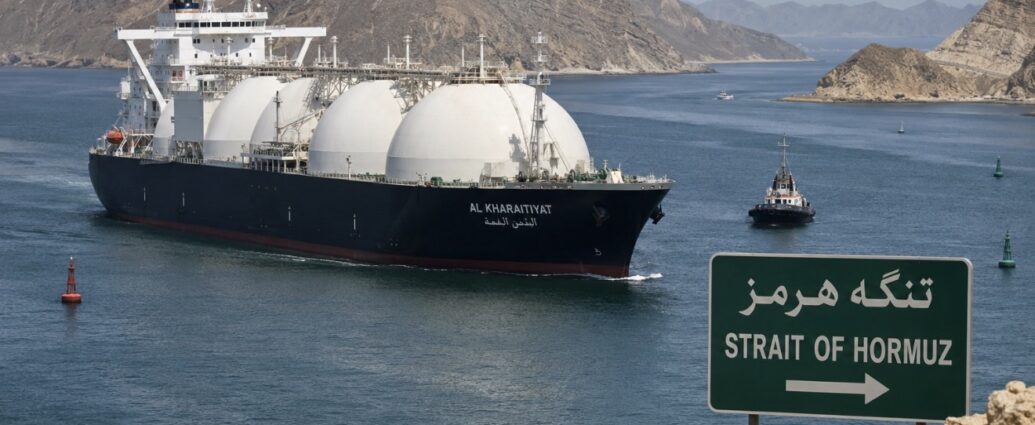
By JBizNews Desk | May 10, 2026

In a development energy markets, diplomats and governments around the world have been watching for since the Iran war began in late February, Reuters and LSEG shipping data confirmed Sunday that a Qatari liquefied natural gas tanker has successfully transited the Strait of Hormuz — marking the first such passage by a Qatari gas vessel since the conflict effectively shut down the world’s most important energy chokepoint more than two months ago.

The tanker, identified as the Al Kharaitiyat, departed Qatar’s Ras Laffan export terminal and passed through the Strait of Hormuz en route to Port Qasim in Pakistan, according to LSEG shipping data. The vessel is managed by Nakilat Shipping Qatar Ltd, sails under the Marshall Islands flag, and carries approximately 211,986 cubic meters of liquefied natural gas.

The passage did not happen accidentally or through force.

According to two people familiar with the matter who spoke to Reuters, Iran specifically approved the shipment as a deliberate confidence-building gesture toward both Qatar and Pakistan — the latter of which has quietly emerged as one of the key diplomatic intermediaries between Washington and Tehran throughout the conflict.

The diplomatic mechanics behind the transit are as significant as the shipping data itself.

Pakistan has been engaged in direct discussions with Iran seeking permission for a limited number of LNG cargoes to move through the strait, driven largely by worsening domestic gas shortages after the Hormuz closure disrupted critical energy imports.

Iran ultimately agreed to permit the shipment, and the safe passage of the vessel was coordinated under Pakistan’s existing government-to-government LNG supply arrangement with Qatar, its largest gas supplier.

That structure gave Doha, Islamabad and Tehran a politically controlled framework that avoids the appearance of Iran broadly reopening Hormuz to unrestricted commercial traffic.

For global energy markets, the significance of the transit cannot be overstated.

The Strait of Hormuz normally handles roughly 20% of global oil trade and approximately 20% of global LNG shipments, making it the single most strategically important maritime energy corridor in the world economy.

Since the war began, those flows have been severely disrupted.

Qatar — the world’s second-largest LNG exporter — has seen much of its export network effectively paralyzed by the conflict. Iranian strikes earlier in the war damaged approximately 17% of Qatar’s LNG export capacity, with analysts estimating roughly 12.8 million tons per year of production could remain offline for between three and five years while repairs continue.

The crisis dramatically tightened LNG markets across both Europe and Asia.

Europe typically receives between 12% and 14% of its LNG imports from Qatar through Hormuz, while countries including China, Japan, South Korea, Taiwan and Pakistan depend heavily on the route for electricity generation, industrial production and long-term energy security.

Before Sunday’s transit, Iran’s control over the strait had appeared nearly absolute.

On April 6, Iran’s Islamic Revolutionary Guard Corps halted two Qatari LNG tankers — the Al Daayen and the Rasheeda — near Hormuz and ordered both vessels to hold position indefinitely without public explanation, reinforcing how completely Tehran had established operational control over the waterway after the outbreak of the conflict.

The International Energy Agency has already described the Hormuz shutdown as the largest disruption in the history of modern global energy markets.

Every day the Al Kharaitiyat’s transit continues without incident now becomes another signal that limited, politically managed shipping movements may be possible even before a formal peace agreement is reached.

The breakthrough comes during an especially delicate diplomatic moment.

U.S. Secretary of State Marco Rubio said Friday that Washington expected Iran’s response within hours to a formal U.S. proposal aimed at ending the war before broader negotiations begin over Iran’s nuclear program and regional security issues.

As of Sunday evening, no formal public response had emerged from Tehran, though relative calm prevailed around the Strait after several days of sporadic military flare-ups.

The Al Kharaitiyat’s passage appears to fit directly into that fragile diplomatic window — a small but concrete signal that Iran may be willing to selectively ease restrictions around Hormuz while broader negotiations remain unresolved.

For financial markets, however, the key question is whether Sunday’s transit represents an isolated diplomatic gesture or the beginning of a wider reopening pattern.

A single LNG tanker traveling from Qatar to Pakistan does not reopen the Strait of Hormuz.

It does not restore the massive energy flows that normally move through the corridor each day, nor does it eliminate the geopolitical risk premium currently embedded across oil, LNG and global shipping markets.

But it does demonstrate something markets had not seen since the war began:

Iran is willing — under tightly controlled political conditions — to authorize at least limited movement through the world’s most critical energy chokepoint.

Whether additional vessels follow, and under what conditions, may determine whether Sunday’s transit ultimately becomes the first sign of gradual stabilization — or simply a temporary diplomatic exception inside a conflict that has already reshaped the global energy system.

JBizNews Desk

By JBizNews Desk | May 10, 2026

A new estimate from Morgan Stanley shows the world is burning through its oil reserves at the fastest pace ever recorded, leaving the global economy increasingly exposed to fuel shortages, inflation shocks and prolonged energy-market volatility as the Iran conflict continues choking supply flows through the Strait of Hormuz.

Nearly two months into the near-closure of the strategic waterway, global inventories have fallen so sharply that banks, energy executives and government agencies are warning the damage may continue long after the fighting itself ends. Analysts say the market’s normal buffer against disruption — the vast storage system of crude oil and refined fuels that stabilizes prices during crises — is rapidly disappearing.

Morgan Stanley estimates global oil stockpiles declined by roughly 4.8 million barrels per day between March 1 and April 25, a drawdown larger than any previous quarterly inventory decline tracked by the International Energy Agency. Crude oil accounted for nearly 60% of the depletion, with refined fuels making up the remainder.

The figures offer one of the clearest measurements yet of how severely the Hormuz disruption has hollowed out the global energy system.

Goldman Sachs issued a similar warning this week, estimating that visible global oil inventories are approaching their lowest levels since 2018. The bank estimates total oil stockpiles have now fallen to approximately 101 days of forward demand, with inventories potentially dropping as low as 98 days of demand by the end of May if shipping disruptions continue.

While Goldman stopped short of predicting operational shortages this summer, analysts at the bank described the speed of the inventory collapse and the magnitude of supply losses across some fuel categories as “concerning.”

The warnings are increasingly being echoed directly by the leaders of the world’s largest energy companies.

Patrick Pouyanné, chief executive of TotalEnergies, told investors during the company’s earnings call that global hydrocarbon inventories are currently being depleted at a rate of roughly 10 million to 13 million barrels per day in order to balance the market.

“We would exit the conflict with clearly some very low inventories,” Patrick Pouyanné said, warning that even a near-term reopening of the Strait of Hormuz would still leave the market deeply depleted.

ExxonMobil chief executive Darren Woods delivered an equally stark assessment.

“It’s obvious to most that if you look at the unprecedented disruption in the world supply of oil and natural gas, the market hasn’t seen the full impact of that yet,” Darren Woods said. “There’s more to come if the Strait remains closed.”

The inventory collapse is increasingly becoming both an energy problem and a broader economic one.

For consumers, the most immediate consequence is appearing at gasoline stations and inside airline ticket pricing. Morgan Stanley warned this week that U.S. gasoline inventories are on track to fall below 200 million barrels by the end of August, levels analysts described as historically tight heading into peak summer driving season.

“The U.S. gasoline market is genuinely tight and tightening further into summer,” Morgan Stanley analysts wrote.

National average gasoline prices have already climbed above $4.50 per gallon, the highest level in roughly four years, while diesel prices continue pressuring freight, logistics and manufacturing costs globally.

Energy traders say the situation is becoming particularly dangerous because the current supply shock is no longer isolated to crude oil itself. Inventories across diesel, jet fuel and refined products are now tightening simultaneously, limiting the market’s ability to absorb additional disruption.

Outside the Middle East, the hardest-hit region has become Asia-Pacific.

Oil inventories across Asia excluding China have fallen by approximately 70 million barrels since the conflict began, according to data from geospatial analytics firm Kayrros. Japan and India have both dropped to at least 10-year seasonal lows for petroleum inventories, with Japan’s stockpiles reportedly falling roughly 50% and India’s down approximately 10% since the war escalated.

Pakistan’s petroleum minister said last month the country holds only about 20 days of commercial refined-product reserves.

Diesel markets are showing especially severe stress.

Sumit Ritolia, analyst at commodity intelligence firm Kpler, described diesel as “the lifeblood of the global economy,” warning that inventory drawdowns across onshore storage, vessels at sea and major global trading hubs are increasingly bridging supply gaps that cannot be sustained indefinitely.

The pressure is now spreading into shipping rates, food production, industrial manufacturing and airline operations.

For financial markets, the inventory collapse has become a major driver of inflation expectations and recession risk calculations. Rising fuel costs are already filtering into freight contracts, airline hedging activity, agricultural inputs and industrial supply chains, while central banks face renewed pressure over whether higher energy costs could reignite inflation globally.

Energy-sector analysts at several investment banks say the longer inventories remain depleted, the greater the probability oil markets experience sharp price spikes from even relatively minor new disruptions.

China presents a more complicated picture.

According to Kayrros, Chinese crude inventories have remained comparatively stable and may have even risen during portions of the conflict. Beijing and Seoul are also reportedly considering resuming some refined-product exports that had previously been reduced, a move analysts say could modestly slow the pace of the global drawdown.

But commodity strategists caution that falling demand across parts of Asia, Africa and Latin America may reflect economic stress rather than healthy market rebalancing, as higher fuel prices increasingly force consumption cuts in price-sensitive economies.

The U.S. Energy Information Administration now expects Brent crude to average approximately $115 per barrel during the second quarter of 2026, with prices remaining elevated well into 2027 even under scenarios where the Strait of Hormuz gradually reopens.

The agency warned that attacks on regional energy infrastructure and continued uncertainty surrounding the duration of the conflict have embedded a lasting geopolitical risk premium into oil prices that may not disappear quickly.

Even if Hormuz reopened immediately, the EIA noted, restoring global trade flows to anything resembling prewar conditions would likely require months.

What the inventory data ultimately reveals is a global energy market that has already absorbed one of the largest supply shocks in modern history and now has very little remaining capacity to absorb another one.

The world entered the Iran conflict with expanding oil inventories and falling fuel prices. It is now moving into the peak summer demand season with stockpiles near multi-year lows, gasoline prices near four-year highs, and the chief executives of ExxonMobil and TotalEnergies publicly warning that the full economic consequences of the disruption have not yet fully surfaced.

The market’s buffer is rapidly disappearing.

What happens next depends largely on one question: how long the Strait of Hormuz remains constrained — and whether the global economy can withstand the strain long enough for it to reopen.

JBizNews Desk

JBizNews Desk | May 7, 2026

Wall Street Is Watching Guidance More Than Q1 Earnings

Airbnb (ABNB) releases its first-quarter 2026 financial results tonight after the closing bell, but investors are increasingly focused on something far bigger than the winter quarter that just ended: the FIFA World Cup.

With the 2026 tournament beginning June 11 across 16 host cities in the United States, Canada, and Mexico, Airbnb is positioned at the center of what could become the largest short-term rental event North America has ever seen.

Tonight’s earnings call is expected to provide Wall Street’s first detailed look at how summer booking demand is shaping up — and whether the World Cup travel surge many hosts and investors expected is materializing at the scale anticipated.

Analysts currently expect Airbnb to report first-quarter earnings of $0.30 per share, up roughly 25% from a year ago, on revenue of approximately $2.62 billion, representing about 15% year-over-year growth.

That would mark a seasonal slowdown from the stronger fourth quarter, when Airbnb reported $2.78 billion in revenue and $0.56 in earnings per share, but investors broadly view the sequential decline as normal for the travel industry’s slower winter season.

Airbnb stock closed Wednesday at $139.88 and has gained only about 2.3% this year as travel companies continue navigating pressure from elevated fuel prices, geopolitical instability tied to the Iran conflict, and softer international tourism demand.

The World Cup Is Becoming the Bigger Story

What investors really want from tonight’s earnings call is forward guidance — specifically, how quickly World Cup-related demand is accelerating and whether the company expects the tournament to materially boost summer performance.

The early numbers are already significant.

Airbnb says searches for stays in World Cup host cities are running roughly 80% higher than during the same period last year. The company also says roughly one in six guests booking stays in the United States, Canada, and Mexico during tournament dates is using Airbnb for the first time — a major customer acquisition opportunity with potential long-term value extending beyond the tournament itself.

The company is aggressively preparing for the demand surge.

Airbnb hosts across the 16 host cities are projected by Deloitte to earn an average of roughly $3,000 during the tournament period, while Airbnb is offering a $750 incentive to new entire-home hosts who welcome their first guests before July 31 in an effort to rapidly expand supply.

For homeowners in host cities, the World Cup is increasingly being viewed not simply as a sporting event but as a major economic opportunity tied directly to tourism demand, short-term rentals, restaurants, transportation, and local spending.

Hotels Face a Very Different Reality

While Airbnb’s data points toward growing demand, traditional hotel operators are facing a much more uneven picture.

The American Hotel and Lodging Association (AHLA) released a survey this week showing that roughly 80% of hotel operators across the 11 U.S. World Cup host markets say bookings are currently tracking below initial expectations.

One major factor has been large-scale FIFA room block cancellations.

In some cities, between 70% and 95% of originally reserved hotel inventory tied to FIFA contracts has reportedly been released back into local markets only weeks before the tournament, flooding cities like Kansas City, Philadelphia, Boston, Seattle, and San Francisco with excess room supply.

At the same time, hotel operators say visa restrictions and geopolitical instability are weighing heavily on international travel demand.

Between 65% and 70% of hoteliers surveyed cited visa concerns as the primary drag on bookings.

A new U.S. Visa Bond Pilot Program now requires travelers from several World Cup-qualified countries — including Algeria, Tunisia, and Senegal — to post visa bonds reaching as high as $15,000 before receiving tourist approval.

Meanwhile, travel restrictions affecting several participating nations and uncertainty surrounding Iran’s World Cup participation due to the ongoing conflict have added additional complexity to international travel planning.

Airbnb May Hold a Structural Advantage

Ironically, the hotel market disruptions may ultimately strengthen Airbnb’s position rather than weaken it.

Unlike hotels concentrated near stadium corridors and downtown tourism zones, Airbnb’s distributed inventory model allows visitors to stay in residential neighborhoods far from traditional hotel districts — often at lower prices and with more flexibility for families and group travel.

That may prove especially attractive to domestic travelers and budget-conscious international fans navigating higher airfare and travel costs.

Oxford Economics recently estimated that while the World Cup’s broader GDP impact on major tourism cities may ultimately be “marginal and short-lived,” local Airbnb hosts in smaller neighborhoods could benefit disproportionately from overflow demand and shifting travel patterns.

Airbnb’s own booking trends appear to support that theory, with host-city reservations already running ahead of comparable 2025 levels even as many hotels continue reporting weaker-than-expected demand.

Analysts See Long-Term Growth Beyond the Tournament

Wall Street analysts increasingly view the World Cup as only one piece of Airbnb’s longer-term growth story.

This week, Oppenheimer analyst Jed Kelly upgraded Airbnb to Outperform with a $180 price target, citing the World Cup as a near-term catalyst alongside several broader strategic growth initiatives.

Kelly highlighted Airbnb’s expansion into hotel inventory, the company’s growing “Reserve Now, Pay Later” financing product — which management says has already reached over 70% adoption in the U.S. — and AI-powered search upgrades expected to roll out through 2026.

He also pointed specifically to Manhattan as a potential expansion opportunity, noting that New York City hotel inventory remains roughly 3 million room nights below 2019 levels due partly to stricter short-term rental regulations that reshaped the city’s lodging market.

UBS maintained a Neutral rating on Airbnb but raised its price target to $153, citing continued geopolitical uncertainty tied to Middle East tensions.

Tonight’s Earnings Call Could Shape the Summer

Airbnb’s earnings call begins at 5:00 p.m. ET, where investors expect CEO Brian Chesky to provide updated booking trends, summer demand guidance, and a clearer picture of what the company is seeing in real-time reservation data ahead of the World Cup.

Options markets are currently pricing in a roughly 7.85% move in either direction following the earnings release.

For investors, the report could help determine whether Airbnb’s World Cup opportunity is becoming the transformational summer catalyst bulls have anticipated — or whether broader economic and geopolitical pressures are beginning to weigh more heavily on global travel demand.

For thousands of homeowners preparing properties in host cities, the stakes are more practical: whether the booking wave they were promised is actually arriving.

JBizNews Desk

© JBizNews.com. All rights reserved. This article is original reporting by JBizNews Desk. Unauthorized reproduction or redistribution is strictly prohibited.
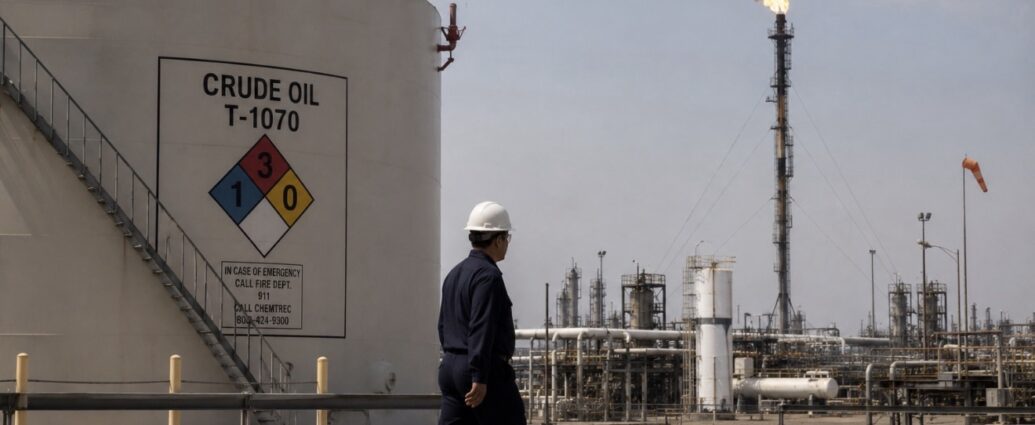
JBizNews Desk | May 7, 2026

Wall Street opened Thursday at fresh all-time highs as a convergence of forces pushed markets higher: diplomatic momentum toward a U.S.-Iran peace deal sent oil prices tumbling to their lowest levels since the war began in February, a wave of corporate earnings beat expectations across food, tech, and cybersecurity, global markets from Tokyo to London surged in sympathy, a bipartisan U.S. Senate delegation arrived in Beijing calling for de-escalation with China, and billionaire hedge fund manager Paul Tudor Jones told CNBC Thursday morning that the AI-driven bull market still has “another year or two to run” — a statement that gave fresh confidence to investors already riding a historic rally.

The S&P 500 opened at 7,372, the Nasdaq at 25,957, and both indexes extended Wednesday’s record closes, while cheaper oil — down more than 4% on the session — offered the clearest signal yet that relief at the gas pump may finally be within reach for millions of American households.

Iran Talks and Oil Markets Drive the Rally

The geopolitical backdrop was the dominant force. The United States and Iran are working through Pakistani mediators on a one-page, 14-point memorandum of understanding to formally end hostilities and establish a structure for nuclear negotiations. Talks are expected to resume next week in Islamabad. President Donald Trump said he has held “very good talks” with Iran and called a deal “very possible,” though he has also warned that Iran will be bombed “at a much higher level” if negotiations fail.

Iran confirmed it is reviewing the U.S. proposal and was expected to deliver a formal response to mediators Thursday. The ceasefire, in place since April 7, has remained fragile — earlier this week Iran attacked U.S.-escorted commercial vessels in the Strait of Hormuz — but markets chose to focus on the diplomatic track instead of the military risk.

The impact on consumers could be immediate if tensions continue easing. The national average for gasoline reached $4.54 per gallon this week, sharply above pre-war levels, and a reopening of stable shipping lanes through the Strait of Hormuz would directly reduce fuel costs for drivers, airlines, trucking companies, delivery services, manufacturers, and small businesses already squeezed by months of elevated energy prices.

Global Markets Surge Alongside Wall Street

Global markets rallied alongside Wall Street.

Japan’s Nikkei 225 surged more than 5% Thursday, crossing 62,000 for the first time ever, led by SoftBank, which jumped more than 18%, while semiconductor-related companies Sumco Corp. and Ibiden each soared roughly 20% on continued optimism tied to AI infrastructure demand.

European markets extended Wednesday’s strong gains, with London, Paris, and Frankfurt each climbing more than 2% amid improving investor sentiment tied to both geopolitics and global growth expectations.

Meanwhile, a bipartisan U.S. Senate delegation led by Senator Steve Daines arrived in Beijing Thursday calling for stability and peaceful cooperation with China ahead of a high-level meeting between the two countries’ leaders next week — another sign that Washington is attempting to stabilize multiple geopolitical fronts simultaneously.

Paul Tudor Jones Extends AI Optimism

On Wall Street, investors also received another dose of AI-fueled optimism from billionaire hedge fund manager Paul Tudor Jones, founder of Tudor Investment Corporation, who said Thursday on CNBC’s Squawk Box that the current AI boom resembles the commercialization phase of the internet during the mid-1990s.

Jones compared the current environment to roughly 1999 — about a year before the peak of the dot-com rally — and said the market could continue climbing significantly higher before a major correction eventually arrives. He added that he recently increased his exposure to AI-related investments, though he cautioned that whenever the cycle ultimately turns, the selloff could be severe.

Corporate Earnings Fuel Momentum

Corporate earnings also helped drive Thursday’s rally.

McDonald’s reported adjusted first-quarter earnings per share of $2.83, beating analyst expectations of $2.74, on revenue of $6.52 billion. Executives said the company’s value-focused menu strategy continues resonating with inflation-weary consumers seeking lower-cost dining options. Shares rose more than 3% following the report.

DoorDash surged roughly 10% after posting quarterly earnings of $0.42 per share, ahead of the $0.36 analysts expected. Gross order value climbed 37% year-over-year to $31.6 billion, also topping estimates, while second-quarter guidance came in above Wall Street forecasts.

The company disclosed that it absorbed more than $50 million in fuel-related relief costs for drivers during the quarter as gasoline prices surged during the Iran conflict. Executives said they plan to offset some of those costs through internal operational adjustments and technology investments.

Cybersecurity company Fortinet became the S&P 500’s top performer at the open, surging between 15% and 19% after beating first-quarter earnings expectations and raising full-year billings guidance, signaling continued strong enterprise demand for cybersecurity infrastructure amid the AI expansion.

Palantir Technologies added nearly 3%, extending gains following its own strong earnings report earlier this week, while AppLovin climbed 3.7% after beating revenue and earnings estimates despite enduring a difficult first quarter marked by regulatory scrutiny and aggressive short-seller attacks that had cut the stock nearly in half earlier this year.

Some Earnings Reports Fail to Impress

Not every earnings report impressed investors.

Arm Holdings fell more than 7% despite topping expectations after executives disclosed supply limitations that could prevent the company from meeting an additional $1 billion in demand tied to its next-generation AGI-focused processors. Investors appeared more concerned about production bottlenecks than the company’s strong earnings beat.

Shake Shack tumbled nearly 19% after missing first-quarter expectations, while Whirlpool also declined following weaker-than-expected results that highlighted ongoing pressure on consumer spending for big-ticket household purchases.

Energy giant Shell slipped despite posting strong quarterly earnings, as declining oil prices and lower production levels weighed on investor sentiment toward the broader energy sector.

Analysts Raise Targets Across Key Stocks

Analysts were also active Thursday morning.

Stifel raised its price target on Starbucks to $117 from $115, maintaining a Buy rating after the company announced a new China joint venture with Boyu Capital tied to the sale of a 60% stake in its China retail operations.

RBC Capital analyst Tom Narayan raised his price target on Ford Motor to $13 from $11, while Piper Sandler analyst Derek Podhaizer increased his target on Nabors Industries to $120 from $84, both maintaining bullish ratings.

Economic Data Offers Reassurance

Economic data released Thursday offered additional reassurance that the U.S. economy remains relatively stable despite geopolitical tensions and elevated energy costs.

Weekly jobless claims totaled 200,000 for the week ended May 2 — above the prior week but below the 206,000 consensus estimate — while continuing claims fell to 1.77 million. First-quarter productivity rose 0.8%, below expectations, while unit labor costs increased 2.3%.

Investors are now looking ahead to Friday’s closely watched nonfarm payrolls report for a clearer picture of how the labor market and broader economy are handling the combined pressures of war-related inflation, elevated fuel prices, and rapid AI-driven economic transformation.

For now, however, markets appear focused on one message above all else: easing geopolitical tensions, falling oil prices, resilient corporate earnings, and relentless AI optimism continue fueling one of the strongest rallies Wall Street has seen in years.

JBizNews Desk

© JBizNews.com. All rights reserved. This article is original reporting by JBizNews Desk. Unauthorized reproduction or redistribution is strictly prohibited.

By JBizNews Desk | May 5, 2026

The next phase of inflation may not be driven by global markets or government policy — but by small businesses across America quietly raising prices to survive.

As oil prices surge above $100 per barrel amid escalating tensions in the Middle East, small and mid-sized businesses are beginning to pass rising energy and transportation costs directly onto consumers, marking what economists describe as a “second wave” of inflation that is typically slower to emerge but harder to reverse.

Unlike large corporations, which often hedge fuel costs or absorb short-term volatility, small businesses operate with tighter margins and fewer financial buffers. That leaves them with limited options when expenses rise — cut costs, reduce staff, or increase prices.

Increasingly, they are choosing the latter.

“We’re seeing early signs of cost pass-through across multiple sectors,” said Diane Swonk, Chief Economist at KPMG, noting that energy price shocks tend to move through the economy in stages. “It starts with fuel, then transportation, then wholesale goods, and eventually shows up in the prices consumers pay every day.”

The impact is already visible in industries ranging from food service to logistics. Restaurant owners report higher delivery costs and ingredient prices tied to fuel surcharges, while contractors and service providers are adjusting quotes to reflect increased travel and material expenses.

The dynamic is particularly pronounced in sectors dependent on petroleum-based inputs, including plastics, chemicals, and packaging. As those costs rise, businesses face mounting pressure to maintain margins.

“This is not a one-time adjustment,” said Bill Dunkelberg, Chief Economist at the National Federation of Independent Business (NFIB), whose surveys track small business sentiment nationwide. “When costs keep rising, businesses keep adjusting prices — and that creates persistence in inflation.”

That persistence is what concerns policymakers.

While headline inflation had begun to ease earlier this year, the resurgence in energy prices threatens to reverse that progress. The Federal Reserve, which targets 2% inflation, now faces the possibility that price pressures could become embedded again — not through demand surges, but through cost structures.

Energy shocks historically present a unique challenge for central banks. Unlike demand-driven inflation, which can be cooled through higher interest rates, cost-push inflation is more difficult to control without slowing the broader economy.

“Raising rates doesn’t lower oil prices,” Swonk said. “But it can slow everything else.”

For consumers, the impact is cumulative. Higher fuel costs increase the price of transporting goods, which raises retail prices. At the same time, service costs — from home repairs to delivery fees — begin to climb.

The result is a gradual erosion of purchasing power, even if wage growth remains stable.

Recent data suggests that wage gains have already slowed. According to the Bureau of Labor Statistics, average hourly earnings rose 3.5% year-over-year in March, the slowest pace since 2021. If inflation accelerates again, real wages could decline — putting additional strain on household budgets.

Small business owners say the decisions are not taken lightly.

“Customers are already stretched,” said one restaurant operator in New Jersey, who asked not to be named. “But when your costs go up across the board, you don’t have a choice.”

The broader risk is that these incremental price increases, spread across thousands of businesses, collectively reinforce inflation expectations. Once consumers begin to anticipate higher prices, behavior changes — from spending patterns to wage demands — making inflation more difficult to contain.

Looking ahead, much will depend on the trajectory of energy prices. If oil stabilizes, some of the pressure could ease. If it continues to rise, the pass-through effect is likely to intensify.

For now, the shift is subtle but significant: inflation is no longer just a headline statistic — it is being rebuilt, one price adjustment at a time, across the real economy.

© JBizNews.com. All rights reserved.

Omaha, Nebraska — May 5, 2026 — Legendary investor Warren Buffett delivered one of his most pointed warnings yet to Wall Street and retail traders, lumping cryptocurrencies and the booming prediction-market industry into a broader “gambling mood” that has never been more intense in his 60-plus years in the markets. Speaking at Berkshire Hathaway’s 2026 annual shareholder meeting and in a CNBC interview broadcast to attendees, the Oracle of Omaha described financial markets as “a church with a casino attached” and said one-day options, crypto-style speculation, and prediction platforms like Polymarket and Kalshi represent pure gambling rather than investing.

The remarks come as Berkshire Hathaway sits on a record cash hoard exceeding $397 billion, a clear signal that Buffett sees limited attractive opportunities in today’s overheated environment. He explicitly tied the surge in speculative activity — including crypto trading and event-based betting on everything from elections to geopolitical outcomes — to a dangerous shift away from long-term value creation toward short-term bets that he compared to state-sponsored gambling.

Buffett has long been a vocal critic of cryptocurrencies, famously calling Bitcoin “rat poison squared” and arguing that digital assets produce no cash flow or intrinsic value. His latest comments extend that skepticism to the rapidly growing prediction-market sector, which has exploded in popularity since the 2024 U.S. election. Platforms such as Polymarket and Kalshi allow users to wager real money on real-world events, drawing billions in volume and attracting both sophisticated traders and everyday retail participants. Buffett grouped these platforms with legalized sports betting and day trading, calling the entire category a “tax on stupidity” that disproportionately benefits the house — and, indirectly, wealthier players who can afford to absorb losses.

The economic stakes are enormous. Prediction markets have grown into a multi-billion-dollar industry, with some estimates placing daily trading volume in the hundreds of millions. Crypto markets, meanwhile, continue to command hundreds of billions in daily turnover despite repeated boom-bust cycles. Buffett highlighted a recent high-profile case involving a U.S. Army soldier who allegedly used classified military intelligence to profit nearly $400,000 on a prediction market tied to a raid in Venezuela — an incident that underscores the regulatory and ethical risks inherent in these platforms. The Justice Department charged the soldier with insider trading, reinforcing Buffett’s view that much of the activity skirts the line between legitimate hedging and outright gambling.

For ordinary investors, the warning carries immediate practical weight. Retail participation in crypto and prediction markets has surged, fueled by easy mobile apps, leverage, and 24/7 trading. Yet Buffett stressed that these vehicles produce no underlying economic value — they simply transfer money from one participant to another. In contrast, traditional value investing, he argued, focuses on businesses that generate real earnings and dividends over decades. The current speculative frenzy, he suggested, is reminiscent of previous bubbles, including the dot-com era and the run-up to the 2008 financial crisis.

The impact on broader markets is already being felt. Berkshire’s massive cash position — the largest in its history — reflects not only caution but also a deliberate decision to preserve dry powder for when better opportunities emerge. Buffett noted that only a handful of years in his career have offered truly compelling bargains; the rest of the time, patience is the disciplined investor’s greatest weapon. With one-day options trading exploding in volume and prediction markets mimicking crypto’s high-leverage style, the risk of sudden, sharp drawdowns remains elevated.

Analysts say Buffett’s message is particularly timely as crypto prices remain volatile and prediction markets increasingly influence political and economic narratives. Retail investors pouring money into these assets may be chasing short-term thrills at the expense of long-term wealth building. The Oracle’s track record — turning Berkshire into one of the world’s most valuable companies through disciplined, patient capital allocation — gives his caution considerable credibility.

Buffett’s comments also come amid broader concerns about market structure. He pointed to the proliferation of ultra-short-term products as evidence that the line between investing and gambling has blurred more than ever. While most market participants still operate on the “right side” of that line, the “casino” side has become dangerously attractive, he warned.

The economic ripple effects could be significant. Heightened speculation distorts capital allocation, inflates asset bubbles, and leaves retail investors vulnerable to sharp reversals. Should a major correction hit — whether triggered by geopolitical shocks, regulatory crackdowns on prediction platforms, or a crypto meltdown — the fallout would extend far beyond individual traders to pension funds, banks, and the broader economy.

Buffett stopped short of predicting an imminent crash, but his actions speak volumes: Berkshire continues to hoard cash rather than chase today’s hot trends. For investors tempted by the allure of crypto’s upside or the thrill of prediction-market bets on everything from Fed rate moves to election outcomes, the message is clear: treat these vehicles with extreme caution.

The warning adds to a weekend filled with breaking business news, from airline fuel-price disasters to BlackBerry’s automotive software resurgence and Israel’s soaring cost of living. When markets reopen Monday, traders will be closely watching whether Buffett’s words cool the speculative fever or simply get drowned out by the casino noise.

JbizNews- Desk – Investing / Markets

By JBizNews Desk | Monday, May 4, 2026

Ocean freight prices are climbing sharply across global trade routes as shipping carriers struggle to expand capacity fast enough to meet rising demand, tightening supply chains and increasing costs for businesses worldwide.

Container rates have surged in recent weeks, particularly on key routes from Asia to North America and Europe, as a combination of strong shipping demand, port congestion, and limited vessel availability creates a renewed imbalance in global logistics.

Vincent Clerc, CEO of A.P. Moller-Maersk, said “global container demand continues to outpace available supply, and that imbalance is driving significant rate increases across major shipping lanes.

Industry data shows freight rates rising at their fastest pace in months, reversing a period of relative stability and signaling that supply constraints are intensifying again. Carriers have attempted to deploy additional vessels and optimize existing routes, but executives say capacity expansion is being limited by infrastructure bottlenecks, port delays, and equipment shortages.

A key issue is the availability of containers and efficient turnaround times. Congestion at major ports is delaying the return of empty containers, creating shortages in critical export hubs and further tightening capacity. At the same time, longer transit times are effectively reducing available fleet supply.

Peter Sand, Chief Shipping Analyst at Xeneta, noted that “carriers are in a stronger pricing position as capacity remains constrained, leaving shippers with fewer alternatives and less negotiating power.

Carriers are also exercising greater discipline in managing capacity, prioritizing profitability after several years of volatile earnings. This has resulted in tighter control over available space, limiting the ability of the market to quickly absorb demand spikes.

For businesses, the impact is immediate. Higher freight rates are increasing landed costs, squeezing margins, and forcing companies to reconsider pricing, sourcing, and inventory strategies. Importers, particularly small and mid-sized firms, report difficulty securing space at predictable rates, leading to shipment delays and higher operating costs.

The surge in shipping costs is also feeding into broader inflation pressures, particularly in goods-heavy sectors where transportation represents a significant portion of total expenses.

Analysts warn that without a meaningful increase in capacity or a slowdown in demand, elevated freight rates could persist into peak shipping seasons, prolonging the strain on global trade.

What comes next: With capacity tight and demand holding firm, ocean freight markets are entering another volatile phase—one where pricing power remains with carriers and businesses must adapt quickly to rising costs and limited shipping flexibility.

JBizNews Desk

Washington, D.C. — May 4, 2026

President Donald J. Trump today participated in a high-profile Small Business Summit in the White House East Room, gathering more than 130 small business owners from across the United States to mark the start of National Small Business Week (May 4–11). The event served as a platform to recognize the 2026 National Small Business Week award winners and underscore the administration’s signature policies credited with fueling a broad-based “Main Street revival.”

In remarks delivered this afternoon, the president spotlighted the transformative impact of the Working Families Tax Cuts Act — signed into law on July 4, 2025 — which has delivered permanent tax relief and regulatory certainty to the nation’s 36 million small businesses, described by the White House as “the true engine of job creation, innovation, and community prosperity.”

Key provisions highlighted include the permanent extension of the 20 percent small business deduction (formerly Section 199A), allowing pass-through entities and entrepreneurs to deduct up to 20 percent of qualified business income. The law also restored and expanded full (100 percent) immediate expensing for investments in equipment, factory construction, machinery, and domestic research and development (R&D), providing businesses with critical upfront cash-flow relief and incentives to expand operations.

Administration officials noted that these measures, combined with broader deregulation efforts, have already produced measurable results. Nearly 12 million small business owners have seen average tax reductions of roughly $7,000, with the permanent 20 percent deduction alone delivering about $4,600 in annual relief to 8 million entrepreneurs. The Deregulation Strike Force eliminated more than $110 billion in compliance costs in its first year, while the Small Business Administration (SBA) delivered record capital — guaranteeing $45 billion in 7(a) and 504 loans to over 85,000 businesses in FY25.

SBA Administrator Kelly Loeffler, who joined the president at the summit, praised the momentum: “We are a nation of builders again thanks to President Trump’s historic wins for Main Street, and I’m honored to mark National Small Business Week alongside him and the job creators who fuel our local communities — particularly as America celebrates 250 years of freedom and free enterprise. … Our nation’s 36 million small businesses now have the confidence to hire, reinvest and expand, unleashing an historic era of sustained growth. America is open for business again.”

The East Room gathering brought together owners representing a cross-section of American enterprise, including manufacturing, food production, defense, energy, retail, and other sectors. Attendees heard directly from the president about additional America First initiatives: expanded Opportunity Zones to channel capital into underserved communities, a new dedicated loan program for small manufacturers, the “Make Onshoring Great Again Portal” for domestic supply-chain sourcing, suspension of burdensome Beneficial Ownership Information (BOI) reporting requirements (saving billions in paperwork), and the termination of the Obama-era Joint Employer Rule to protect franchise owners.

The summit aligns with the official presidential message on National Small Business Week, issued Sunday, which emphasized the role of small businesses in powering the U.S. workforce (employing more than 45 percent of American workers) and advancing the American Dream. “Every day, my Administration is delivering incredible victories for America’s small businesses,” the message stated, referencing the “One Big Beautiful Bill” (the Working Families Tax Cuts Act) and ongoing efforts to slash red tape so owners can “focus on their craft rather than being burdened with endless paperwork.”

The 2026 award winners — selected by the SBA and recognized nationally during a May 3 ceremony in Washington, D.C. — include honorees in categories such as Small Business Person of the Year, Exporter of the Year, Small Business Manufacturer of the Year, Rural Small Business of the Year, Blue-Collar Small Business of the Year, and the Phoenix Award for Small Business Disaster Recovery, among others. Today’s summit provided a high-visibility stage to celebrate their achievements amid the week-long observance.

The event comes as small business optimism has rebounded under the current policy framework, with owners citing greater certainty for long-term planning, hiring, and capital investment. The administration has positioned these gains as central to a broader economic renaissance tied to America’s semiquincentennial (250th anniversary) celebrations.

National Small Business Week continues through May 11 with virtual training sessions, resources, and further recognitions hosted by the SBA. The White House has framed the week as both a celebration of entrepreneurial spirit and a reaffirmation of policies designed to keep America “open for business.”

JbizNews will continue to monitor developments from the summit and provide ongoing coverage of small business policy impacts throughout the week.

By JBizNews Desk | Monday, May 4, 2026

Retail stocks came under pressure Monday as fresh data and company signals pointed to early signs of softening consumer spending, raising concerns about demand sustainability heading into the critical summer season.

Shares of major retailers declined as investors reacted to a combination of slowing foot traffic, increased promotional activity, and shifting consumer behavior. The emerging trend suggests that while overall spending remains positive, consumers are becoming more selective, prioritizing essential goods over discretionary purchases.

Executives across the sector are beginning to acknowledge the shift. Brian Cornell, CEO of Target, said in recent remarks that “consumers are still spending, but they are making more deliberate choices, focusing on value and essentials rather than discretionary items.

That change in behavior is forcing retailers to adjust strategies. Companies are increasing discounts and promotional efforts to maintain sales volumes, particularly in categories such as apparel, home goods, and electronics. While these measures can support revenue, they often come at the expense of profit margins.

The pressure is especially visible in inventory management. After a period of aggressive restocking to meet earlier demand, many retailers now find themselves holding excess inventory in certain categories. Clearing that inventory requires price cuts, which further compress margins and weigh on earnings expectations.

Neil Saunders, managing director at GlobalData Retail, said “the consumer is not pulling back entirely, but the shift toward value-driven spending is creating a more challenging environment for retailers to sustain profitability.

Macroeconomic factors are playing a key role. Elevated interest rates have increased borrowing costs for households, while inflation—though easing—continues to affect purchasing power. These pressures are particularly impactful for middle- and lower-income consumers, who are more sensitive to price changes.

Credit trends are also being closely watched. Rising credit card balances and higher delinquency rates in some segments suggest that certain consumers are relying more heavily on credit to maintain spending levels, a dynamic that may not be sustainable over time.

At the same time, the labor market remains relatively strong, providing a partial cushion. Continued job growth and wage gains are supporting overall consumption, but analysts note that these factors may not fully offset the impact of higher living costs and interest rates.

Retailers are responding with a mix of caution and adaptation. Many are tightening cost controls, refining product assortments, and investing in data-driven strategies to better align with changing consumer preferences. E-commerce platforms and loyalty programs are also being leveraged to drive engagement and sales.

However, the outlook remains uncertain. If consumer confidence weakens further or economic conditions deteriorate, the retail sector could face a more pronounced slowdown.

What comes next: Investors will be closely watching upcoming earnings reports and consumer data for confirmation of whether the current softness is a temporary adjustment or the beginning of a broader demand slowdown that could reshape the retail landscape through the remainder of 2026.

JBizNews Desk

12:29 PM EDT • Monday, May 4, 2026

Sugar futures climbed sharply to a one-month high on Monday as investors aggressively unwound bearish short positions amid tightening supply expectations and direct spillover from elevated crude oil prices tied to geopolitical tensions in the Strait of Hormuz.

As of 11:35 AM EDT, the front-month NY Sugar #11 (May 2026 contract) was trading at 15.18 cents per pound, up approximately +1.7% on the day. The move marks the highest level since early April, recovering sharply from recent lows near the 13.20–13.50 cent range and reversing weeks of net-short speculative positioning that had built up during a period of expected global surpluses.

The primary catalyst is the surge in energy markets. With Brent crude holding near $109–110 per barrel and WTI around $101, Brazilian sugarcane mills — which account for roughly 40% of global sugar exports — are shifting more cane crush toward ethanol production. Ethanol has become significantly more profitable than sugar given high gasoline prices, reducing near-term sugar output and tightening the 2026/27 global balance faster than expected. This energy-driven diversion is a classic flex in Brazil’s dual sugar-ethanol market and has already prompted major analysts to revise forecasts downward.

Firms including Green Pool Commodity Specialists and Czarnikow have trimmed projected surpluses or widened deficit estimates for the new season, citing the ethanol shift and stronger biofuel demand. The result has been a rapid unwind of speculative shorts, with open interest data showing notable position covering that has amplified the technical rally and pushed prices through recent resistance levels.

While the longer-term outlook still anticipates large sugarcane crops later in the season from Brazil and other producers, the immediate supply squeeze — combined with the oil linkage — is dominating market sentiment and creating strong upward momentum in the soft commodity.

Additional photorealistic image of sugarcane harvesting (illustrating the real-world supply dynamics in Brazil’s fields that are driving today’s ethanol diversion and sugar rally):

Photorealistic documentary-style photograph of sugarcane harvesting in a vast Brazilian plantation at harvest time. A large modern mechanical harvester is actively cutting tall, dense rows of bright green sugarcane stalks in the foreground, kicking up light dust and debris, while a few field workers with machetes are visible in the mid-ground on a smaller plot. Expansive green fields stretch to the horizon under a bright blue sky with scattered white clouds. Golden natural sunlight, highly detailed textures on leaves, soil, machinery, and human figures, realistic shadows and depth of field, sharp focus, cinematic yet natural lighting, no text, logos, or watermarks, ultra-realistic like a National Geographic field photo.landscape

Traders will now watch for any further developments in the Middle East, weekly Brazilian crush and production reports, ethanol parity levels, and the Brazilian real’s strength for continued direction. A sustained rally in energy prices could keep sugar supported in the near term, while any easing of Hormuz tensions might temper the ethanol incentive and cap the upside.

JBizNews Commodities Desk | Real-Time Update • May 4, 2026 • 11:35 AM EDT

By JBizNews Desk | Monday, May 4, 2026

Global trade is beginning to slow as shipping delays intensify and transportation costs climb, disrupting business operations and forcing companies to absorb higher expenses across already strained supply chains.

From manufacturers waiting on critical inputs to retailers struggling to keep shelves stocked, companies are reporting longer lead times, missed delivery windows, and rising uncertainty in fulfilling customer demand. The disruption is being driven by a renewed combination of port congestion, container shortages, and elevated fuel costs, tightening global logistics networks at a critical moment.

Ngozi Okonjo-Iweala, Director-General of the World Trade Organization, warned that “persistent logistics disruptions and rising trade costs are acting as a drag on global growth, particularly as businesses rely on predictable supply chains to operate efficiently.

The operational impact is becoming increasingly visible. Businesses are being forced to adjust production schedules, delay shipments, and carry higher inventory levels to buffer against unpredictability. These changes are not only increasing costs but also reducing efficiency and profitability.

Across major shipping hubs in Asia, Europe, and North America, congestion has returned, extending vessel wait times and reducing schedule reliability. As a result, companies are finding it harder to plan, forecast, and execute on time-sensitive orders.

John Denton, Secretary-General of the International Chamber of Commerce, said “when supply chains become unreliable, businesses are forced to operate defensively—holding more inventory, paying more for logistics, and ultimately passing those costs through the system.

Freight costs are adding further pressure. Ocean shipping rates have risen sharply in recent weeks, driven by strong demand and constrained capacity. For many businesses, particularly those operating on thin margins, the increase is forcing difficult decisions around pricing, sourcing, and order volumes.

Small and mid-sized businesses are among the most exposed. With limited negotiating power and less flexibility in their supply chains, many are being forced to either raise prices or absorb losses, both of which carry long-term consequences.

The ripple effects are extending beyond individual companies. Higher shipping costs are feeding into broader inflation, while slower trade flows are beginning to weigh on overall economic momentum.

Analysts warn that if disruptions persist, the cumulative impact could deepen, affecting hiring, investment, and expansion plans across multiple sectors.

What comes next: With supply chains tightening again and shipping costs rising, businesses are entering a more defensive phase—one where operational resilience, cost control, and supply chain flexibility will be critical to navigating the months ahead.

JBizNews Desk

Caracas — May 4, 2026 — Venezuela’s crude exports have surged past 1 million barrels a day for the first time in years, marking a swift rebound less than six months after the ouster of strongman Nicolas Maduro and delivering a major economic lifeline to the cash-strapped South American nation.

April exports soared to 1.16 million barrels a day according to Bloomberg shipping reports and vessel movements, while Reuters data based on PDVSA documents and tanker tracking showed a 14% month-on-month jump to 1.23 million barrels per day — the highest monthly average since late 2018. The surge comes as a Caracas-Washington supply pact has encouraged more sales to the United States, India and Europe, with trading firms and Chevron increasing exports.

The rebound is dramatic. Exports have more than doubled from levels at the end of 2025, fueled by the easing of U.S. sanctions and a steady flow of imported diluents that have helped restart production. Production itself approached 1.1 million barrels a day in March, the highest since 2019, according to PDVSA presentations.

The economic impact is immediate and transformative for Venezuela. Oil revenue is the lifeblood of the government budget, and the jump in exports is expected to generate hundreds of millions in additional hard-currency inflows each month at current prices. This comes as the country struggles with reconstruction after years of hyperinflation, sanctions and economic collapse under Maduro. Analysts say the higher volumes could help stabilize the economy, reduce reliance on debt and ease pressure on the bolivar, while also boosting global oil supply and helping moderate prices amid the ongoing fuel crunch affecting airlines worldwide.

The post-Maduro government has moved quickly to reopen fields and restore output. International oil companies and trading houses are returning, with shipments gaining diversity and reaching more customers than in recent years. Direct exports to the U.S. rose sharply to 445,000 bpd in April, while India took 374,000 bpd and Europe 165,000 bpd, according to shipping data.

The developments carry global implications. Higher Venezuelan supply helps offset tightness caused by the Iran conflict and other disruptions, potentially easing some of the fuel-price pressure that has hammered airlines and other sectors. However, the rapid rebound also highlights Venezuela’s vulnerability: output remains far below the country’s pre-Chávez peak of more than 3 million bpd, and long-term recovery will depend on sustained investment, infrastructure repairs and political stability.

PDVSA documents and vessel tracking confirm the surge, with 66 vessels departing Venezuelan waters in April compared with 61 in March. Trading firms such as Vitol and Trafigura played a major role, alongside increased activity from Chevron.

The milestone is a clear win for the post-Maduro leadership, which has prioritized oil sector revival as a cornerstone of economic recovery. Yet challenges remain: much of the infrastructure is aging, and full rehabilitation will require billions in investment. Still, the export jump signals that Venezuela is re-entering the ranks of significant Latin American oil producers after years on the sidelines.

For global markets, the added supply is a welcome development amid the weekend’s heavy breaking business news — from airline shutdowns driven by the fuel-price crunch to conglomerate earnings and OPEC+ production decisions. Traders will be watching closely when markets reopen Monday for any signs of how the Venezuelan rebound is being priced into crude futures and related energy stocks.

JbizNews- Desk – Energy

By JBizNews Desk | Monday, May 4, 2026

The little booklet that Cuba’s socialist government has relied on for more than six decades to feed its people is running out of both pages and purpose. Across Havana, state-run bodegas that once anchored daily life are now largely empty, and the ration system known as “la libreta” has been reduced to a handful of basics — split chickpeas, limited sugar, and little else. In its place, essential goods are increasingly priced in U.S. dollars, a currency out of reach for much of the population.

José Luis Amate López, a bodega clerk in central Havana, said demand has collapsed alongside supply. His store, which serves roughly 5,000 residents, has had virtually nothing to sell for weeks. “No Cuban can truly survive on the products from the ration book anymore,” he said.

The erosion of the ration system is now one of the clearest signs of a broader economic breakdown in a country of nearly 10 million people, where fuel shortages, power outages, and inflation have become part of daily life. Wages paid in Cuban pesos continue to lose purchasing power, leaving households increasingly dependent on external support.

The numbers underscore the strain. Ana Enamorado, 68, said her April ration amounted to little more than split chickpeas and two pounds of sugar. Her combined salary and pension total roughly 8,000 pesos — about $16 a month. Meanwhile, a carton of eggs can cost nearly half that amount, with basic staples like meat and cornmeal consuming what remains. “There’s hardly anything in the ration book,” she said. “We’re practically living off air.”

Even bread, once one of the most protected items in the system, has become a symbol of decline. Lázaro Cuesta, 56, said daily portions have been cut in half while prices have surged more than tenfold. “And the quality is worse,” he added, reflecting a broader frustration shared across long lines that form daily outside distribution points.

For those without access to remittances, the situation is particularly severe. Roughly 60% of Cubans receive financial support from relatives abroad, but Rosa Rodríguez, 54, is not among them. Earning the equivalent of about $8 a month, she said choices between basic goods have become unavoidable. “If you buy beans, then you can’t buy sugar,” she said, describing a system where survival increasingly depends on trade-offs rather than stability.

Economists point to structural failures at the core of the crisis. William LeoGrande, a professor at American University, said the government no longer has the financial capacity to sustain the ration system at scale. Supplies now arrive sporadically, he noted, while inflation continues to erode purchasing power following the government’s 2021 currency unification effort. “They simply don’t have the money to do it anymore,” he said.

The strain is visible inside the bodegas themselves. Shelves once stocked with yogurt, pasta, and soap now sit bare, with faded posters listing goods that have effectively disappeared. The gap between policy promises and daily reality has become a source of public cynicism — and increasingly, quiet frustration.

At the same time, the shift toward dollar-based pricing has widened inequality across the island. Access to food is no longer defined solely by citizenship, but by whether a household has access to foreign currency. Those with relatives abroad can still navigate the system; those without face growing scarcity.

Officials have discussed moving toward a model that subsidizes individuals rather than goods — a shift that could ease pressure on state finances — but implementation has lagged. For now, the ration book remains in place, though its role has fundamentally changed.

For many Cubans, “la libreta” is no longer a guarantee of survival. It is a reminder of a system that once was — and of the widening gap between state support and everyday reality.

— JBizNews Desk

© 2026 JBizNews.com. All rights reserved.
This content is original reporting by JBizNews Desk. Unauthorized use, reproduction, or distribution, in whole or in part, without prior written permission is strictly prohibited.

JBizNews Desk | New York | Sunday, May 3, 2026

Wall Street enters one of its most consequential weeks of the year with investors navigating a powerful crosscurrent of forces: a critical jobs report on Friday, a wave of major corporate earnings, a Federal Reserve that just held rates steady, and an unresolved Iran conflict that continues to shadow global energy markets and economic forecasts alike.

Where Markets Stand

April ended on a high note. The S&P 500 closed Friday, May 1 at 7,230.12, up 0.29 percent on the session. The Nasdaq Composite hit a fresh all-time high, closing at 25,114.44, up 0.89 percent. The Dow Jones Industrial Average slipped 152.87 points, or 0.31 percent, to settle at 49,499.27. For the month, the S&P 500 and Nasdaq posted their best monthly performance since 2020, while the Dow notched its best month since November 2024. The CBOE Volatility Index, known as the VIX, closed below 17 — a nearly two-week low — signaling reduced near-term fear even as macro risks remain elevated.

Ben Snider, chief U.S. equity strategist at Goldman Sachs Research, said in a note published April 24 that the S&P 500 is forecast to climb 6 percent to a year-end target of 7,600, built on expectations of 12 percent earnings-per-share growth in 2026. “In the near term, equity market gyrations will likely continue to mirror geopolitical volatility,” Snider wrote, identifying the Iran war and the AI buildout as “the clearest equity market risks in coming weeks.” Year-to-date share buyback authorizations have hit a record $422 billion, and announced merger-and-acquisition volumes have more than doubled from a year ago, Snider noted.

The Fed Holds — Rates Stay Put

The Federal Reserve held interest rates steady at its meeting this week, with the federal funds rate remaining between 3.5 and 3.75 percent. Three dissents on the policy statement signaled a lack of support for any easing bias, according to Charles Schwab market commentary published May 1. According to the CME FedWatch Tool, the chance of a rate cut at the June meeting stands at just 5 percent. Futures markets suggest rates will stay at current levels through the year, with only a 10 percent probability of a cut and a 6 percent chance of a hike — a notable shift given that odds of a hike were near zero before the meeting.

Core PCE, the Fed’s preferred inflation gauge, jumped to 4.3 percent in the first quarter from 2.7 percent in the prior quarter — above the 4.1 percent expected. New York Fed President John Williams is scheduled to speak Monday and his remarks will be scrutinized for any fresh signals on the rate path. Bob Lang, founder and chief options analyst at Explosive Options, told CNBC on May 1 that a strong jobs number could be welcome news for markets, though he does not expect it would meaningfully shift the interest rate outlook given the Fed’s current posture.

Friday’s Main Event: The Jobs Report

The week’s most consequential data release arrives Friday, May 8, when the U.S. Bureau of Labor Statistics publishes the April nonfarm payrolls report. Economists polled by FactSet expect the U.S. economy to have added just 50,000 jobs in April — far below the prior reading of 178,000 — with the unemployment rate expected to hold steady at 4.3 percent. Federal Reserve Chair Jerome Powell said last week that the labor market had shown “more and more signs of stability.” Supporting data arrives throughout the week: the JOLTS job openings report for March drops Tuesday, May 5; ADP’s private payroll survey for April publishes Wednesday, May 6, with economists polled by FactSet expecting 95,000 private-sector job additions; and initial jobless claims arrive Thursday, May 7.

Palantir: Monday’s Marquee Report

Palantir Technologies reports after the market close Monday, May 4, and expectations are high. Wall Street analysts project earnings per share of $0.28 — a 115 percent jump year over year — alongside revenue of approximately $1.54 billion, up 74 percent annually, according to LSEG data cited by CNBC on May 3. U.S. commercial and government revenue are both forecast to grow more than 60 percent, reflecting surging demand for Palantir’s artificial intelligence platform. William Power, senior analyst at Baird, reaffirmed an Outperform rating and a $200 price target ahead of the print, saying he expects “another strong quarter.” Oppenheimer initiated coverage this week with an Outperform rating and a $200 price target. Citigroup carries a Buy rating with a $210 target. Not everyone is bullish: RBC Capital Markets set a $90 price target, citing elevated valuations — the stock trades at roughly 50 times expected 2026 revenue — and flagged slowing government contract trends and growing competition from Microsoft, Databricks, Snowflake, OpenAI and Anthropic.

AMD: Tuesday’s AI Bellwether

Advanced Micro Devices reports Tuesday, May 6, after the market close, with earnings and revenue both expected to grow by double digits versus a year ago, according to LSEG. All eyes will be on AMD’s artificial intelligence chip roadmap and whether the company can sustain momentum against Nvidia. Ross Seymore, analyst at Deutsche Bank, said ahead of the report that secular and cyclical revenue tailwinds combined with operating margin leverage support upside potential, but maintained a Hold rating, writing that the fundamental upside is “largely reflected in AMD’s share price following the recent significant appreciation.” Bespoke Investment Group data shows AMD tops earnings estimates 62 percent of the time.

Disney: Wednesday’s Consumer Pulse

Walt Disney reports Wednesday, May 6, before the market open, with analysts expecting earnings per share of $1.49 — a 2.8 percent increase — on revenue of $24.85 billion, up 5 percent annually, according to Forex.com analysis published May 4. Entertainment revenue is expected to rise 8.3 percent, Sports revenue around 1.5 percent, and Experience revenue 6.1 percent. The main focus will be Disney+ and Hulu streaming profitability, with management having guided to $500 million in streaming operating income — the metric most likely to move the stock. Parks and Experiences remain the largest contributor to operating income, but analysts warn that U.S. demand and international tourism trends could be softening. The report comes weeks after Disney cut roughly 1,000 jobs across multiple divisions.

Uber: Wednesday’s Ride-Hailing Read

Uber Technologies also reports Wednesday, May 6, before the bell. Analysts expect double-digit revenue growth but double-digit declines in earnings versus a year ago, according to LSEG. Ross Sandler, analyst at Barclays, said ahead of the report that he expects solid demand but flagged higher gas prices and bad weather as near-term cost pressures. “Uber has enough breadth to manage these near-term dynamics, and while robotaxi risk continues to weigh on the story, the risk/reward remains attractive,” Sandler said. Bespoke data shows Uber beats earnings estimates 61 percent of the time.

The Iran Shadow

Overhanging all of it is the ongoing Iran conflict and its grip on global energy markets. President Donald Trump said Saturday he is reviewing Iran’s 14-point peace proposal but “can’t imagine” it is acceptable. A White House Situation Room meeting on Iran is expected Monday with Vice President JD Vance, Chief of Staff Susie Wiles and special envoy Steve Witkoff. Brent crude remains elevated after surging more than 55 percent since the war began February 28. The S&P Global U.S. Manufacturing PMI rose to 54.5 in April from 52.3 in March — its strongest expansion since May 2022 — but the ISM Prices Index jumped 6.3 points to 84.6, its highest since April 2022, a warning that energy-driven inflation is seeping through the supply chain. ISM Services PMI for April publishes Tuesday, May 5, offering the next read on whether the service sector is holding up against rising costs.

With more than half of S&P 500 companies having reported thus far — over 80 percent beating expectations — the earnings season has provided a floor of confidence under the market. But with jobs data, Fed guidance, Iran diplomacy and major tech and consumer earnings all landing in the same five-day window, this week will test whether that confidence holds.

JBizNews Desk
© JBizNews.com. All rights reserved. This article is original reporting by JBizNews Desk. Unauthorized reproduction or redistribution is strictly prohibited.

JBizNews Desk | New York | Sunday, May 3, 2026

Tankers are loading up in Alaska and along the U.S. Gulf Coast and sailing to Japan, Thailand and Australia in unprecedented numbers. Nine weeks into the effective closure of the Strait of Hormuz, the United States has surpassed Saudi Arabia as the world’s top crude exporter and become the energy supplier global markets cannot function without — but energy executives and analysts warned this week that America’s supply cushion is running out faster than the world realizes.

Over the past nine weeks, more than 250 million barrels of crude from American oil wells and storage facilities have been shipped overseas, according to Bloomberg reporting published Sunday, May 3. That volume has made the U.S. once again the world’s number one crude exporter. But domestic oil and fuel stockpiles have drawn down for four consecutive weeks, falling below historical averages, raising serious questions about how long record exports can be sustained.

President Donald Trump told reporters Friday, May 2: “This has been amazing. The amount of oil and gas that we’re selling now is at a level that nobody’s ever seen.” He added: “We have more oil production right now than any time in history. And if you take a look at the ships, they’re all coming up to Texas, Louisiana, Alaska.”

Chevron chief executive Mike Wirth offered a starkly different assessment Friday, May 2, saying the global energy system is under “extreme stress.” The day before, Thursday, May 1, ConocoPhillips warned that “critical shortages” of oil are imminent. In anonymous survey comments published in late April by the Federal Reserve Bank of Dallas, energy executives said: “The unpredictable nature of the current administration makes business modeling near impossible.”

The Largest Supply Disruption in History

International Energy Agency Executive Director Fatih Birol has left no room for ambiguity about the scale of what has happened. Speaking on the podcast “In Good Company” hosted by Norges Bank Investment Management chief executive Nicolai Tangen on April 1, Birol said the energy crisis sparked by the war was “the worst in history” — worse even than the 1973 and 1979 oil shocks. “In both of them we lost each about 5 million barrels per day of oil. These oil crises led to global recession in many countries,” Birol said. “Today, we lost 12 million barrels per day — more than two of these oil crises put together.”

Crude and oil product flows through the Strait of Hormuz plunged from 20 million barrels per day before the war to just over 2 million barrels per day in March, according to the IEA’s April 14 monthly Oil Market Report. In early April, loadings through the Strait averaged just 3.8 million barrels per day, compared with more than 20 million barrels per day in February before the crisis, the IEA reported. Gulf producers including Iraq, Saudi Arabia, Kuwait, the UAE, Qatar and Bahrain collectively shut in an estimated 9.1 million barrels per day of crude production in April as onshore storage filled with oil that had nowhere to go.

Brent crude surged more than 60 percent over the course of March alone — the biggest monthly price gain since records began in the 1980s — before reaching a peak near $150 per barrel in physical markets, according to the IEA’s April Oil Market Report. JP Morgan warned that inventories are reaching minimum operational levels, with the actual shortage potentially doubling from 4 million barrels per day to as much as 8 million barrels per day as stockpiles and oil at sea are exhausted, according to analysis cited by Economics Help on May 2.

Birol told CNBC on April 1 that the IEA’s emergency reserve release of 400 million barrels — the agency’s largest ever, unanimously agreed by member countries on March 11 — was not a solution. “This is only helping to reduce the pain, it will not be a cure,” he said. “The cure is opening up the Strait of Hormuz.”

Rory Johnston, founder of Commodity Context, said April 21 that any reopening of the Strait would likely trigger an immediate drop of $10 to $20 in crude prices due to speculative positioning — but warned supply chain bottlenecks, infrastructure damage and production outages would keep the market tight, likely anchoring Brent in the $80 to $90 range even after a reopening. “This is still the largest oil supply shock in the history of the oil market,” Johnston said. “Without a sustained restoration of flows, prices may need to rise further to curb demand.”

Tony Sycamore, market analyst at IG, said in a note published April 30: “Prospects for any near-term resolution to the Iran conflict or a reopening of the Strait of Hormuz remain dim.”

Vitol chief executive Russell Hardy said April 21 that one billion barrels of oil production will be lost because of the war, with the current running total already between 600 and 700 million barrels. Naif Aldandeni, energy strategist, told Al Jazeera on March 15 that the IEA’s reserve release was “a small bandage on a large wound,” adding that the release would produce “only a temporary stabilising effect.”

What It Means at the Pump

For ordinary Americans, the consequences are direct. Retail gasoline prices have climbed to an average of $4.40 per gallon, according to Bloomberg. The U.S. Energy Information Administration reported March 30 that average retail gasoline stood at $3.99 per gallon and diesel at $5.40 per gallon — the highest levels in real terms in over two years. Gas prices have risen $1.16 per gallon since the start of the war, with prices expected to hit $5.00 per gallon if the Strait remains closed, according to the 2026 Iran War Fuel Crisis entry on Wikipedia. Jet fuel has spiked 95 percent since the war began, causing multiple airlines to raise baggage fees. Energy Secretary Chris Wright has repeatedly cited the $5-per-gallon threshold as the key political benchmark heading into November’s midterm elections.

U.S. domestic oil production has actually fallen roughly 100,000 barrels per day since the war began as drillers remain hesitant to invest amid deep uncertainty, according to Bloomberg. Exxon Mobil and Chevron are also managing disruptions to their Middle East operations, adding further constraints.

LNG and Fertilizer: The Hidden Crisis

The disruption extends well beyond crude oil. LNG supplies from Qatar and the UAE through the Strait of Hormuz have been cut by more than 300 million cubic metres per day since March 1, according to the IEA — reducing global LNG supply by roughly 20 percent. QatarEnergy declared force majeure on all export contracts after its Ras Laffan facility — the world’s largest LNG liquefaction plant — was struck on March 2 and went offline. The company warned repairs could take up to five years. Steven Wilson, a partner in the global energy practice at law firm Mayer Brown, said in late March that LNG suppliers were becoming more selective in negotiating long-term contracts because spot market pricing had become far more lucrative — squeezing buyers and driving prices higher.

Over 30 percent of global urea and significant volumes of ammonia and phosphate transit the Strait of Hormuz. Morningstar analyst Seth Goldstein projected that nitrogen fertilizer prices could roughly double from 2024 levels. The UN World Food Programme warned the disruptions are driving long-term increases in global food prices, threatening a scenario similar to the 2022 food crisis.

How Long Can Iran Hold Out?

Muyu Xu, senior crude oil analyst at Kpler, told Al Jazeera in late April that the U.S. naval blockade was already slowing Iranian oil loadings and exports, pressuring onshore inventories. “We expect any production reduction to be gradual over the coming week, with a higher likelihood of acceleration into May,” Xu said.

Kenneth Katzman, former Iran analyst at the Congressional Research Service in Washington, told Al Jazeera that Iran had between 160 million and 170 million barrels of oil “afloat” on tankers around the world — cargo that transited the Strait before the U.S. blockade began — potentially giving Tehran revenue flows through August. “Does President Trump have until August? Probably not,” Katzman said. “He’s probably going to have to look at kinetic escalation if he wants to bring this to the conclusion he wants, or he’s going to have to accept less than the deal he ideally wants.”

The question now facing energy markets, policymakers and businesses worldwide is whether diplomacy can reopen the Strait before the supply shock forces demand destruction on a scale not seen since the 1970s energy crisis — an outcome none of the parties to the conflict has yet fully prepared the world for.

JBizNews Desk
© JBizNews.com. All rights reserved. This article is original reporting by JBizNews Desk. Unauthorized reproduction or redistribution is strictly prohibited.

Vienna — May 3, 2026 — OPEC+ has agreed in principle to raise collective oil production quotas by 188,000 barrels per day for June, marking the third consecutive monthly symbolic increase aimed at stabilizing global markets.

The decision, reached during virtual consultations among members, comes as the cartel (now operating without the United Arab Emirates following its recent departure) continues its gradual unwinding of voluntary production cuts. However, actual additional barrels reaching the market are expected to remain limited due to ongoing disruptions in the Gulf region linked to the U.S.-Iran conflict and security issues around the Strait of Hormuz.

Analysts describe the move as largely “on-paper” at this stage, with real supply growth constrained by geopolitical volatility rather than cartel policy. U.S. crude exports have nevertheless surged to record levels, helping offset some of the tightness.

The quota hike reflects OPEC+’s balancing act: supporting prices for member economies while avoiding a sharp oversupply that could crash the market. Oil prices have been volatile in recent weeks amid the broader Middle East tensions, with Brent crude hovering near key technical levels.

Energy ministers emphasized that the increases are “gradual and reversible” if market conditions deteriorate. The UAE’s exit from the formal quota system earlier this year has slightly altered the group’s internal dynamics but has not derailed the broader production strategy.

For global businesses, the implications are significant. Airlines, shipping companies, and manufacturers continue to grapple with elevated fuel costs, while oil producers and service firms watch closely for any real supply relief. The Trump administration has meanwhile kept a close eye on domestic energy output and strategic reserves.

This latest quota adjustment keeps the oil market in a state of cautious equilibrium. Traders will be watching June’s actual production data and any fresh developments from the Gulf for clearer signals on direction.

JbizNews- Desk – Energy

For the first time in 60 years, Warren Buffett will not be the main attraction at Berkshire Hathaway’s annual meeting. Buffett, 95, stepped down as CEO at the end of 2025 but remains chairman of the board. Greg Abel, 63, took over as chief executive on January 1, 2026, after years of careful grooming as Buffett’s chosen successor.

Now Abel faces his first shareholder meeting in the top seat — and the pressure is real.

A Mountain of Cash, A Lagging Stock

Berkshire shares have severely underperformed since Buffett unexpectedly announced his departure last year on May 3. On a year-over-year basis, BRK stock fell 11.19%, while the S&P 500 gained 29.5% over the same period. 

Abel’s most pressing challenge is how to put Berkshire’s massive cash reserve to work, which ended 2025 at approximately $373 billion.  A pricey, AI-driven stock market has left Berkshire few deep-value opportunities for deploying that war chest  — the kind of distressed bargains that Buffett built his legend finding.

Abel has started making moves. He restarted share buybacks in March, ending a drought of more than a year.  But investors want more answers — and more action.

Proving Himself

The mood in Omaha this weekend is one of cautious watching. Some investors want to see Abel prove himself before deciding to buy more, according to Lawrence Cunningham, a governance professor at the University of Delaware, who told Reuters the market is “expressing caution.” 

Abel is considered more hands-on than his predecessor and less likely to forgive prolonged underperformance, while remaining committed to Berkshire’s culture of giving managers room to operate day-to-day. 

Key questions heading into the meeting include Berkshire‘s capital allocation strategy, potential acquisitions, succession planning beyond Abel, and the performance of major holdings including Apple, Occidental Petroleum, and the company’s insurance operations. 

Buffett remains chairman emeritus and a strategic voice on capital allocation, though Abel now holds full CEO operating authority.  Whether that arrangement reassures or unsettles long-term shareholders may be one of the more telling storylines to emerge from this weekend’s meeting.

The era after Buffett has arrived. What Greg Abel does with $373 billion — and a company carrying 60 years of legend — will define what comes next.

JBizNews Desk

© JBizNews.com. All rights reserved. This article is original reporting by JBizNews Desk. Unauthorized reproduction or redistribution is strictly prohibited.

Wall Street kicked off May on a strong note Friday, with all three major indexes rising in early trading as a blockbuster Apple earnings report, a record-setting close the night before, and fresh signs of progress in U.S.-Iran peace negotiations sent oil prices sharply lower and stocks higher.

The Numbers At The Open

The S&P 500 gained 0.5%, the Nasdaq Composite added 0.7%, and the Dow Jones Industrial Average advanced roughly 112 points, or 0.2%, in early trading.  The gains build on a historic session Thursday. The S&P 500 closed above the 7,200 threshold for the first time ever, helping both the S&P 500 and Nasdaq secure their strongest monthly performances since 2020. The Dow posted its strongest monthly performance since November 2024. 

Top Mover: Apple

The clear standout at the open is Apple. Apple reported fiscal second-quarter earnings of $2.01 per share on revenue of $111.18 billion, beating analyst estimates of $1.95 per share and $109.66 billion in revenue.  iPhone revenue reached $56.99 billion, up 21.7% year over year, beating expectations across every product category.  Services revenue surged 16.3% to a new all-time record of $30.98 billion.  Apple’s board authorized an additional $100 billion in share repurchases and raised its quarterly dividend 4% to $0.27 per share.  Shares jumped more than 4% at the open. CEO Tim Cook called the results exceptionally strong, saying “the first half of this year was very strong.” 

Analyst Calls

Venu Krishna, head of U.S. equity strategy at Barclays, pointed to a strong economic growth outlook and an intact tech story as catalysts to keep the rally going, saying “the story is good, so we remain optimistic.” 

Pakistan’s Role In Moving Oil Markets

One of the biggest market drivers this morning is not a stock — it is diplomacy. Oil prices fell after Iran reportedly sent its response through Pakistani mediators to the latest U.S. amendments to a draft peace agreement. U.S. West Texas Intermediate crude fell roughly 3% to around $102 a barrel, while international benchmark Brent edged lower to $110.23. 

Pakistan‘s role as mediator in the U.S.-Iran conflict has been one of the most consequential diplomatic developments of 2026. On March 23, Pakistan formally offered to host talks between Washington and Tehran , stepping in as a neutral bridge between two sides with no direct communication. The formal Islamabad Talks were held on April 11 and 12, led on the U.S. side by Vice President JD Vance, alongside special envoys Steve Witkoff and Jared Kushner, and on the Iranian side by parliamentary speaker Mohammad Bagher Ghalibaf and foreign minister Abbas Araghchi. The talks lasted 21 hours but ended without a deal.  A two-week ceasefire mediated by Pakistan had taken hold on April 8, and President Trump subsequently extended it to allow more time for negotiations.  Today’s oil drop reflects market optimism that Iran’s latest response through Pakistani channels could move the process forward — keeping the Strait of Hormuz from becoming a full-blown energy crisis again.

Other Movers

Roblox tumbled 24% in premarket after slashing its full-year 2026 bookings guidance, warning of “continued short-term friction” from new product changes including age verification that have slowed new user acquisition. 

Caterpillar saw several analysts raise price targets after the industrial giant beat earnings expectations, citing booming demand for power generation equipment from AI data centers and a record backlog. 

Exxon Mobil and Chevron both beat quarterly earnings expectations but reported steep profit declines as the Middle East conflict weighed on energy operations. Exxon’s net income declined 45% while Chevron’s fell 36%. 

Occidental Petroleum announced that CEO Vicki Hollub — the first woman to lead a major U.S. oil company — is retiring after a decade at the helm. COO Richard Jackson will take over June 1. 

JBizNews Desk

© JBizNews.com. All rights reserved. This article is original reporting by JBizNews Desk. Unauthorized reproduction or redistribution is strictly prohibited.
May 1, 2026

It was not the debut Bill Ackman had in mind. Pershing Square USA, the billionaire investor’s highly anticipated closed-end fund, fell sharply on its first day of trading Wednesday — erasing nearly a fifth of its value within hours of hitting the market.

Shares priced at $50 but traded as low as $40.33 in the minutes after the opening. By the close, PSUS settled at $40.90 — down 18.2% on the day. 

Pershing Square Inc., the asset management company that listed alongside the fund under the ticker PS, ended its first day at $24.20. 

An investor who bought five shares in the IPO — and received the bonus share of PS that came with the deal — was down roughly 9% on a combined basis by the close, according to calculations by Bloomberg. 

The offering marked the largest closed-end fund launch in U.S. history, but it came in at the low end of Ackman’s ambitions. He had originally targeted between $5 billion and $10 billion. The deal raised $5 billion, with about $2.8 billion already committed by large institutional investors before the IPO opened to the public. 

This was not Ackman’s first attempt at a U.S. public listing. He tried a similar launch in 2024 but pulled it after weak investor interest. 

This time, he structured the deal differently to bring in everyday investors. He lowered the minimum purchase from $5,000 to $250 and partnered with retail brokerages to reach their user bases.  The fund charges a 2% management fee with no performance fees — a departure from the typical hedge fund model that takes a cut of profits.

On the morning of the IPO, Ackman told CNBC: “Hedge funds are sort of known for managing money for rich people. And now we have the opportunity for someone with $50 to be a long-term shareholder. Usually, the retail gets cut massively back, the institutions are favored. We did the opposite.” 

The market, at least on day one, was not convinced. The sharp drop reflects a challenge that closed-end funds frequently face — shares often trade at a discount to the value of the underlying assets once the initial hype fades. Investors who buy in at the IPO price can quickly find themselves underwater even if the portfolio itself performs well.

By Thursday, Ackman moved to show confidence in the deal. He disclosed he had purchased 500,000 shares of PSUS and 800,000 shares of PS out of his own pocket on the first day of trading. Shares rebounded on the second day following the disclosure. 

Whether the bounce holds will depend on how Ackman performs as a public market investor and whether retail investors — the audience he specifically courted — stick with the fund through the early turbulence.

JBizNews Desk

© JBizNews.com. All rights reserved. This article is original reporting by JBizNews Desk. Unauthorized reproduction or redistribution is strictly prohibited.