Taiwan is proposing the largest defense budget in its history, putting nearly 29 cents of every dollar in next year’s central government spending plan toward the military, coast guard and related security costs.
The Cabinet approved NT$1.1225 trillion, approximately $35.2 billion, for defense in 2027. That is an 18% increase from this year and the first time Taiwan’s annual defense allocation has exceeded NT$1 trillion.
The money carries two messages. To Beijing, Taiwan is signaling that a blockade or invasion would become increasingly expensive. To Washington, it is answering demands that the island spend more of its own money on defense rather than assume the United States will absorb the cost of protecting it.
The arithmetic is more complicated than the record headline suggests. The allocation equals approximately 3.01% of Taiwan’s projected 2027 economic output, slightly below this year’s 3.32%, because the economy is expected to expand sharply. President Lai Ching-te wants defense spending to reach 5% of GDP by 2030, which would require tens of billions of dollars in additional annual commitments.
The proposal includes NT$691.9 billion for the Ministry of National Defense, NT$218.2 billion in special budgets and NT$60.7 billion in other special funds. Military pensions account for NT$103.8 billion, while the coast guard receives NT$47.9 billion.
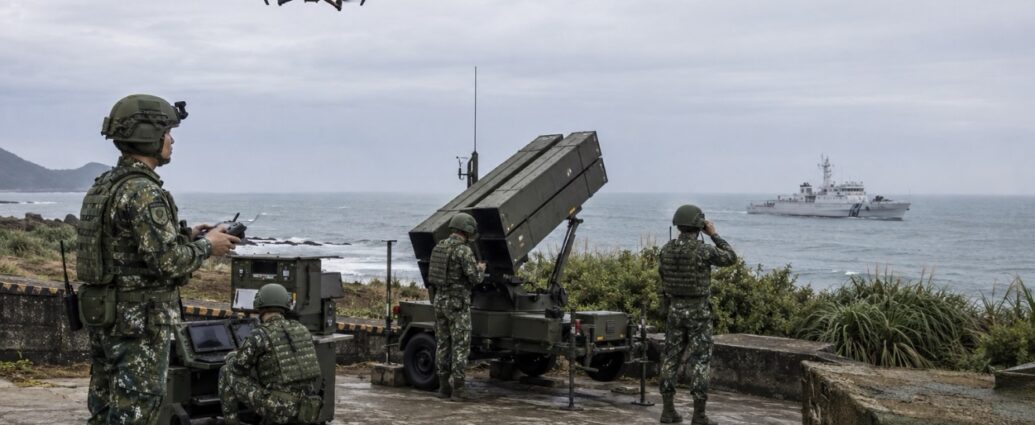
New procurement will emphasize drones, missiles, air defense, coastal surveillance and other systems designed to make Taiwan difficult to blockade or occupy. The strategy is not to match China ship for ship or aircraft for aircraft. China’s military budget remains many times larger. Taiwan instead wants mobile weapons that can survive an initial attack and continue threatening Chinese forces afterward.
That creates a substantial commercial pipeline for American defense contractors as well as Taiwan’s domestic drone, electronics, shipbuilding and missile industries. But it also exposes production bottlenecks: approving money does not guarantee that weapons can be manufactured and delivered quickly enough.
The largest uncertainty is political. Taiwan’s opposition-controlled legislature must approve the budget and has delayed or reduced previous defense requests. Earlier this year, lawmakers approved only about two-thirds of an additional military package, excluding some domestic programs.
The debate therefore reaches beyond the size of one budget. Washington will judge whether Taiwan is prepared to finance its own survival, while Beijing will measure whether the money produces real weapons and trained forces—or remains trapped in Taiwan’s divided parliament.
JBizNews Desk | Taipei
© JBizNews.com All Rights Reserved. Reproduction or distribution without written permission is prohibited.