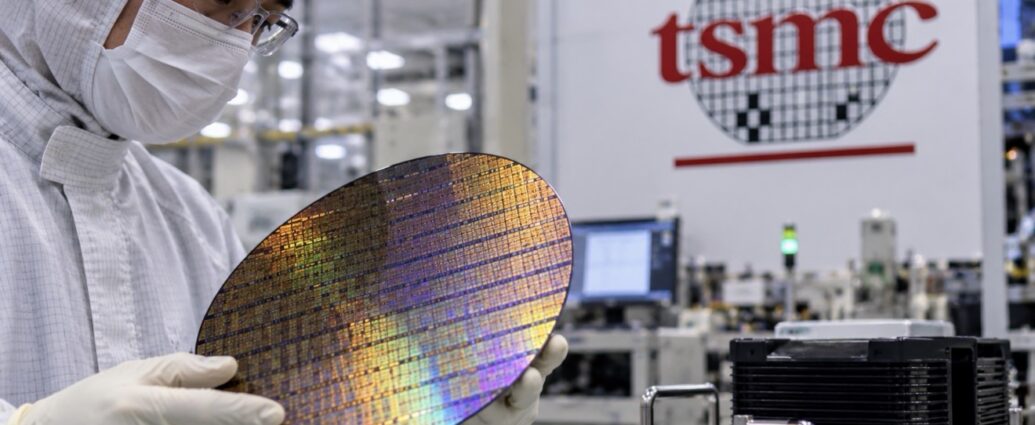
Taiwan is using its unmatched position in advanced semiconductors as a strategic diplomatic tool, expanding investment in the United States and Europe as allies push Taipei to share more of the economic benefits from the AI boom.
Taiwan is leaning more heavily on its semiconductor industry to strengthen political and economic ties with the United States and Europe, as governments increasingly view advanced chips as critical national-security infrastructure.
The shift was on display at the SEMICON Taiwan 2026 industry gathering, where officials and executives emphasized Taiwan’s role as a trusted supplier to democratic allies and a central player in the global AI economy.
Taiwan is home to companies including TSMC, Foxconn and ASE Technology, giving the island an extraordinary position in the production and packaging of advanced semiconductors.
That dominance has become both an advantage and a vulnerability.
The United States and Europe want more semiconductor manufacturing built on their own soil to reduce the risk of disruption from geopolitical tensions around the Taiwan Strait.
Taiwanese companies are responding.
TSMC is in the middle of a massive U.S. expansion centered on Arizona, where planned investment has reached approximately $265 billion across semiconductor manufacturing and related facilities.
Taiwanese officials have also indicated that companies are preparing roughly $20 billion in additional U.S. investment as part of broader efforts to deepen commercial ties and lower trade barriers.
The strategy extends beyond America.
European officials are pushing for stronger semiconductor cooperation under the EU’s next-generation Chips Act, and Taiwan is seeking a larger role in that effort.
Taiwan’s government increasingly describes its semiconductor industry not simply as an export business, but as a diplomatic asset.
The argument is that countries relying on Taiwanese chips have a direct economic interest in Taiwan’s stability and security.
At the same time, Taiwanese manufacturers acknowledge that concentrating too much production on the island creates strategic risk for customers.
That is why companies are globalizing parts of their supply chains while still keeping their most advanced technology and research capabilities anchored in Taiwan.
The balance is delicate.
Move too little production overseas, and allies may become frustrated by their dependence on Taiwan.
Move too much, and Taiwan risks weakening what has often been described as its “silicon shield” — the idea that its importance to the global technology industry gives major powers an additional reason to protect it.
What It Means for You
The AI boom is no longer just reshaping technology companies.
It is reshaping foreign policy.
Advanced chips are now treated almost like strategic commodities.
Governments care about who makes them, where they are produced and whether supply can survive a geopolitical crisis.
That gives Taiwan enormous leverage.
The island can use investment decisions to strengthen relationships with Washington, Brussels and other capitals that want secure access to AI hardware.
For companies, the result is a semiconductor supply chain that is becoming more geographically diversified — but also more expensive.
New factories in the United States and Europe cost more to build and operate than many facilities in Asia.
Businesses may eventually pay part of that price through higher chip costs.
But governments increasingly see that premium as the cost of security.
Taiwan’s strategy is becoming clear:
Use semiconductor investment to deepen alliances — while keeping enough advanced capability at home to remain indispensable.
In the AI era, that may make chips one of the most powerful diplomatic currencies in the world.
JBizNews Desk | New York
© JBizNews.com All Rights Reserved. Reproduction or distribution without written permission is prohibited.