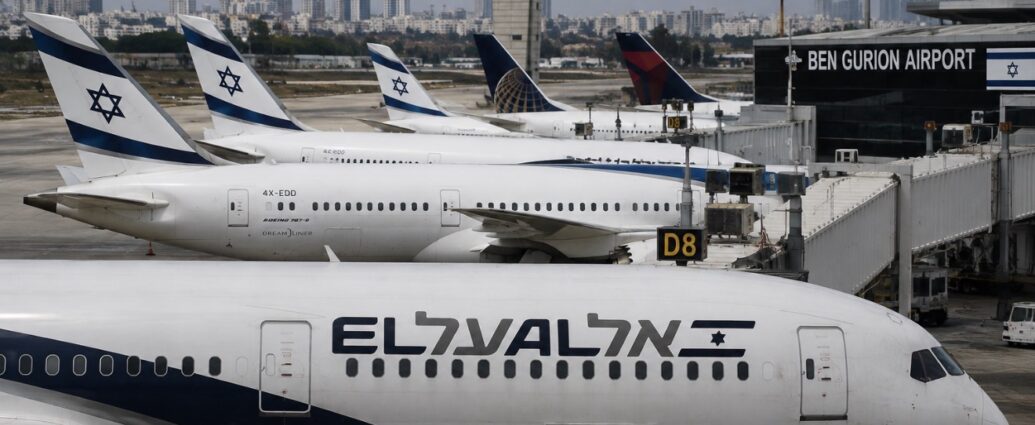
Seats on the Tel Aviv–New York route are about to become much easier to buy, and that is not bringing the price down. Delta Air Lines returns to Ben Gurion Airport in the first week of September with a daily New York flight, and United Airlines follows a day later with two daily flights to Newark on Boeing 787 Dreamliners. Both carriers pulled out of Israel in March at the start of the war with Iran. Their planes come back days before Rosh Hashanah, straight into the one stretch of the calendar when the route is most heavily booked, and the extra capacity is being absorbed by holiday demand rather than translating into cheaper tickets.
That timing is the whole story of the fare picture this fall. Israelis and American Jews travel in a compressed window between Rosh Hashanah, Yom Kippur and Sukkot, and airlines price into it accordingly. A year ago the constraint was inventory: economy seats on the New York run sold out months ahead, and travelers who waited were simply shut out. This year, according to the fare index maintained by Israeli travel-tech firm lastminute.co.il, which tracks nonstop Tel Aviv–New York pricing, seats remain available across the September holidays for buyers shopping close to departure. What has not improved is the number on the ticket.
A single economy fare on the route currently runs anywhere from $1,460 to $3,046, and the cheapest carrier changes depending on the departure date. In early September, a coach ticket was available on Arkia for $1,722, on Delta for $2,176 and on El Al for $2,186. Over Rosh Hashanah the Israeli carriers came down slightly, with Arkia at $1,460 and El Al at $1,722, while Delta held at $2,134. Yom Kippur inverted the pattern: the Israeli airlines were asking roughly $3,000 and Delta had seats near $2,500. United was excluded from the comparison because of availability problems on its inventory.
Business class is where the shortage still bites. Premium cabins on the route remain thin, and thin supply produces violent pricing. In early September, business fares ranged from $5,741 on Arkia to $7,365 on El Al. Around Yom Kippur the spread widened to between $6,122 on Arkia and a peak of $9,994 on United — a gap of nearly $4,000 on the same route in the same week.
For travelers, the practical fix is flexibility rather than patience. Because the price on any given flight is being set as much by how many seats remain in that specific cabin as by overall demand, moving a departure by a day or two, or switching carriers, can change the total cost of a trip by hundreds of dollars in economy and thousands in business. Assaf Greenberg, vice president of marketing at lastminute.co.il, said economy availability has improved after a long stretch of scarcity but that the market is still far from returning to full normality, and that real-time comparison across dates and airlines matters more this season than in a normal year.
The structural fix is more metal on the route, and it is arriving slowly. Israir has purchased an Airbus A330 for $85 million and is awaiting final regulatory approvals to launch its own Tel Aviv–New York service, which would put a fourth Israeli-linked competitor into the market alongside El Al and Arkia. American Airlines, which has not flown regular Tel Aviv service since October 2023, had been scheduled to return in January 2027 and pushed that date back to March 2027 earlier this month. Until those seats show up, the corridor is carried by two American carriers and two Israeli ones during the busiest travel weeks of the Jewish year.
Demand itself is softening at the margins even as prices hold. New York’s share of total Israeli holiday-season flight demand has slipped to 2% this year from 2.4% in 2025, and overall demand for the holiday period is down from last year. Bookings already on the books tell a different story about the month itself: passenger volume from Tel Aviv to New York in September is running 29% above August.
The broader airport picture is strong. Roughly 2.6 million passengers are expected to move through Ben Gurion in August, with 47 airlines operating there. The Israel Airports Authority lists Greece, Cyprus, Italy, the United Arab Emirates, the United States and Germany as the leading destination countries. On weekdays this month the airport is handling between 90,000 and 95,000 arriving and departing passengers a day, and on several days the count is expected to pass 100,000.
JBizNews Desk | New York
© JBizNews.com All Rights Reserved. Reproduction or distribution without written permission is prohibited.